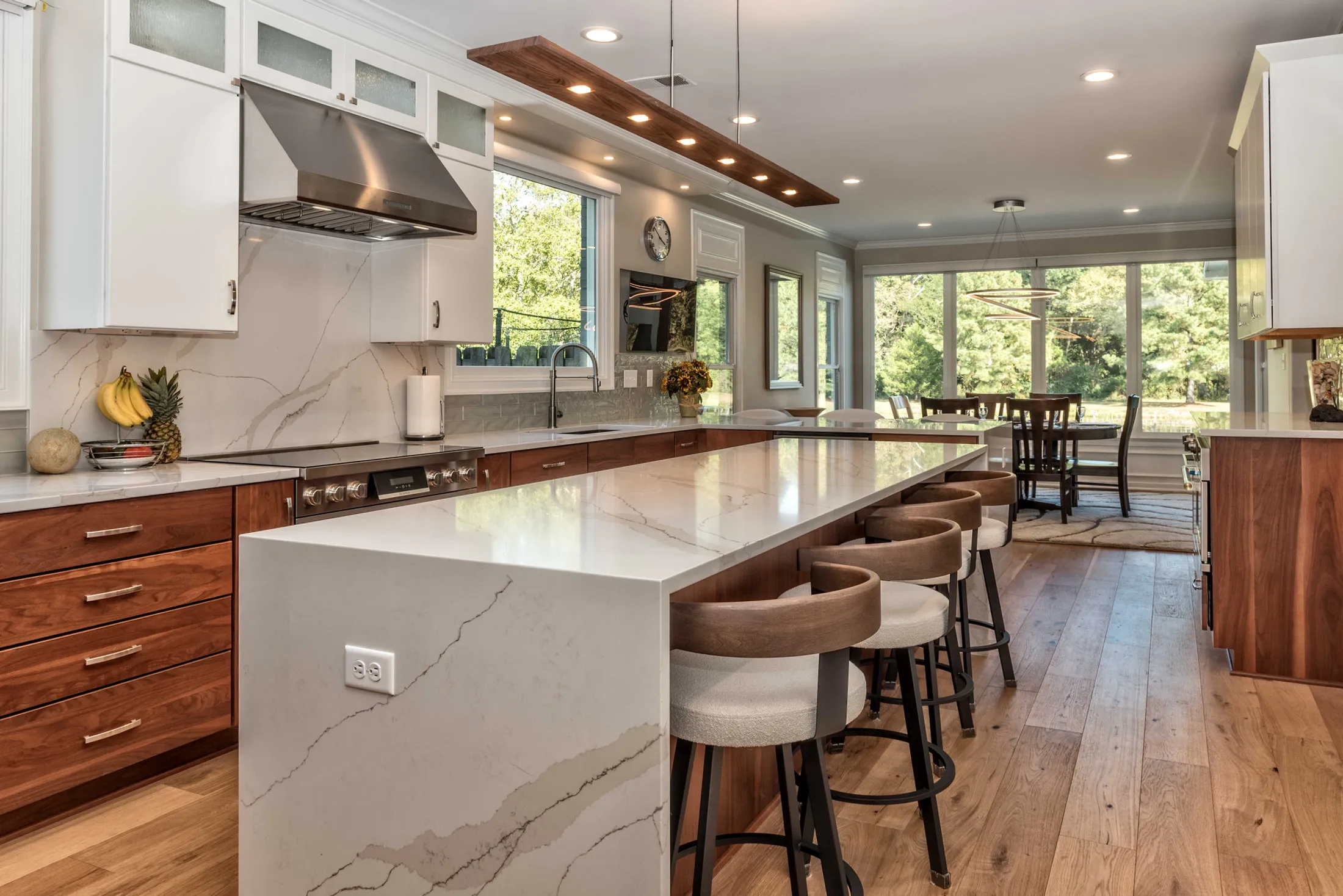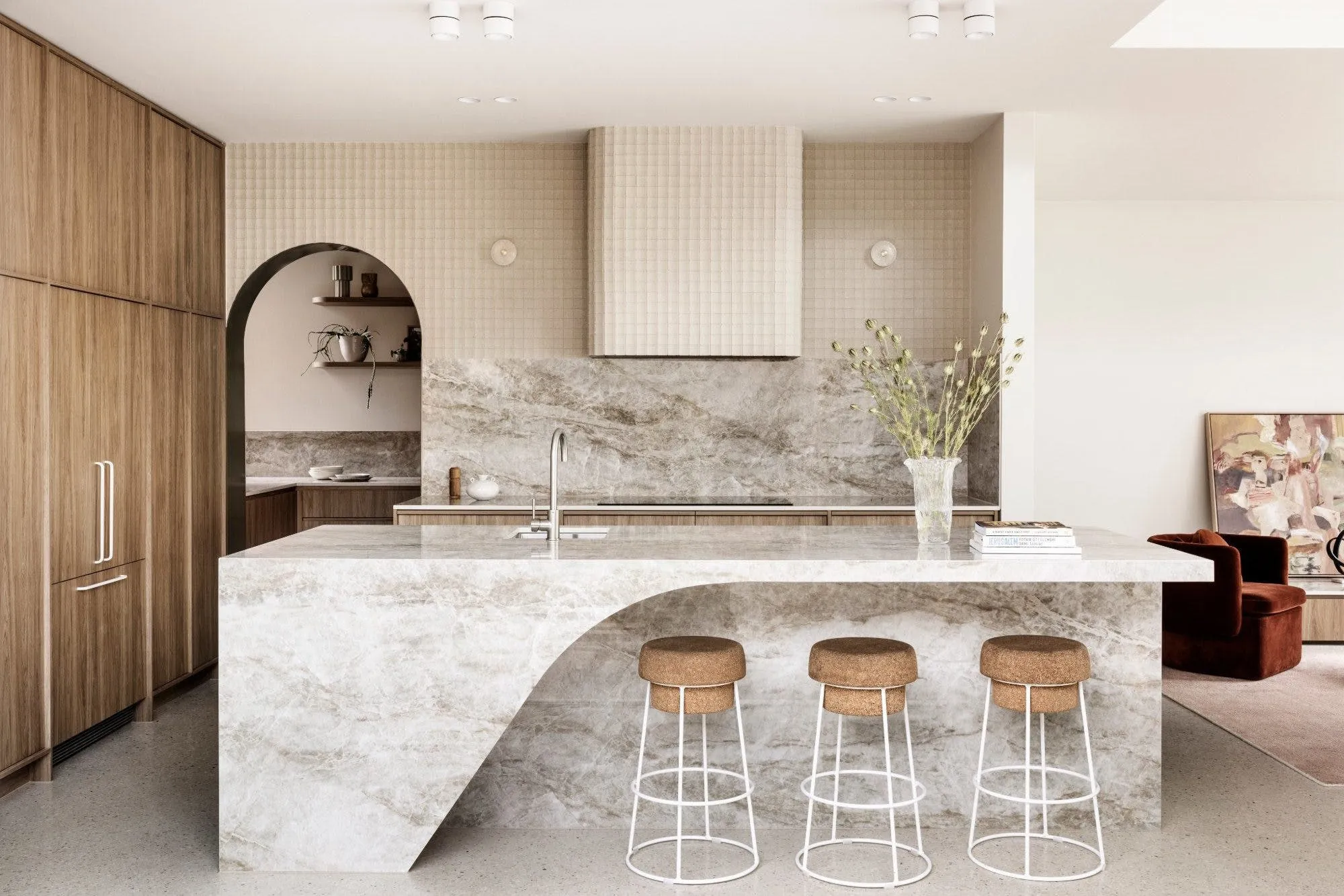
The materials that work in a kitchen work just as well in the rest of the house. Laundry rooms, mudrooms, home bars and offices all benefit from a hard, easy-to-clean surface, and the right choice depends on what that surface will face: water and detergent, wet boots and road salt, wine and citrus, or laptops and coffee mugs.
In most cases quartz is the easy all-rounder, laminate keeps costs down on long or simple runs, and granite and porcelain suit people who want natural stone character or extra heat resistance. Because these rooms are usually smaller than a kitchen, they’re also a natural fit for remnants. Here’s what to think about, room by room.
Laundry rooms
A laundry room counter usually does one of three jobs: a folding surface over front-load machines, a run of counter with a utility sink, or both.
What it has to handle
Water, detergent, stain removers and the occasional drip of bleach. A non-porous surface such as quartz or porcelain copes with most of this, as long as spills are wiped up. Harsh products like bleach shouldn’t be left sitting on quartz or laminate, so keep a cloth within reach. Granite works too, if it’s kept sealed. Our stain removal guide covers what to do when something does get left behind.
Planning points
- Support over appliances. A top over a washer and dryer spans the machines instead of sitting on cabinets, so it needs support from the walls or side panels. Confirm the support details with us at templating.
- Service access. Leave enough clearance to slide the machines out for repairs and hose checks.
- Sink choice. Stone suits an undermount utility sink, while laminate is usually paired with a drop-in sink. Our post on undermount vs drop-in sinks explains the difference.
- Splash protection. A short backsplash or side splash keeps water off the wall.
Mudrooms
Mudroom counters take the hardest beating in an Ontario winter: wet boots, slush, road salt, hockey bags, groceries and keys. Bench tops, drop-zone counters and the tops of cubbies or lockers are the usual places for a countertop.
- Pick a forgiving pattern. A speckled or mid-tone quartz or granite hides grit and salt marks better than a solid white or solid black.
- Think about edges. People sit, lean and swing bags here. A rounded or softened edge is kinder to legs and less likely to chip. Our guide to countertop edge profiles compares the options.
- Support for benches. A stone bench top needs proper support underneath for people sitting on it, especially along the front edge.
- Wipe off salt. Salt residue left to dry can leave a white film. A damp cloth after a slushy day keeps it from building up.
Laminate is a sound budget option for cubbies and drop zones, as long as water from boots and umbrellas isn’t left pooling on it.
Home bars and beverage centres
Basement bars, wet bars and coffee stations face a mix of spills that kitchen counters rarely see all at once: red wine, citrus, sticky cocktails and coffee.
- Quartz resists stains and needs no sealing.
- Porcelain resists stains and handles heat well.
- Granite works if it’s sealed and spills are wiped up promptly.
- Marble is the one to think twice about. Acids from citrus and wine can leave dull etch marks, which we explain in why homeowners choose quartz and granite over marble.
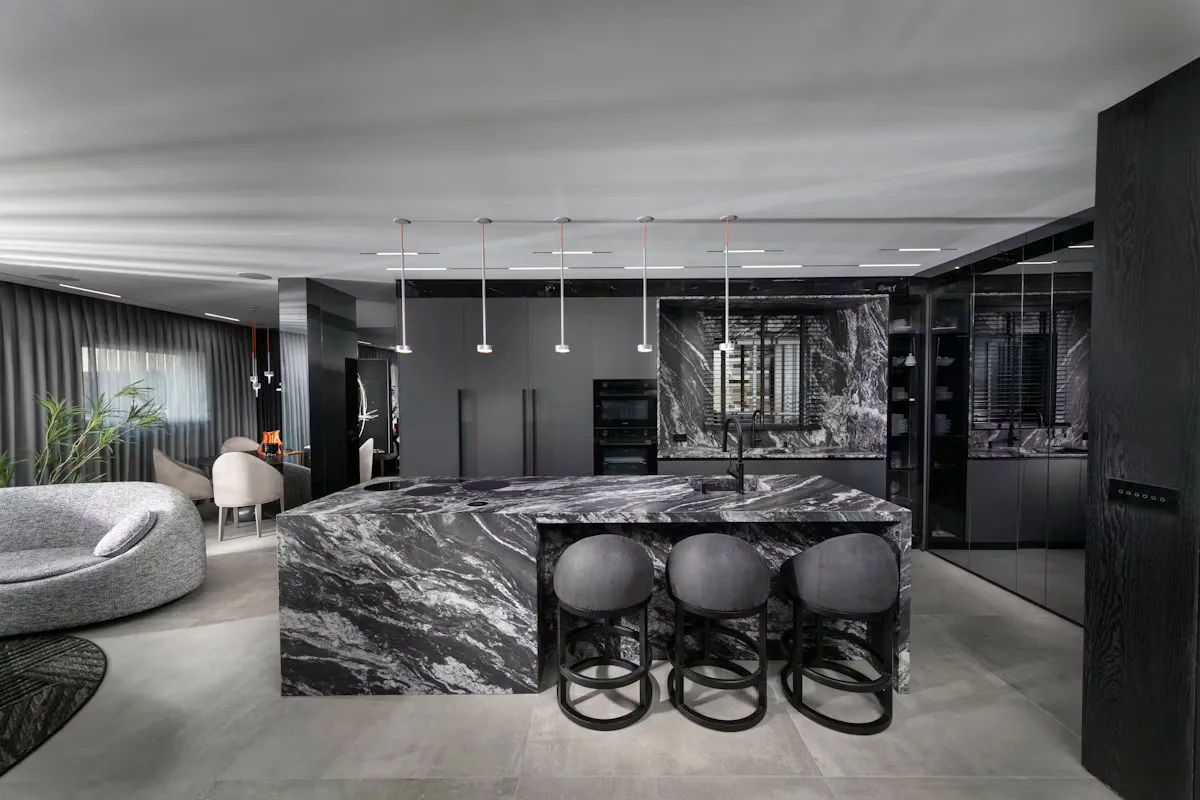
A bar is a good place for a bolder colour or a dramatic pattern that might feel like too much across a whole kitchen. If you’re considering a deep colour, read what to know about dark countertops, and see choosing a countertop colour to suit your cabinets and floors for tying it into the room.
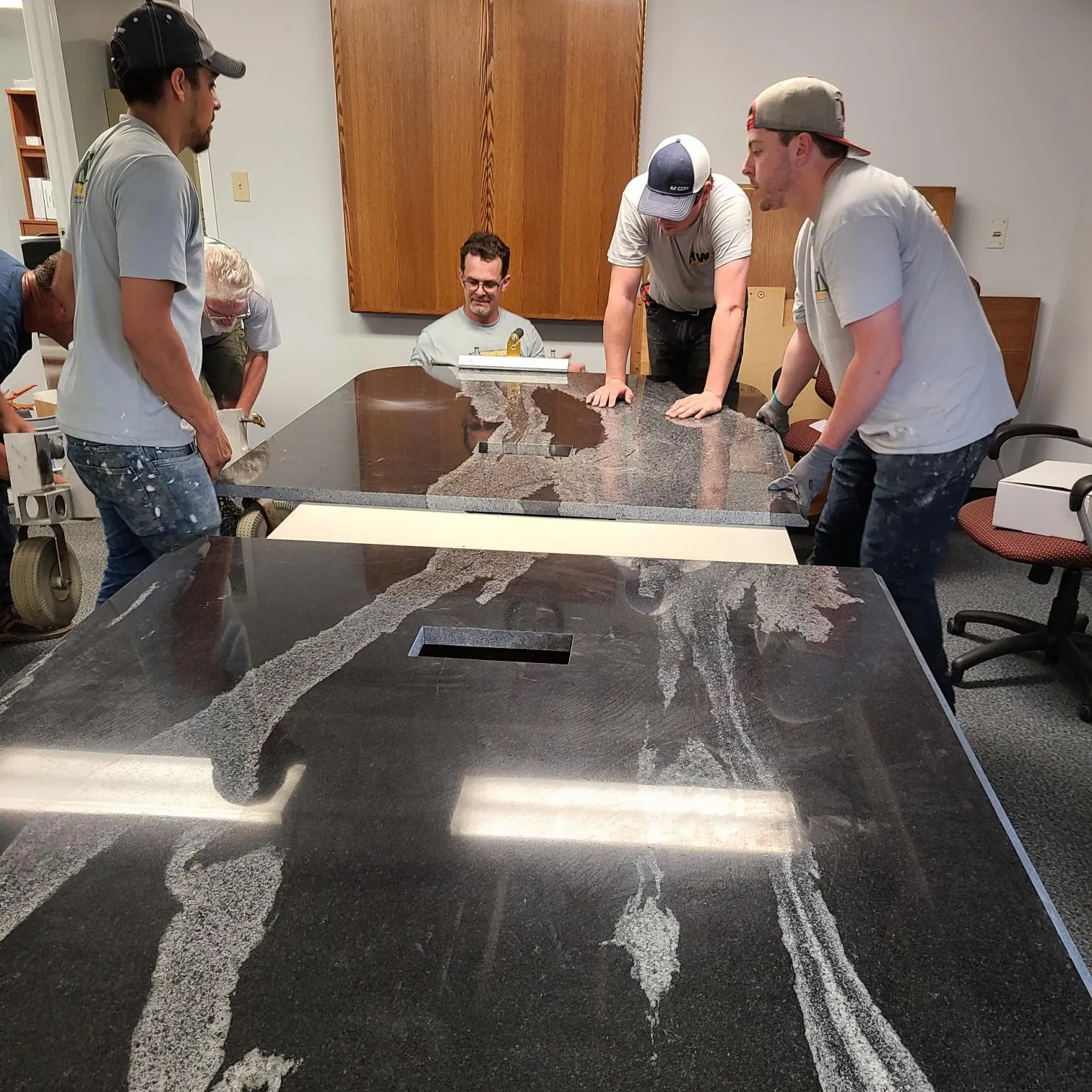
Plan for the overhang on any seating, which may need extra support, the cut-outs for a bar sink and faucet, and the clearances your under-counter fridge or wine fridge requires. In a basement, think about how the pieces will get down the stairs. A long bar top may need a seam, which we cover in countertop seams explained. For more on lower-level spaces, see our notes on countertops for basement apartments.
Home offices and work areas
A countertop makes a durable desk, homework station or craft table, and it wipes clean at the end of the day. Quartz is a common choice, and laminate is practical for a long built-in desk on a budget.
- Desk height and depth. Desks usually sit lower than kitchen counters, so settle the height of your cabinets or supports before templating, and leave room for knees and a chair.
- Spans without cabinets. A desk top over open knee space needs support at the right points, such as a side panel, a leg or a hidden bracket.
- Cable cut-outs. Plan holes for cable grommets so cords can pass through neatly.
- Comfortable edges. Forearms rest on the front edge all day, so an eased or rounded profile is a good choice.
- Glare. A polished surface under bright lights can reflect onto screens. Ask whether the material you like comes in a less glossy finish.
The same thinking applies in workplaces, from reception desks to staff kitchens. See our commercial page and our post on countertops for busy commercial spaces for offices, clinics and retail.
Materials at a glance
| Space | Good choices | Watch for |
|---|---|---|
| Laundry room | Quartz, laminate, porcelain | Support over appliances, bleach spills, water at seams |
| Mudroom | Speckled quartz or granite, laminate for cubbies | Salt residue, sharp edges, bench support |
| Home bar | Quartz, porcelain, sealed granite | Acidic spills on marble, overhang support, appliance clearances |
| Home office | Quartz, laminate | Desk height, open spans, cable cut-outs, glare |
Smaller rooms suit remnants
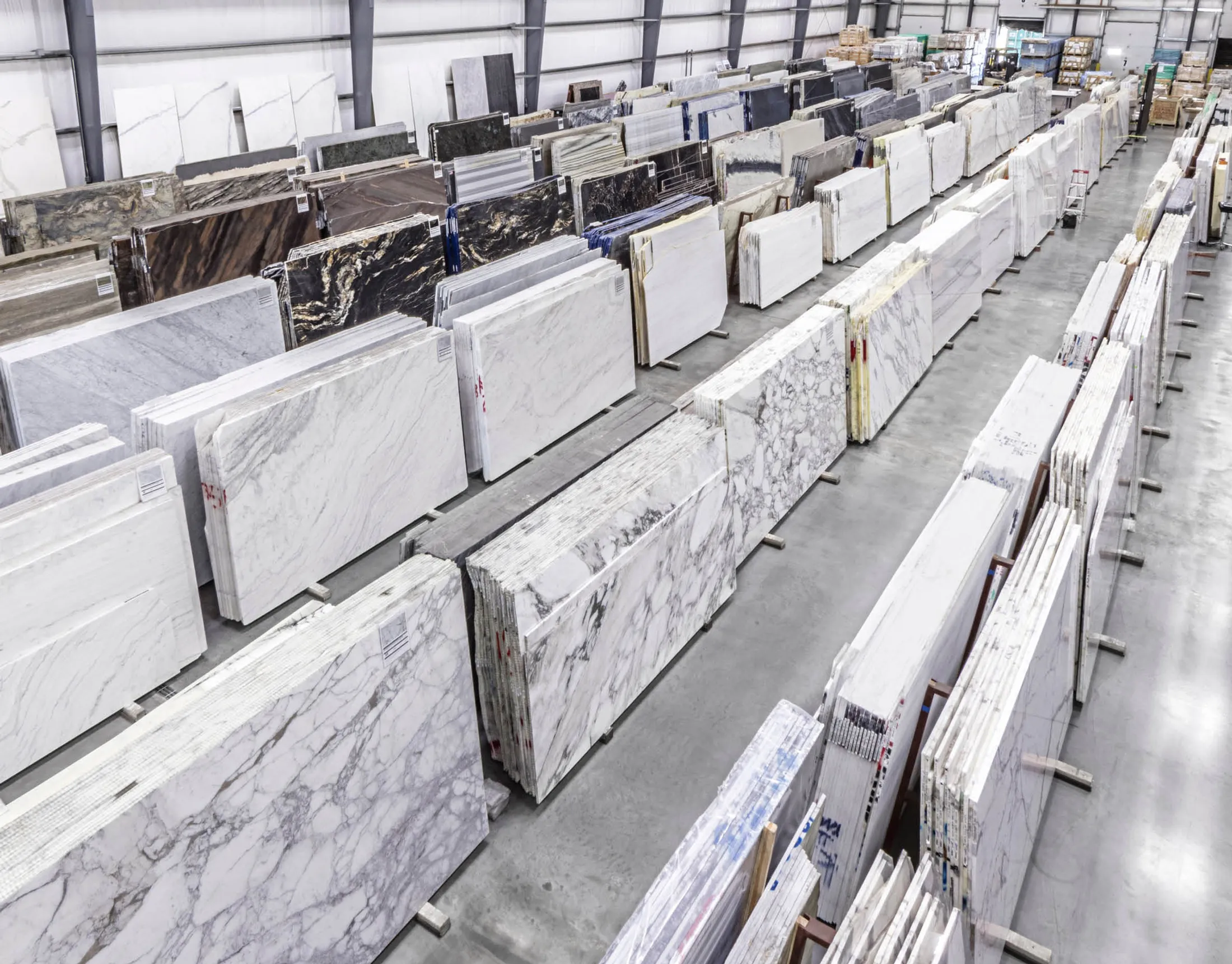
Most of these projects need far less material than a kitchen. A laundry top, bar top or desk can often come from a remnant, a leftover piece of a full slab in the same material and finish. Our 10,000 sq ft stone gallery in Kitchener holds full slabs, half slabs and remnants, and the online Stone Gallery lets you search current stock by name, brand, type, size and colour. Read countertop remnants for vanities and small projects for how to measure and what to check before you choose a piece.
Planning more than one room
If you’re already redoing the kitchen, it’s worth thinking about the laundry room, bar or office at the same time. You can choose materials that coordinate from room to room, ask whether the rooms can be templated and installed together, and work with one team from start to finish.
Every room follows the same steps as a kitchen: cabinets or supports in place first, then precise digital laser templating, fabrication in our Kitchener facility and installation by our own in-house crew. Our guide to preparing for templating and installation applies to a laundry room just as much as a kitchen, and you can see more of our residential work for ideas.
Browse the slabs and remnants in our online Stone Gallery, then send us your measurements for the laundry room, mudroom, bar or office you have in mind. We work with homeowners across Kitchener, Waterloo, Cambridge and Guelph, and you can see the materials in person at our Kitchener stone gallery or Guelph showroom.