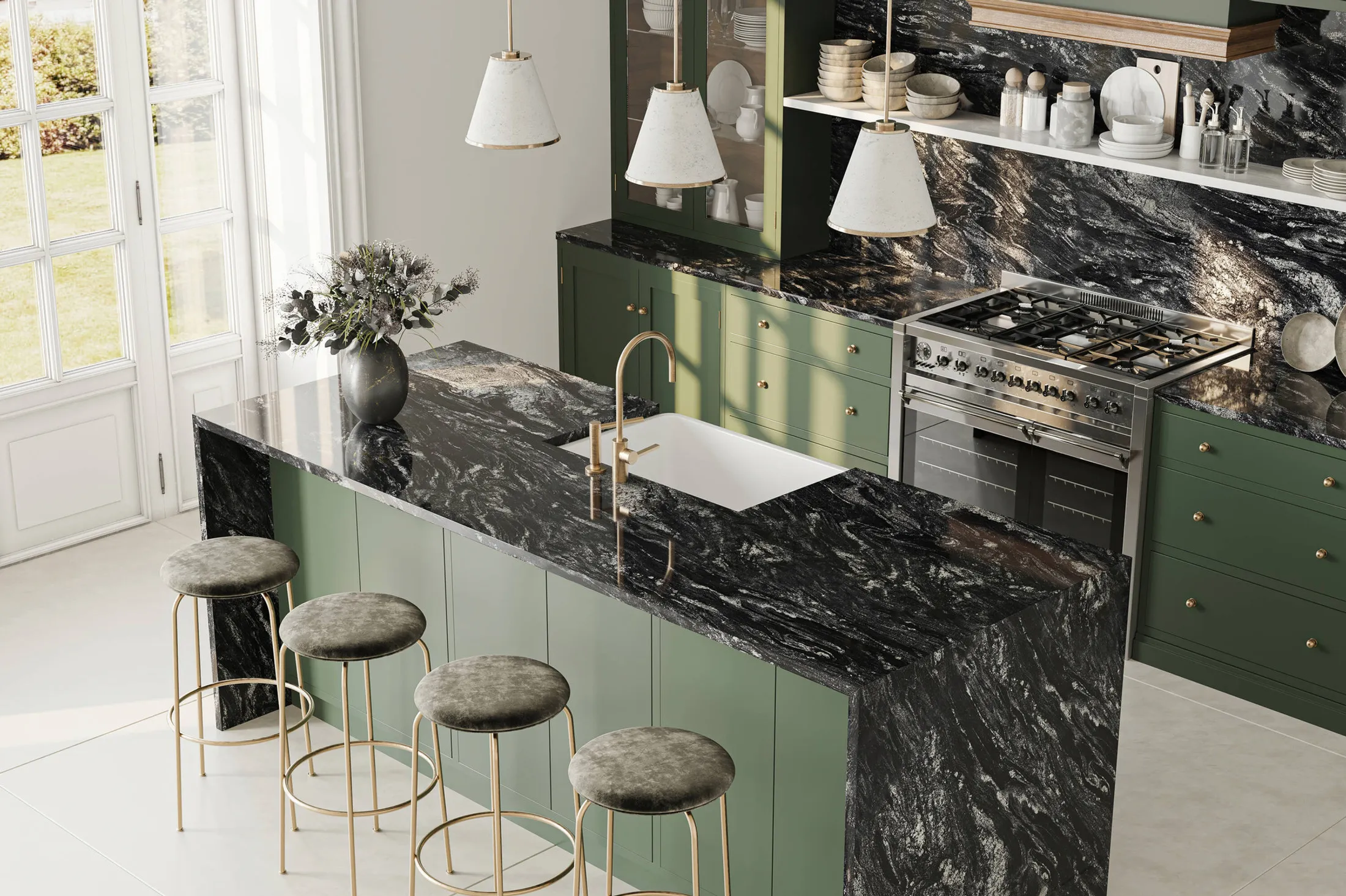
Dark countertops, from deep charcoal to true black, hide stains well, give strong contrast against light cabinets and suit both modern and traditional kitchens. The trade-off is that a polished dark surface shows dust, crumbs, water spots, fingerprints and fine scratches more readily than a lighter or speckled one, and it absorbs light, so the room can feel darker.
Finish and pattern matter as much as the colour itself. A honed or leathered finish, or a dark stone with flecks or veining, is far more forgiving day to day than solid polished black. Choose with those details in mind and a dark countertop can be as practical as it is good-looking.
What dark countertops do well
- Hide stains. Coffee, red wine, tomato sauce and turmeric are much less visible on a dark surface than on white.
- Create contrast. Black or charcoal against white, cream or pale wood cabinets gives a crisp, defined kitchen.
- Anchor a large room. In a big open-concept space, a dark island or perimeter gives the kitchen a clear centre.
- Suit many hardware finishes. Stainless steel, brass, matte black and copper all look at home.
- Stay in style. Black and charcoal are long-standing kitchen choices rather than a passing trend colour.
What shows on a dark surface
The same depth that hides stains makes anything lighter than the countertop stand out:
- Dust, crumbs and flour. Anything pale sits on top of a dark surface and is easy to see.
- Water spots. Many homes in Waterloo Region have hard water, and the mineral spots it leaves as it dries show far more on black than on white.
- Fingerprints and smudges. Oils from hands show as dull patches, especially when light hits the surface at a low angle.
- Fine scratches and wear. Small marks can catch the light on a polished dark top where they’d disappear on a busy granite.
- Reflections. A polished black surface mirrors under-cabinet lights, windows and pendants.
None of these damage the countertop. They affect how often you’ll want to wipe it, and how much that will bother you.
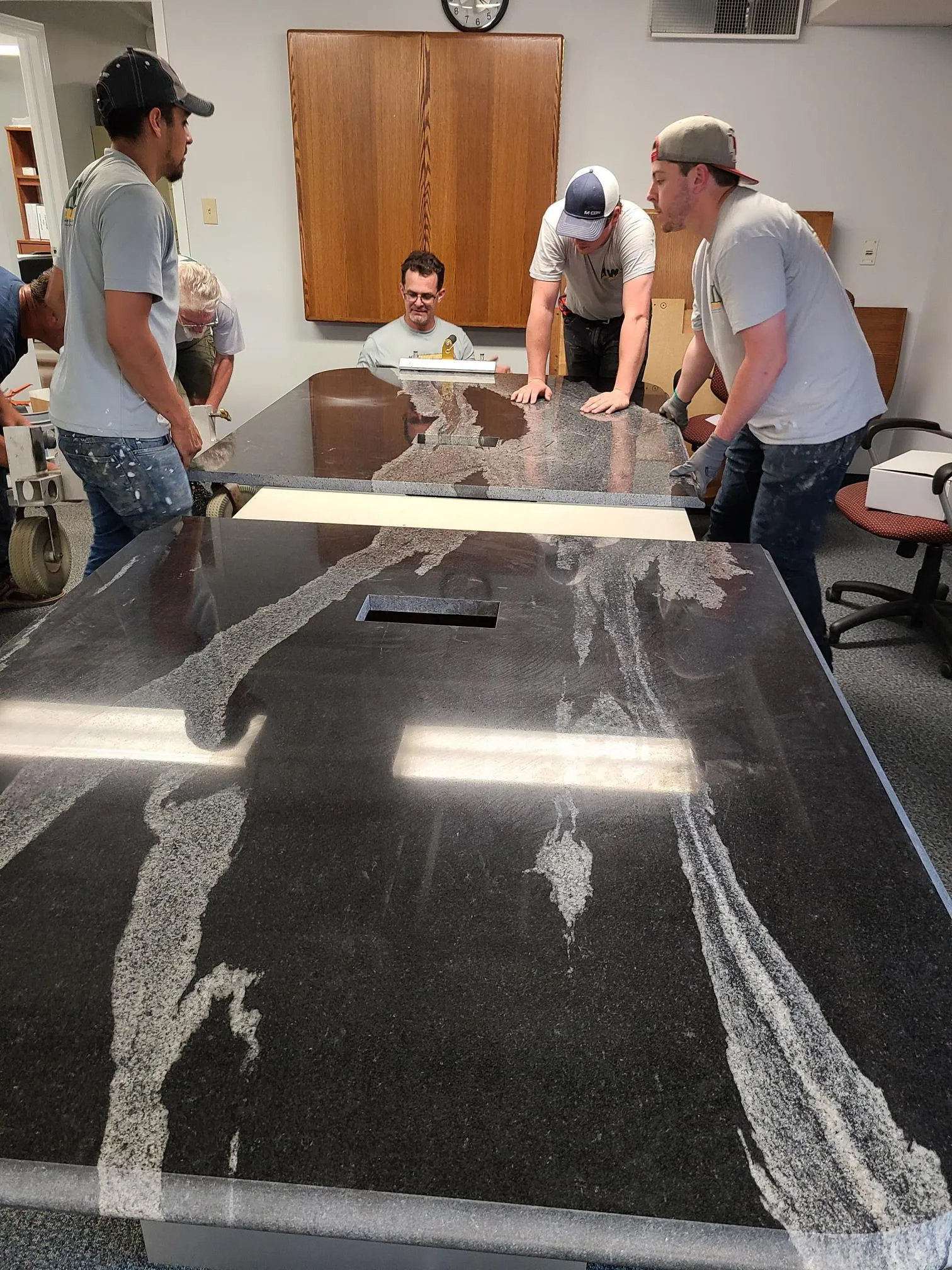
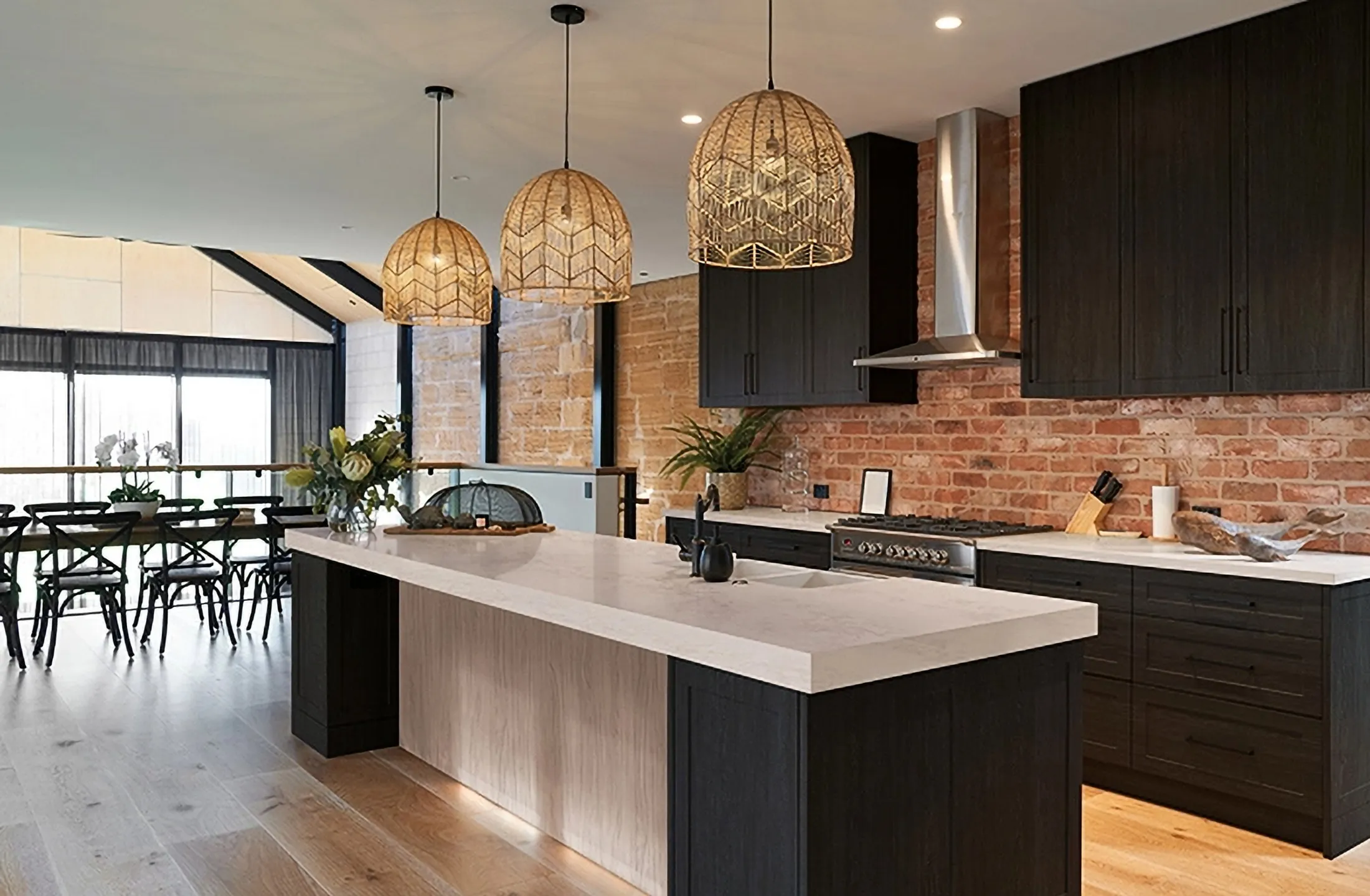
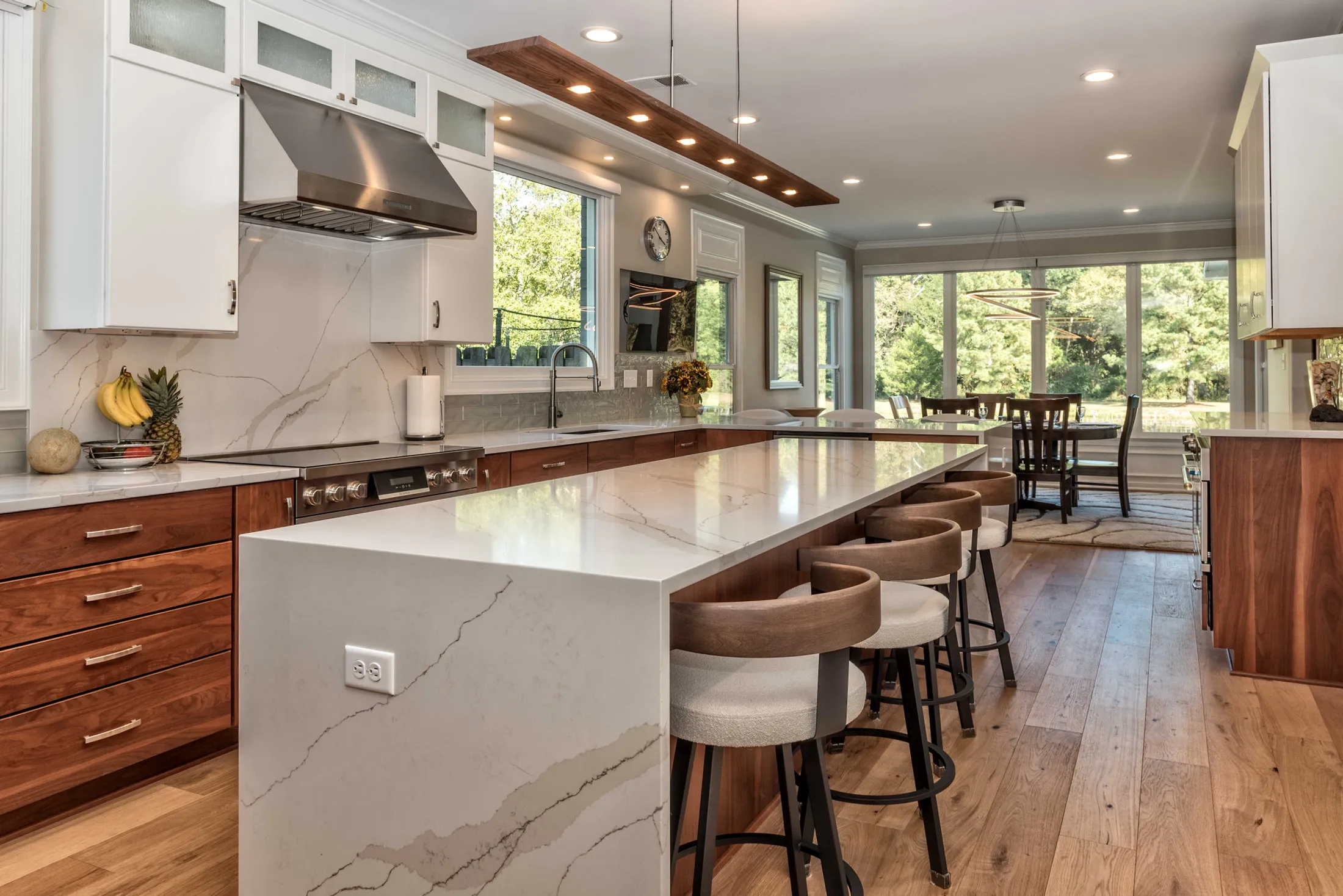
The ceiling lights in this photo show how clearly a dark polished surface reflects whatever is above it.
Finish changes everything
Polished
Polished is the most common finish and shows the deepest, richest colour. It’s the easiest to wipe clean because the surface is smooth, but it shows water spots, fingerprints and reflections the most.
Honed
A honed finish is ground to a matte or low sheen. On a dark countertop it hides water spots, fine scratches and reflections much better than polished, and the colour reads slightly lighter, closer to charcoal than black. The trade-off is that oily fingerprints can show as darker patches, and honed natural stone can need more attention to sealing. Some matte surfaces can also pick up grey marks from metal pots and utensils, which usually clean off. Ask about the specific product before you commit.
Leathered and textured
A leathered finish brushes natural stone to a soft, slightly textured feel with a low sheen. It’s mostly seen on granite and quartzite, and some quartz and porcelain products come in textured finishes with a similar feel. Leathered surfaces hide fingerprints and water spots well and suit rustic and farmhouse kitchens. Crumbs can settle into the texture, so a quick wipe with a damp cloth helps.
Solid black or a pattern?
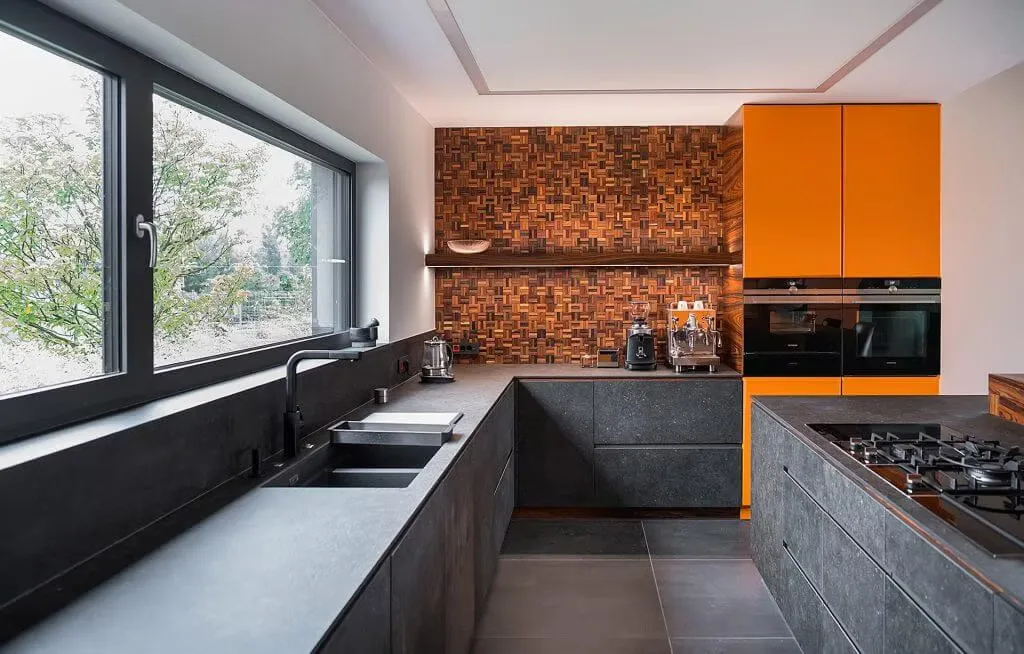
A solid, uniform black is the most dramatic option and the least forgiving. A dark surface with some movement, such as flecks, veining or a salt-and-pepper texture, breaks up crumbs, spots and smudges so you notice them less.
Among the granite colours we show, Silver Waves, Titanium, Black Mist and Black Forest sit at the dark end, each with a different amount of pattern. Quartz and porcelain add solid blacks, charcoal concrete looks and dark marble looks with white or gold veining.
Dark options by material
Quartz
Quartz gives you the most consistent dark colours, from solid black to charcoal and concrete looks, and it doesn’t need sealing. Like any quartz, it should be protected from direct high heat, so keep trivets handy. The quartz brands we show include Vicostone, HanStone, Cambria, Wilsonart and LX Hausys.
Granite
Granite offers natural dark stones with depth and movement no other kitchen will share, and it handles heat well. Finishes depend on how the slab is supplied, so ask what’s available for the colour you like. Granite benefits from periodic sealing, and how often depends on the stone.
Porcelain
Porcelain comes in large dark slabs, including matte charcoal and black marble looks, and it handles heat and UV well. On many porcelain slabs the pattern sits on the surface, so a cut edge can show a lighter colour. A mitred edge keeps the dark face continuous; see countertop edge profiles explained. We offer porcelain from Infinity Stone, Cosentino Dekton and RG Stone.
Laminate
Laminate from Formica and Wilsonart includes solid blacks and dark stone looks at the most affordable price. It’s an easy way to get a dark look in a rental, basement suite or laundry room. Laminate isn’t heat resistant, so hot pans always go on a trivet.
Light and room size
Dark countertops absorb light rather than bounce it back. In a kitchen with good windows that’s rarely a problem, but in a small kitchen, a basement or a north-facing room, a dark perimeter can make the space feel smaller and the work surface harder to see.
A few ways to balance it:
- Pair dark countertops with light cabinets, a light backsplash or a light floor
- Use dark on the island only and keep the perimeter lighter, or the reverse
- Plan good under-cabinet lighting, since you’ll rely on it more
- Choose honed or leathered if you don’t want to see every light reflected
Our guide to choosing a countertop colour that works with your cabinets and floors covers contrast and undertone in more detail.
Living with a dark countertop
Daily care for a dark countertop is the same as for any other colour. It just shows more when you skip it.
- Wipe with a soft microfibre cloth and warm water with a little mild dish soap
- Dry the surface afterward to prevent water spots
- Avoid harsh chemicals and abrasive pads, which can dull a finish
- Use trivets and cutting boards
- Follow the care guidance for your material, especially sealing for natural stone
For more, see our countertop care guide and our guide to removing countertop stains.
Is a dark countertop right for you?
A dark countertop is usually a good fit if:
- You want strong contrast with light cabinets or floors
- Hidden stains matter more to you than visible crumbs
- Your kitchen gets plenty of natural or artificial light
- You don’t mind wiping and drying the surface often
Think twice about solid polished black if:
- Your kitchen is small or dim
- Water spots and fingerprints would bother you
- You’d rather wipe the counter once a day than after every use
Dark slabs look very different at full size than on a small sample, and finish is hard to judge from a photo. Search our online Stone Gallery by colour to shortlist a few black and charcoal options, then book a visit to see them in person at the Kitchener stone gallery or our Guelph showroom.