An edge profile is the shape cut and polished into the exposed front and sides of a countertop. The five you will see most often are eased (a square edge with lightly softened corners), bevel (a flat, angled cut along the top corner), bullnose (a rounded edge, either half or full), ogee (a decorative S-shaped curve) and mitred (a strip of the same material joined at a 45-degree angle so the edge looks much thicker).
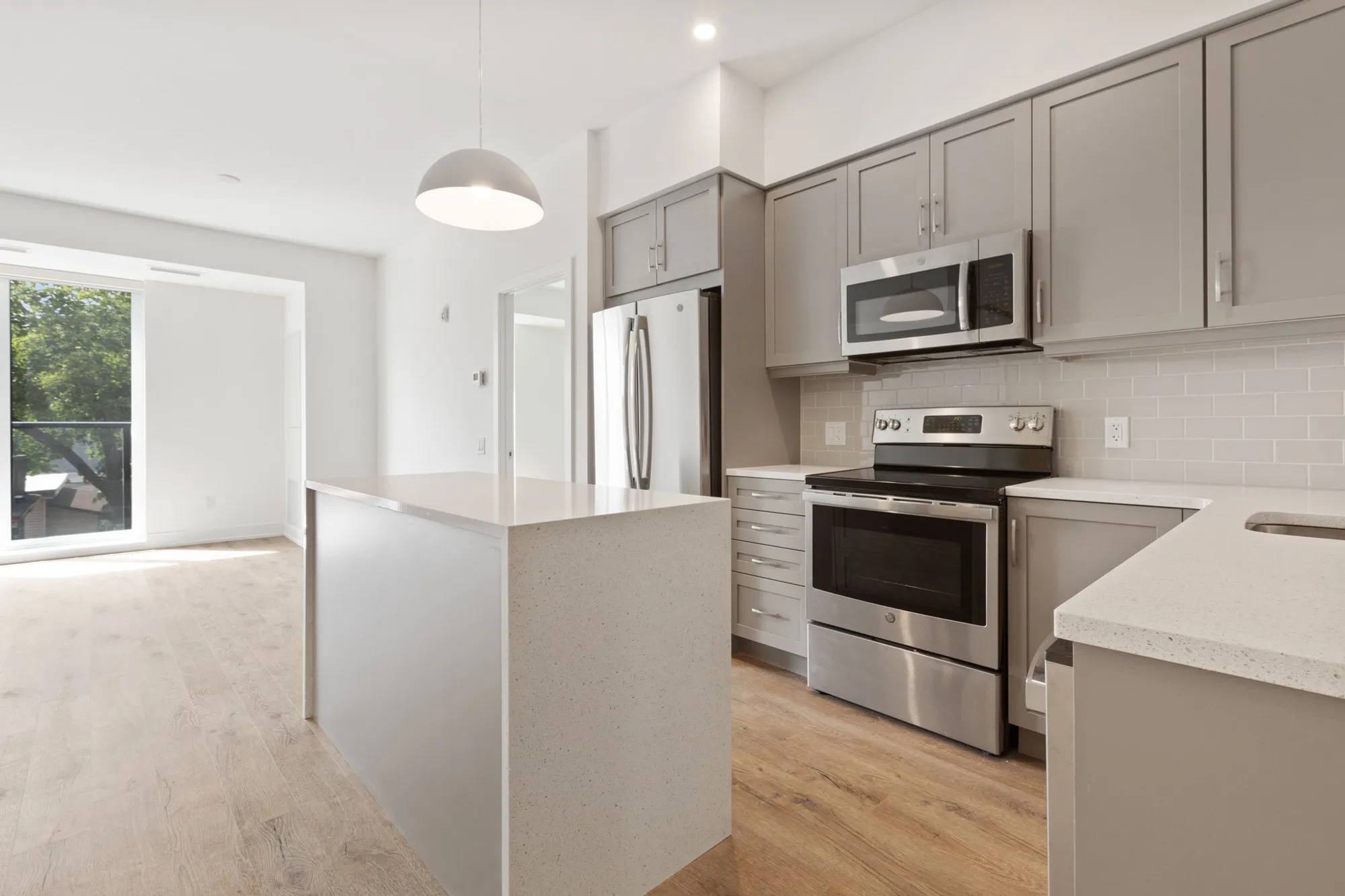
For most kitchens, an eased edge is the practical choice: clean, modern, easy to wipe and less prone to chipping than a sharp corner. Rounded edges are gentler in a busy family kitchen, ogee suits traditional rooms, and a mitred edge gives the look of a thick slab or a waterfall island. Below is how each profile looks, how it wears and which materials it suits.
Why the edge matters
The edge is a small part of the countertop, but it affects more than looks:
- Style. A crisp square edge reads modern. Curves and layered profiles read traditional.
- Durability. Sharp corners chip more easily than softened or rounded ones.
- Cleaning. Deep curves and grooves catch crumbs and need more wiping.
- Comfort. Rounded edges are kinder to hips, elbows and small heads.
- Cost. Profiles that need more shaping take more fabrication time.
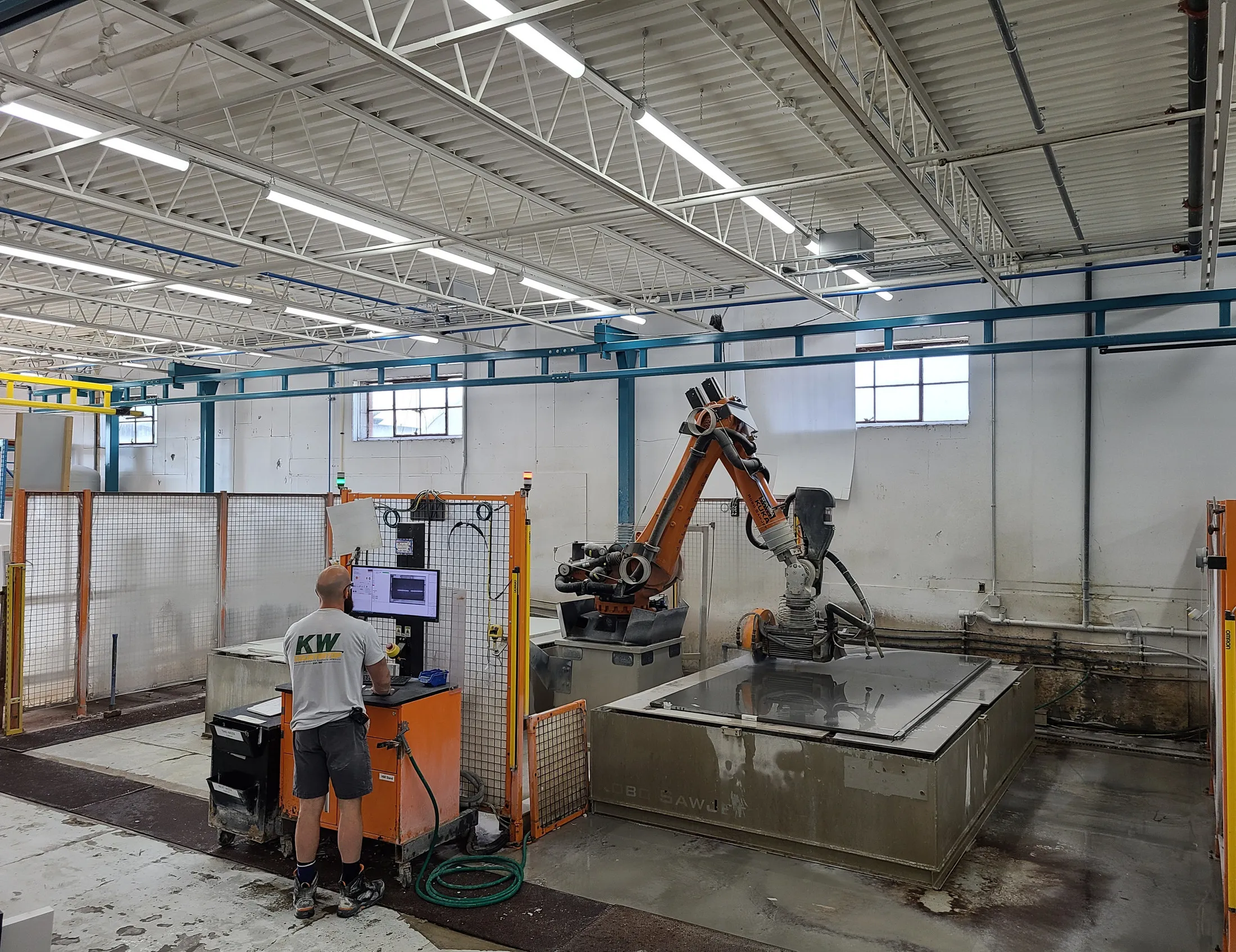
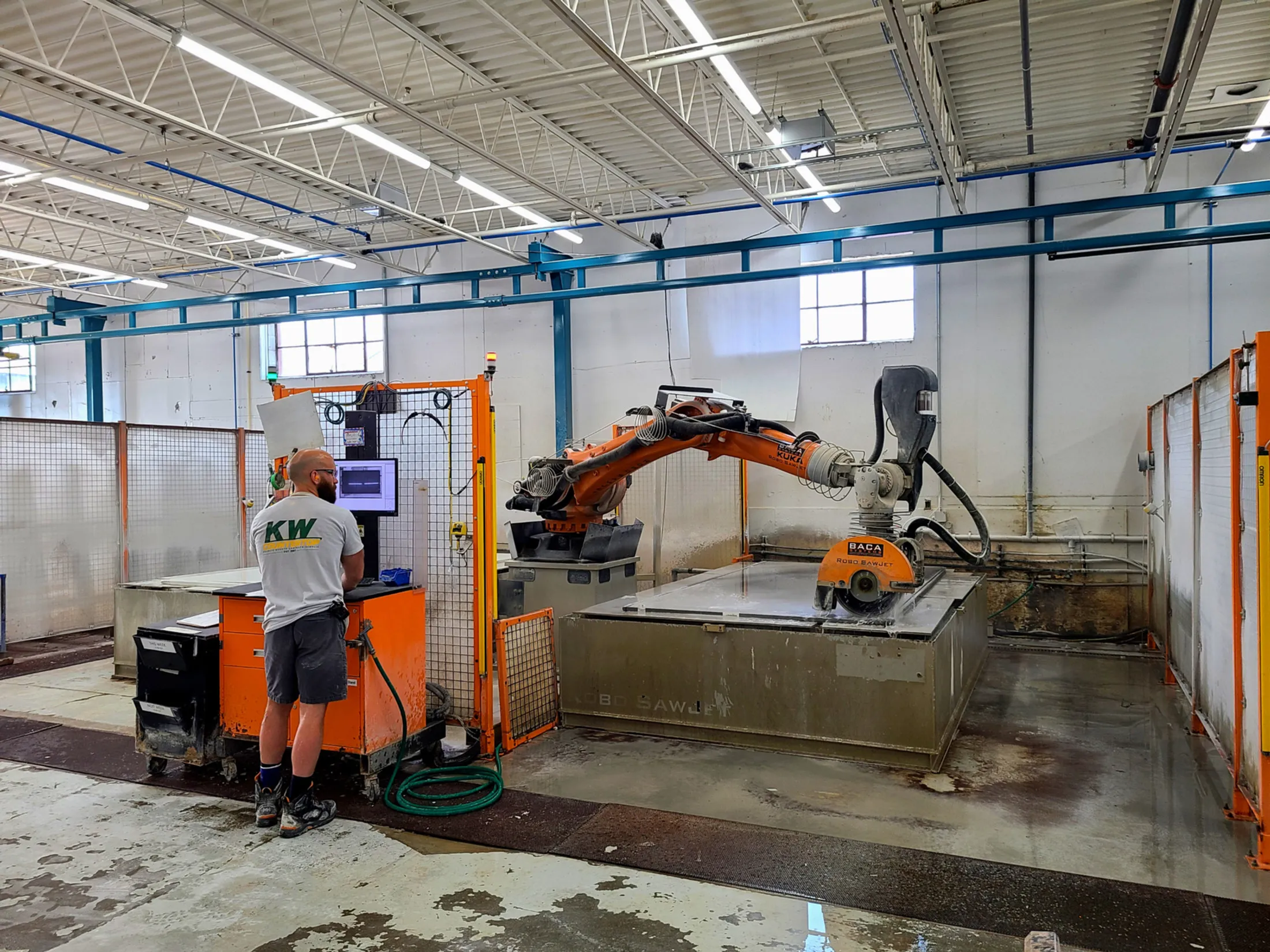
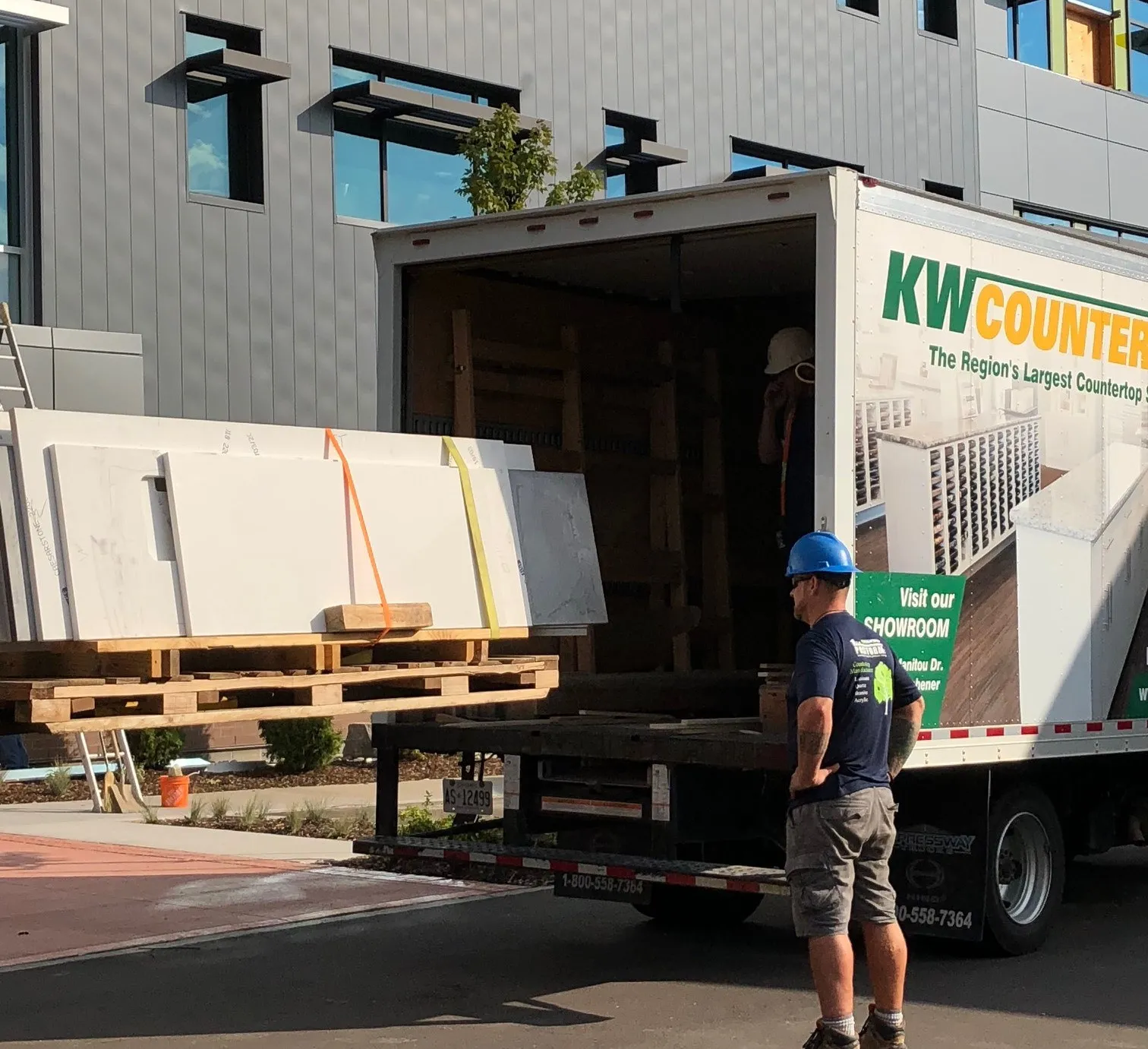
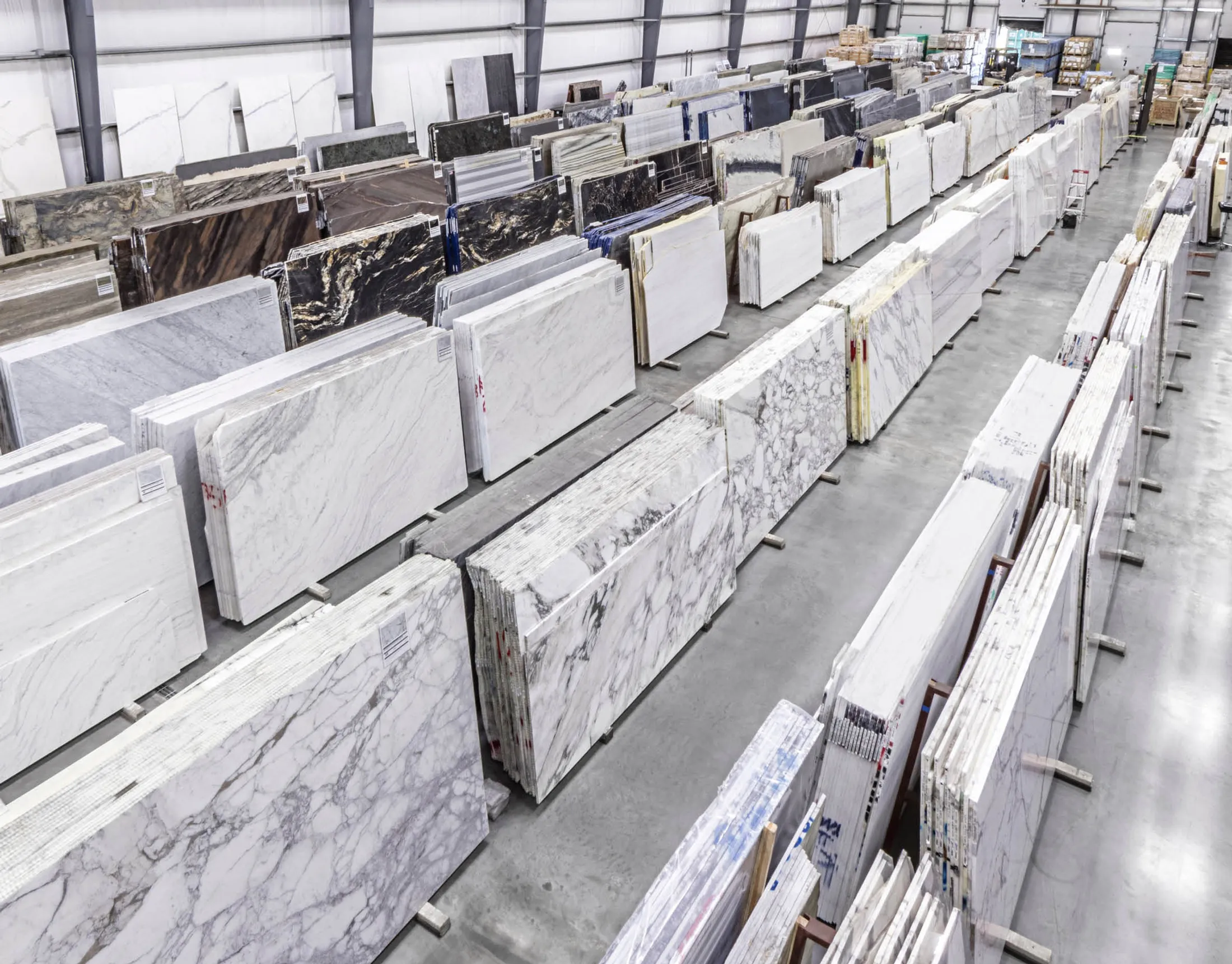
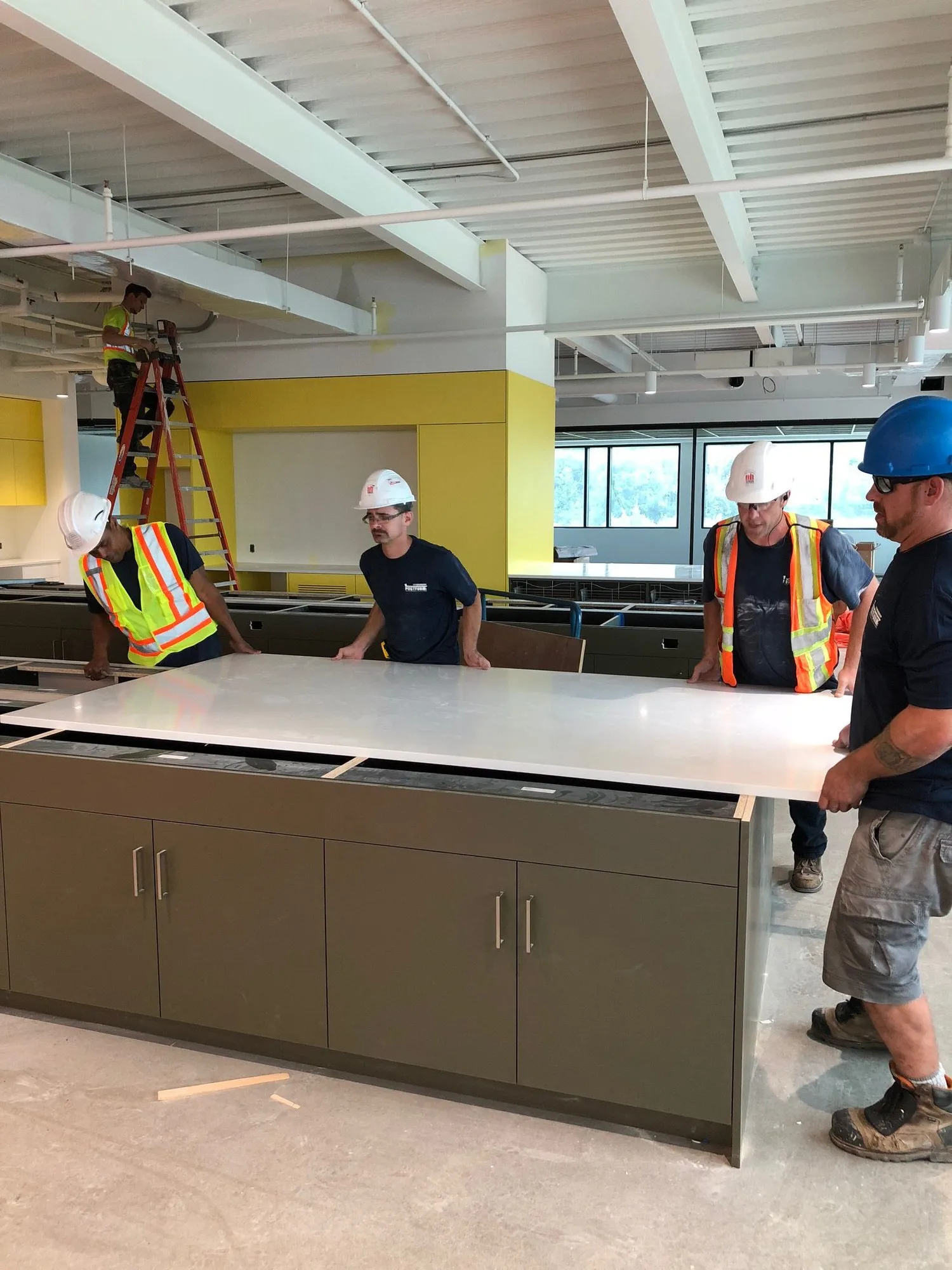
At KW Countertop, slabs are cut in our Kitchener production facility, which includes a BACA Systems Robo SawJet robotic saw, and each piece’s exposed edges are then shaped, polished and checked in the same building before installation. You can read more in the complete process from fabrication to installation.

Eased
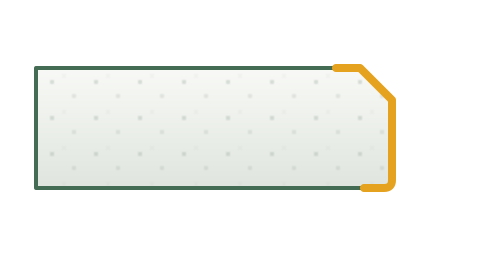
Bevel

Half bullnose

Full bullnose
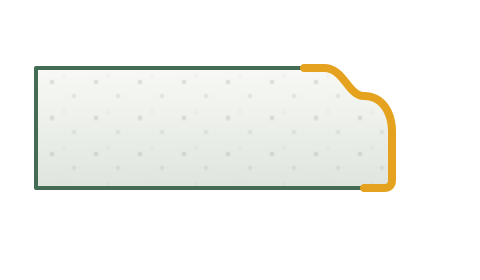
Ogee
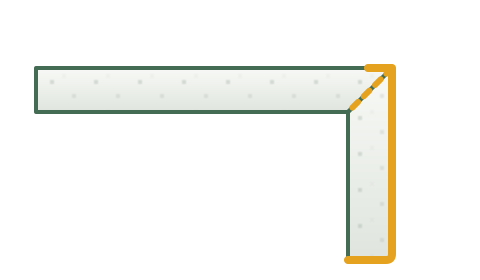
Mitred
Eased edge
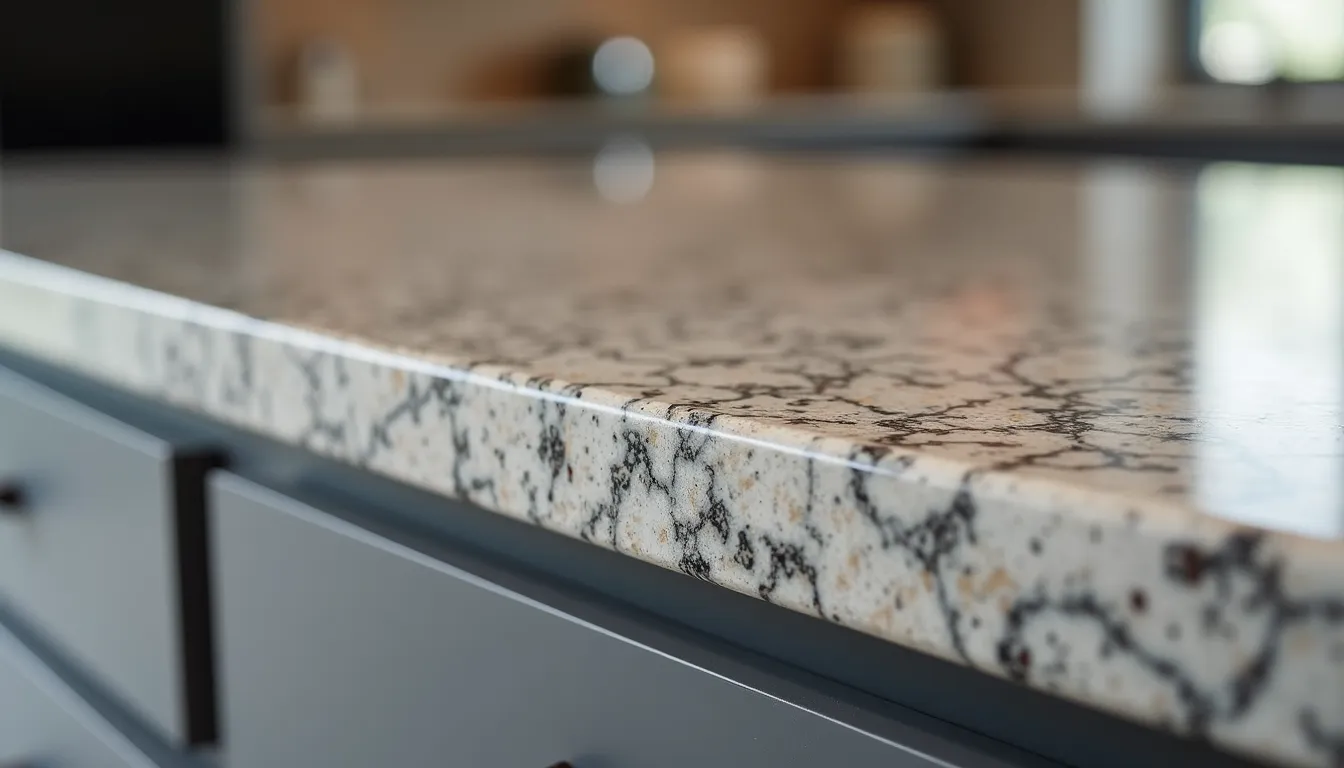
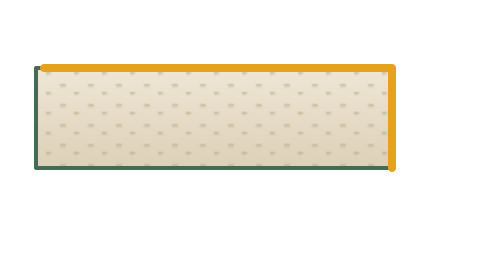
An eased edge is a square edge with the top and bottom corners lightly rounded off. A version with a slightly larger radius is sometimes called a pencil edge. It is the most common choice for quartz and granite, and it suits almost every style from modern to transitional.
Why people pick it:
- Clean lines that let the material be the focus
- Easy to wipe, with no grooves
- Softened corners that resist chips better than a sharp square edge
If you are unsure, start here. It is a hard edge to regret.
Bevel edge
A bevel cuts a flat angle along the top corner of the edge, usually at 45 degrees. The angled face catches the light and adds a little detail without looking traditional. A bevel works well on patterned granite, where it frames the stone, and on thicker slabs where there is room for the cut. It takes slightly more work to fabricate than an eased edge.
Bullnose: half and full
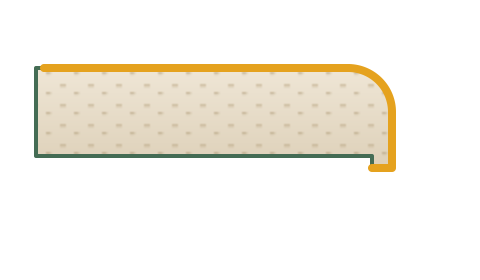
A bullnose edge is rounded. A half bullnose rounds the top and leaves the bottom close to square. A full bullnose rounds both the top and the bottom into one smooth curve.
Rounded edges are the friendliest choice for young families, since there is no sharp corner at head height for small children. They also resist chipping well. A full bullnose can make a thick slab look slimmer, while a half bullnose keeps a little more visual weight.
Rounded front edges are also common on laminate, where the edge options depend on the product line. Our laminate countertops guide covers what is available.
Ogee edge
An ogee edge has an S-shaped curve, where a concave curve flows into a convex one. It is the classic profile for traditional kitchens, often paired with raised-panel cabinets and natural stone.
Things to know:
- It takes more shaping and polishing than simpler profiles, so it costs more
- The curve has a groove that collects crumbs, so it needs a little more wiping
- It looks best on 3 cm material, where there is enough thickness for the full curve
Mitred edge
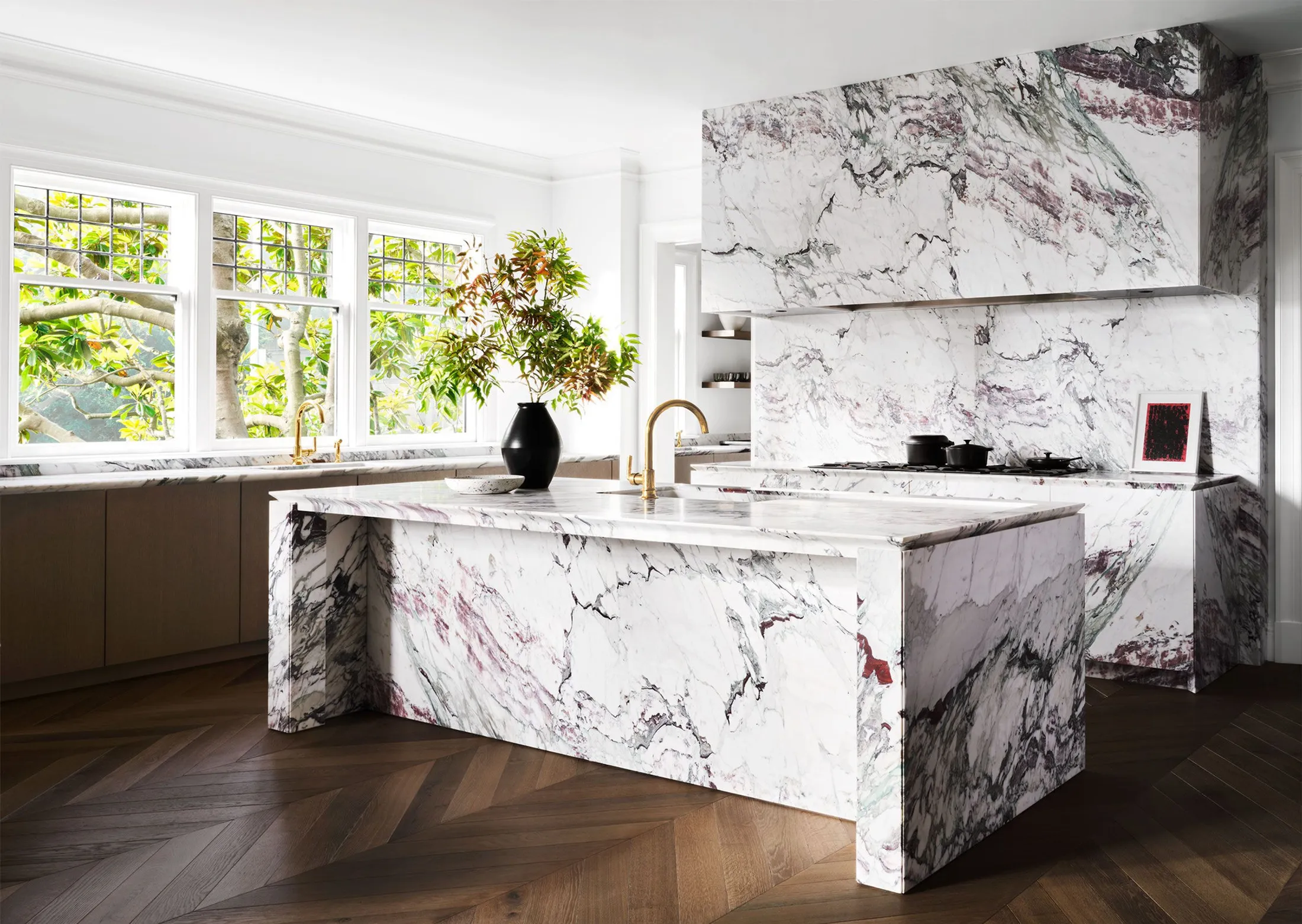
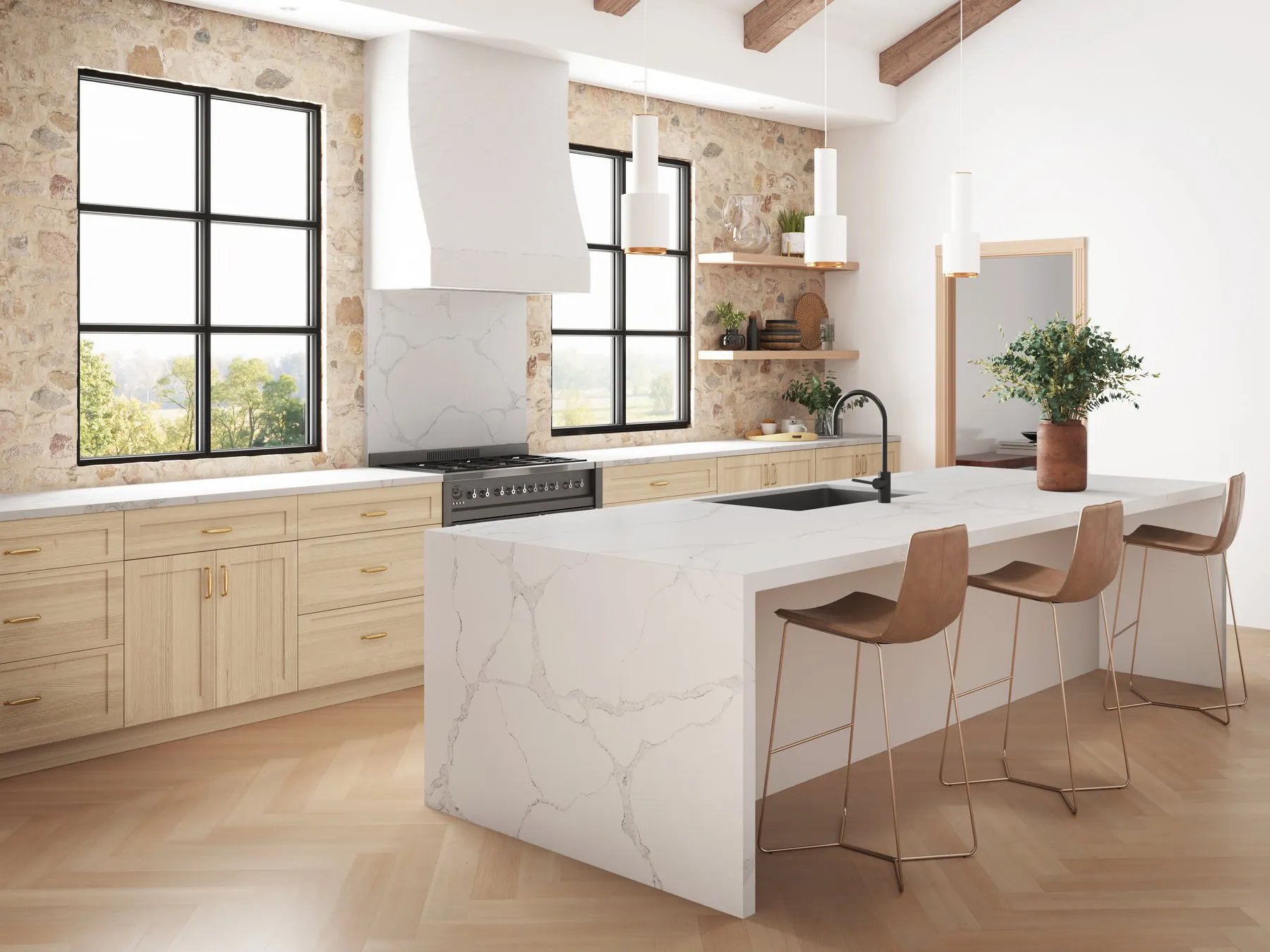
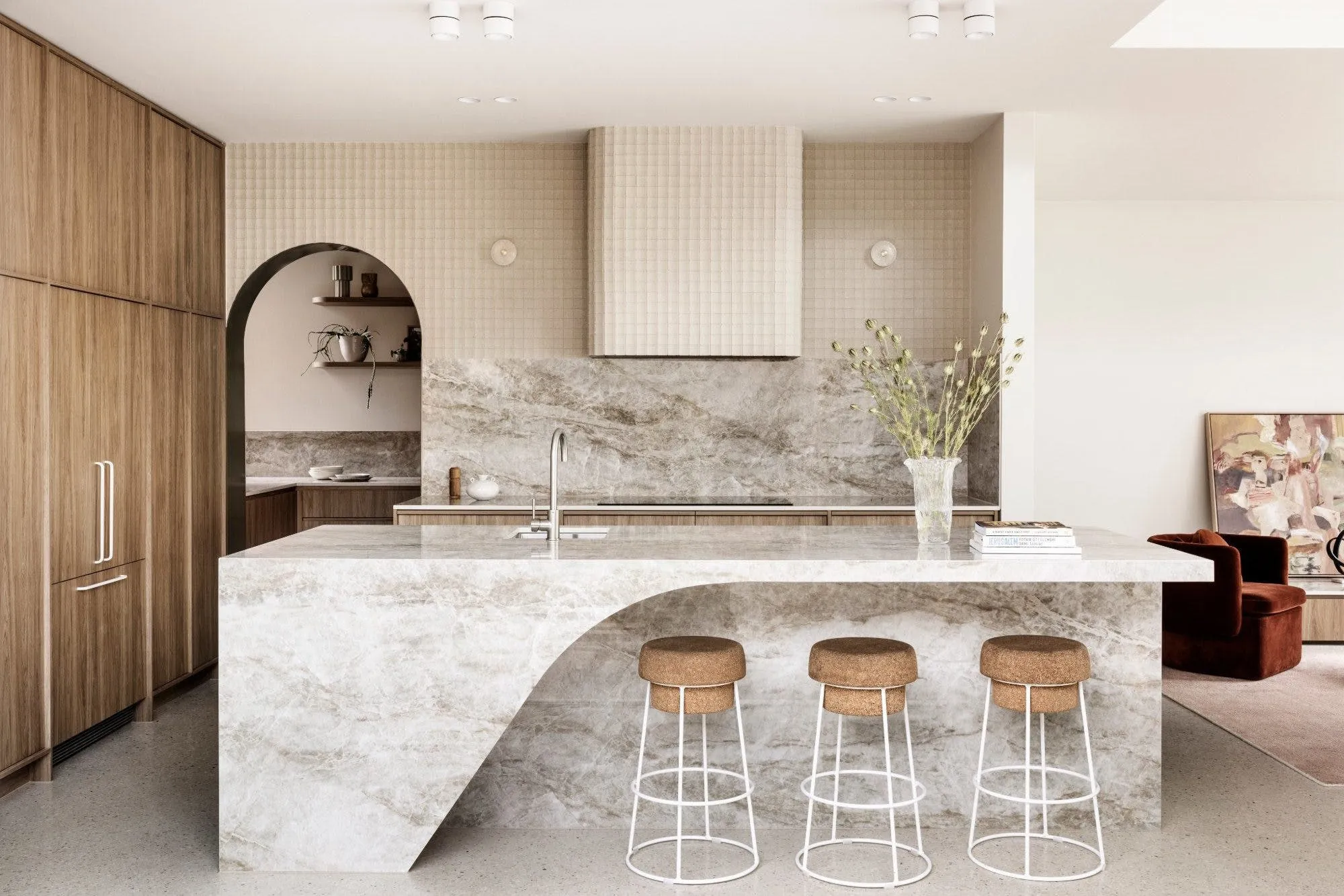
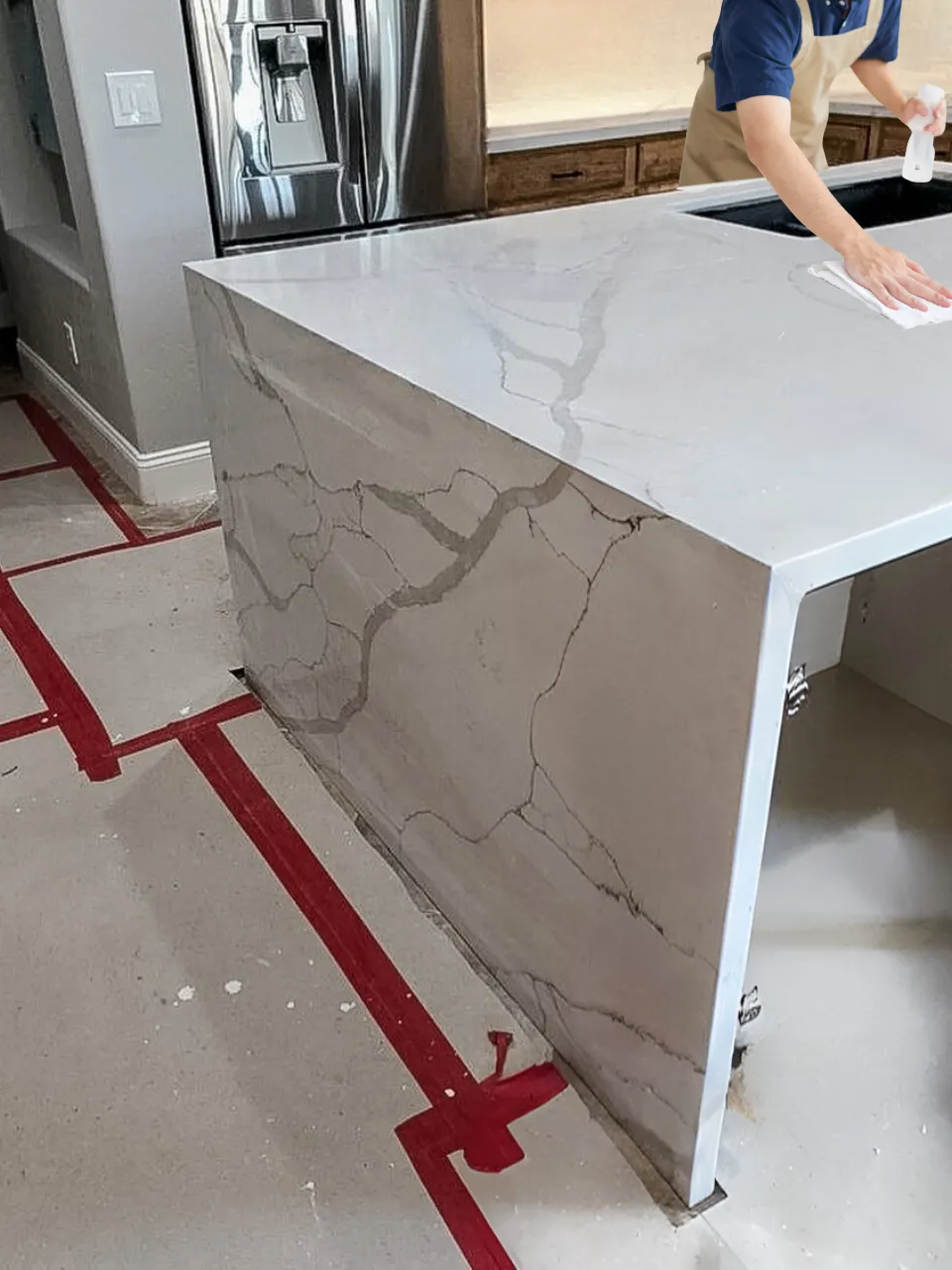
A mitred edge is built rather than carved. A strip is cut from the same slab, the strip and the countertop are both cut at 45 degrees, and the strip is joined under the front edge so the pattern wraps around the corner. The result looks like a much thicker solid slab.
Mitred edges are common on:
- Porcelain, where a thin slab can be given a thick, solid look
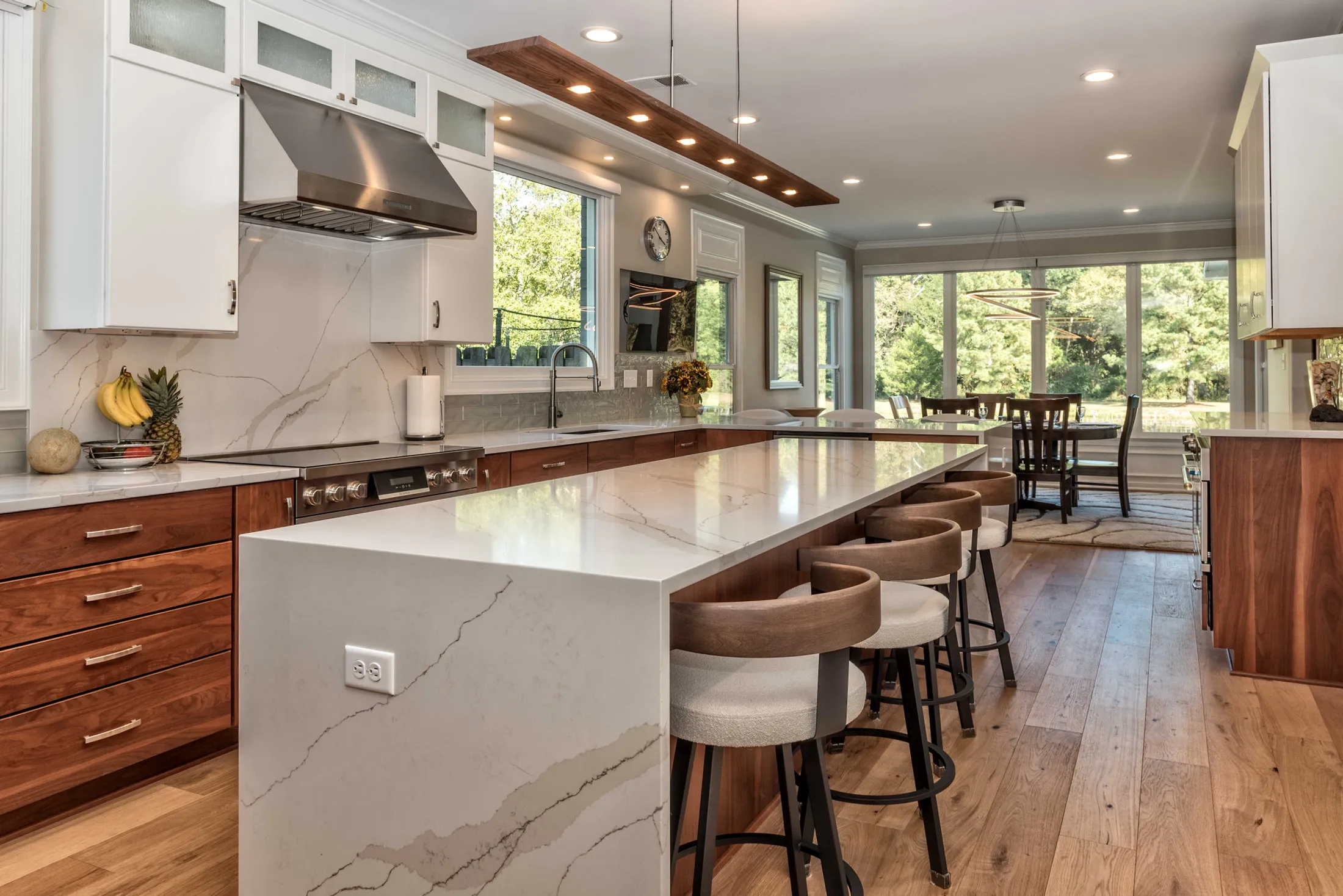
- Waterfall islands, where the top meets the side panel at the same 45-degree joint
- Modern kitchens that call for a heavy, square edge
The joint shows as a fine line, and on veined material it takes careful layout so the pattern continues around the corner. For more on waterfall ends, see waterfall islands and full-height backsplashes.
How your material affects your options
Quartz. Takes most profiles well. Eased is the most common, and mitred edges are popular on islands. Browse colours on our quartz countertops page.
Granite. Suits every profile on this list. A busy pattern hides the detail of a complex edge, so simpler profiles often look best on bold stone, while ogee and bevel suit quieter granites. See granite countertops.
Porcelain. On many porcelain slabs the pattern sits mainly on the surface, so a heavily shaped edge can expose the plainer body underneath. That is why porcelain is usually finished with an eased or mitred edge. Ask us about the specific product before choosing an edge for porcelain countertops.
Laminate. Edge styles come from the manufacturer and the product line rather than being cut like stone: typically a square edge or a rolled front formed from one sheet. See laminate countertops.
Thickness and edges
Thickness and edge work together. A 3 cm slab gives room for ogee, bevel and full bullnose profiles, while 2 cm material often pairs with an eased edge or a mitred build-up for a heavier look. Our guide to countertop thickness, 2 cm vs 3 cm goes into the trade-offs.
Tips for choosing an edge
- Match the room. Square and eased edges suit modern and condo kitchens. Our countertop ideas for Kitchener condos explain why slim, simple edges work in tight spaces.
- Think about traffic. Near the sink, the stove and seating areas, a softened or rounded edge holds up better than a sharp one.
- Round the corners too. Ask about rounded corners on islands and peninsulas, especially where people walk past.
- Keep it consistent. Most kitchens use one profile throughout. A different edge on a bathroom vanity is fine.
- See it at full size. An edge looks different on a sample in your hand than along a full-length island.
Edge choice also affects the price of a project, which we explain in what sets the price of a new countertop.
To see edge styles side by side, visit our Kitchener or Guelph showroom, or send us your layout and we will recommend the profiles that suit your material and your kitchen.