A new countertop’s price is set by six things: the material, the specific slab or colour within that material, the size and shape of your layout, the thickness and edge profile, the number of cutouts, and what the installation involves. Material sets the range. Everything else decides where in that range your project lands.
As a general guide, laminate is usually the most affordable option, quartz and granite cover a wide middle band that overlaps a lot, and exotic natural stone and thick porcelain sit at the high end. Two kitchens with the same square footage can still price very differently, so the only reliable number is a written quote built from your layout. Here is what goes into that quote when you work with us in Kitchener, Waterloo, Cambridge or Guelph.
Material sets the starting range
Each material has its own price band, and the bands overlap more than most people expect. An entry-level granite can come in below a premium quartz, and a plain quartz can sit close to a laminate with an upgraded edge and a custom shape.
| Material | Where it usually sits | What moves it up or down |
|---|---|---|
| Laminate | Most affordable | Pattern, edge style, custom shapes |
| Quartz | Wide middle range | Brand, colour, veining, thickness |
| Granite | Wide middle range | Rarity of the stone, colour, slab size |
| Porcelain | Middle to high end | Thickness, finish, how complex the fabrication is |
| Exotic natural stone | High end | Availability, quarry, how much slab the layout uses |
Laminate
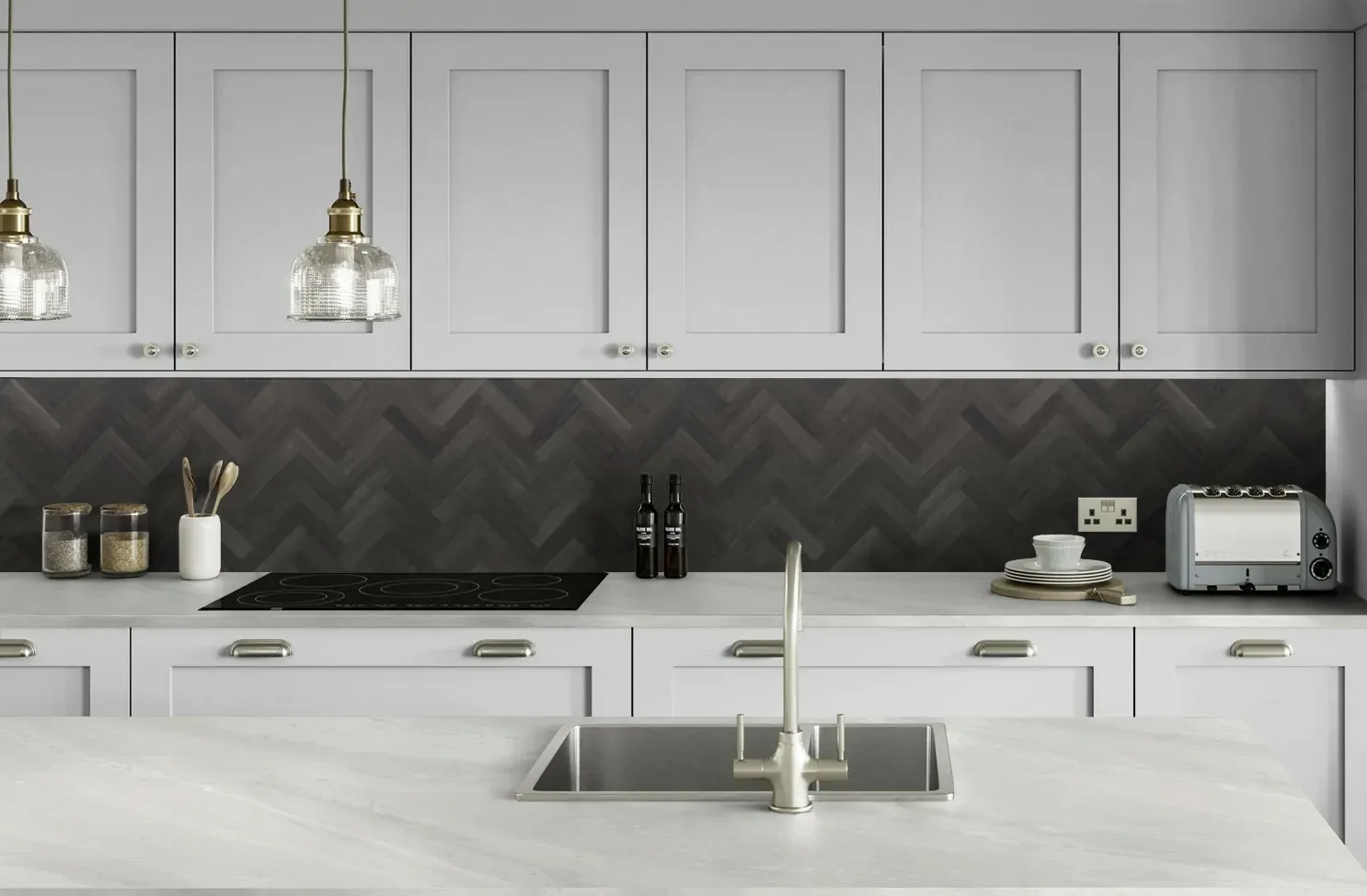
Laminate is a printed surface bonded to a particleboard core. It costs the least to buy and to fabricate, and current patterns from Formica and Wilsonart look far better than the laminate many people grew up with. It is the usual choice for rentals, basement suites and tight budgets. Our post on laminate for first-time homeowners covers where it makes sense.
Quartz and granite
Quartz and granite are the most common choices for kitchens in the region. Within each, the price climbs with the look. A solid white or speckled quartz usually costs less than a marble-look design with long veins, and a common grey or black granite usually costs less than a stone with dramatic movement. If you are weighing the two, see granite vs quartz for Southwestern Ontario homes.
Porcelain and exotic natural stone
Porcelain takes more care to cut and finish, especially in thicker formats or with mitred edges, which moves it toward the high end. Rare natural stones sit at the top because supply is limited and a single slab may have to cover the whole job.
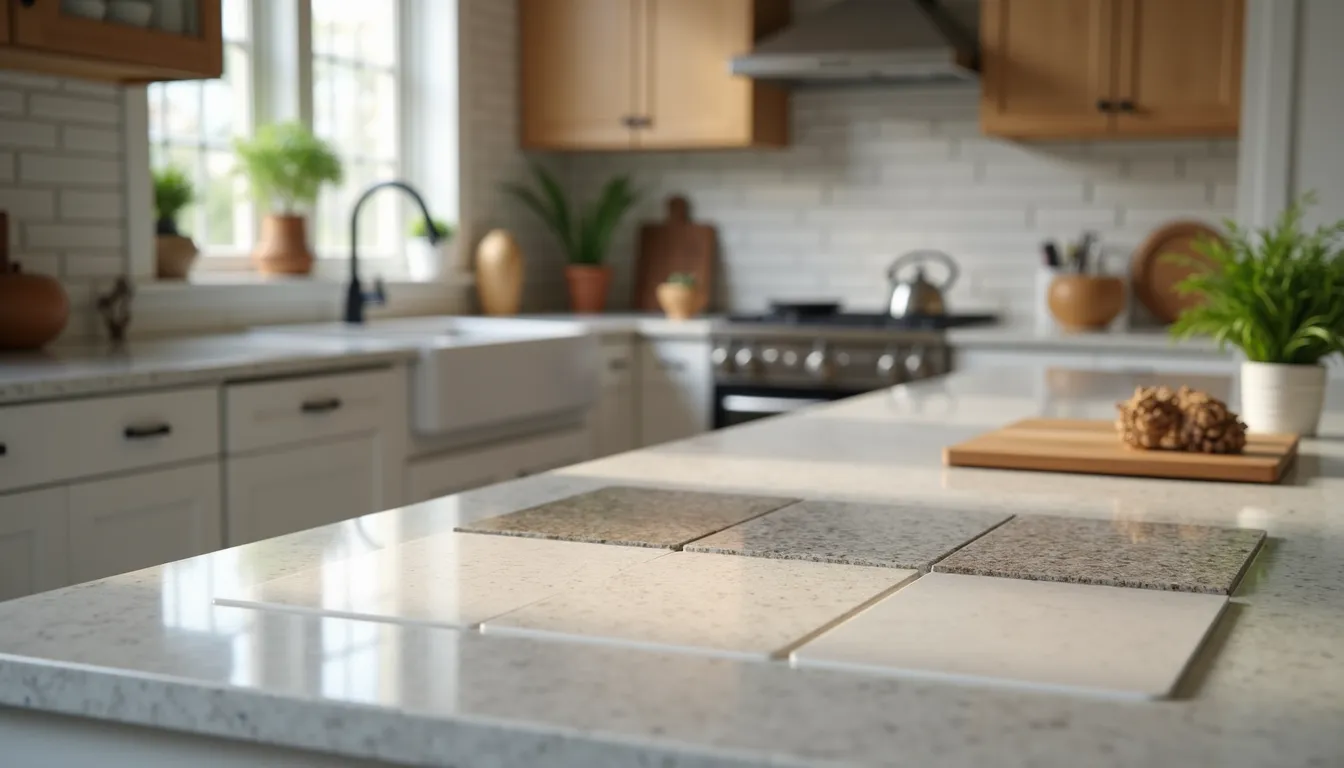
The slab you choose matters as much as the material
Within one material, the specific colour can shift the price more than any other choice. Natural stone pricing depends on the quarry, the size of the block and how much of it is available. Quartz pricing depends on the brand and how complex the pattern is.
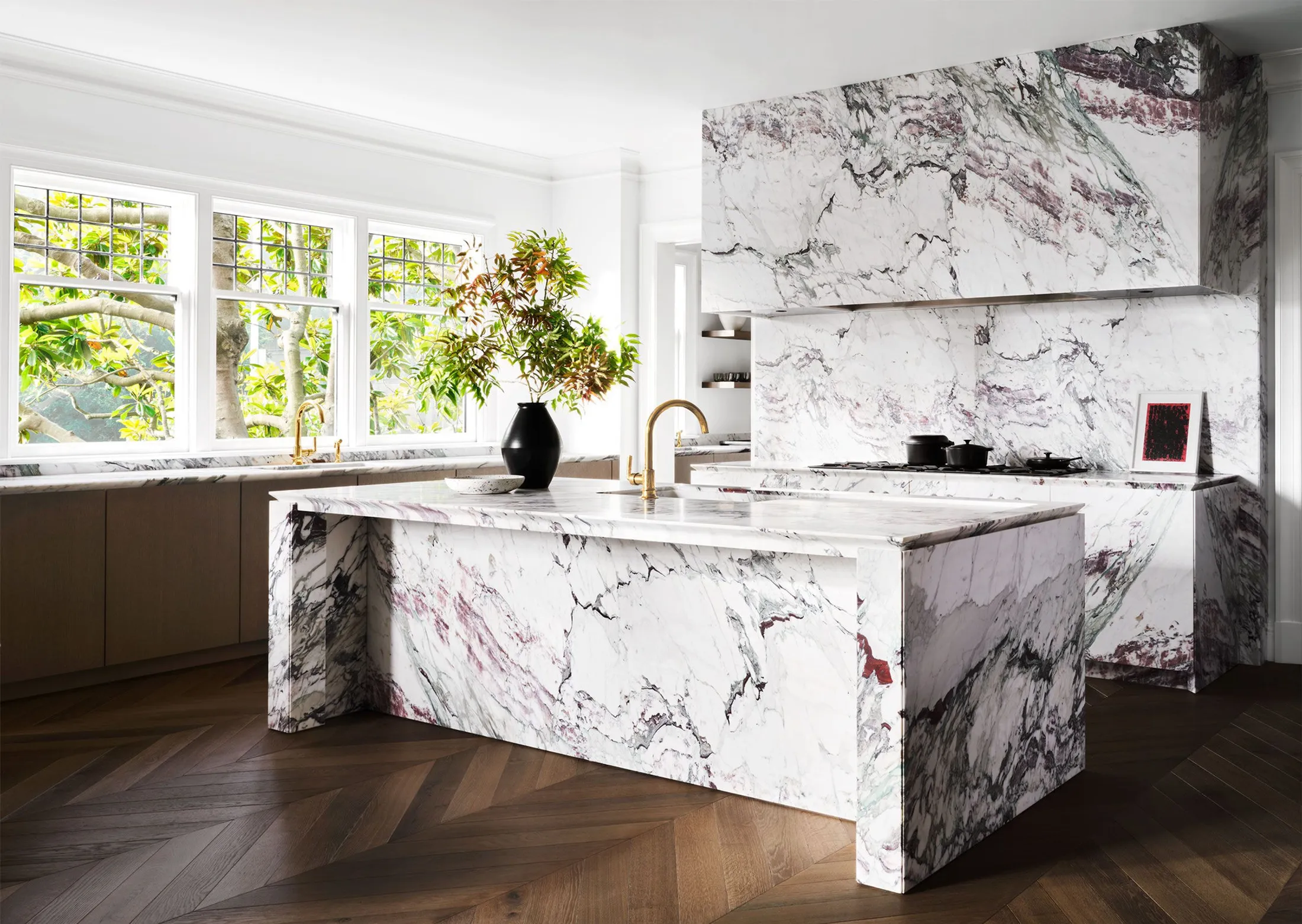
Slab size matters too. If your island is longer than the slab, you need either a seam or a larger slab, which usually costs more. Heavily veined designs can also need extra material so the veins line up across a seam or continue down a waterfall end.
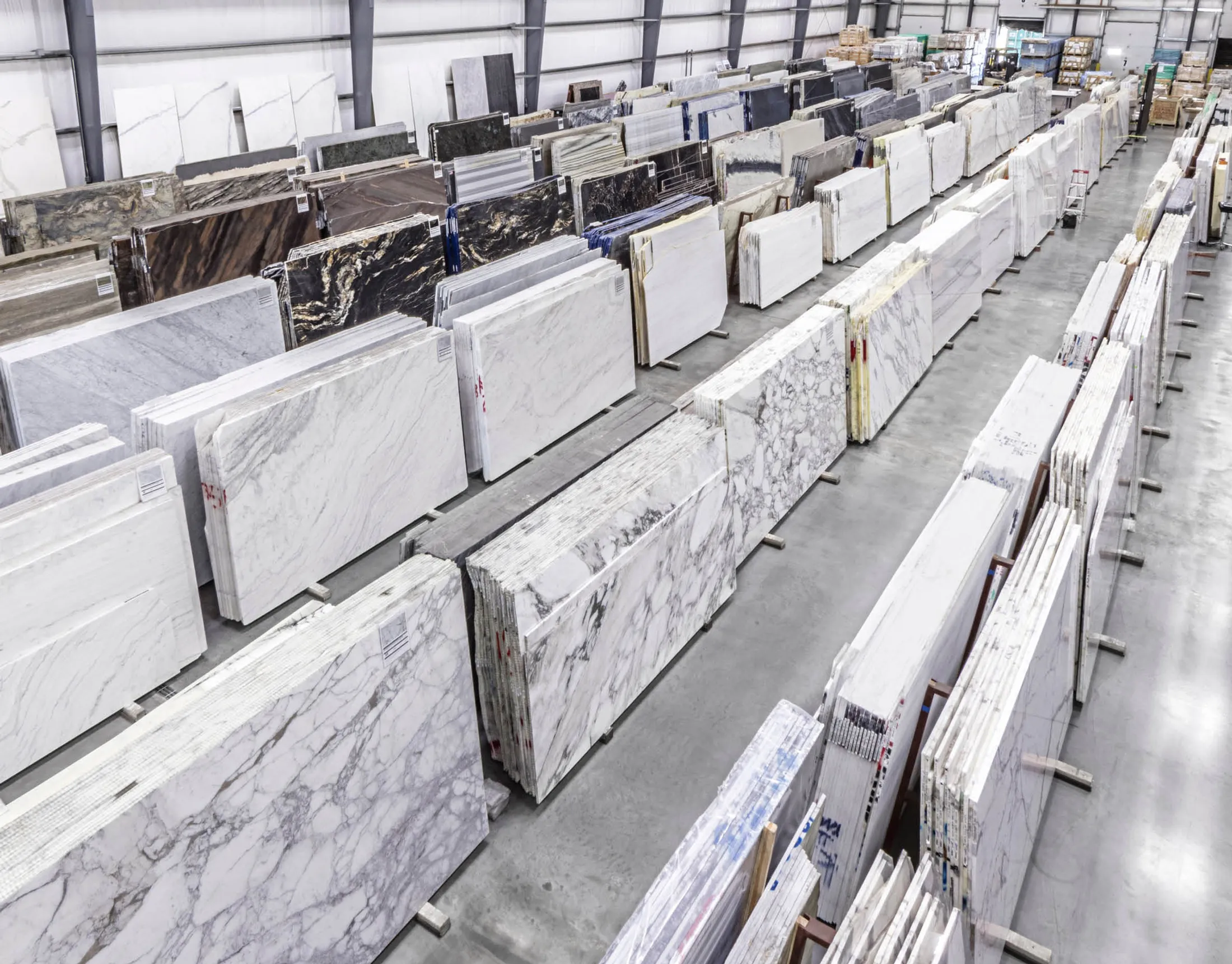
The quickest way to see the range is to walk our 10,000 sq ft stone gallery in Kitchener, or to browse the live slab and remnant inventory online. For a vanity, laundry top or small bar, a remnant can put a premium material within reach, which we cover in countertop remnants for vanities and small projects.
Size, layout and seams
Square footage is the base of every quote, but shape matters as well. An L-shaped kitchen with a peninsula and a separate island has more pieces, more seams and more finished edges than a straight run of the same area.
When we price a layout, we look at:
- Total square footage of countertop, including any stone backsplash
- The number of separate pieces and where the seams fall
- How efficiently the pieces fit on the slabs
- Overhangs for seating, which may need extra support
Small changes, like moving a seam or trimming an overhang, can sometimes let a layout fit on fewer slabs.
Thickness and edge profile
Most quartz and granite comes in 2 cm and 3 cm thicknesses, and the thicker slab costs more. Our guide to countertop thickness, 2 cm vs 3 cm explains when each makes sense.
Fabricators usually price edge work by the length of exposed edge. A simple eased edge is the standard choice. Profiles that take more shaping, such as an ogee, or a mitred edge that builds up the look of a thick slab, add labour. See countertop edge profiles explained for what each one looks like.
Cutouts and details
Every hole in a countertop has to be cut and finished, so each one appears on the quote. Common items include:
- An undermount sink cutout, which needs a polished inside edge
- A drop-in sink or cooktop cutout
- Faucet, soap dispenser and air gap holes
- Outlet cutouts in a stone backsplash
The type of sink changes the work involved. Our post on undermount, drop-in and farmhouse sinks goes through the options. We also sell sinks, faucets and accessories, so they can be planned on the same quote.
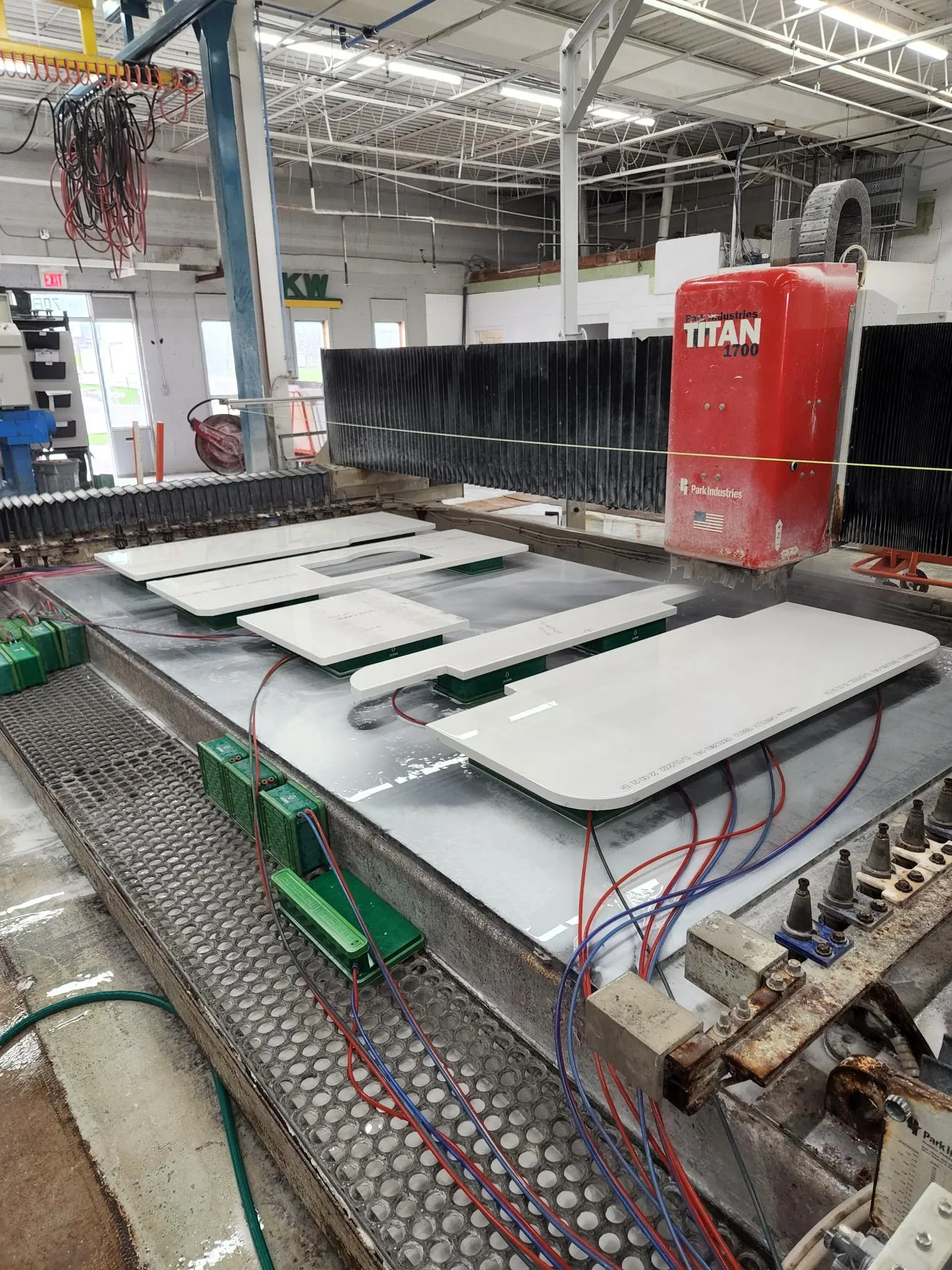
Backsplashes, waterfalls and other extras
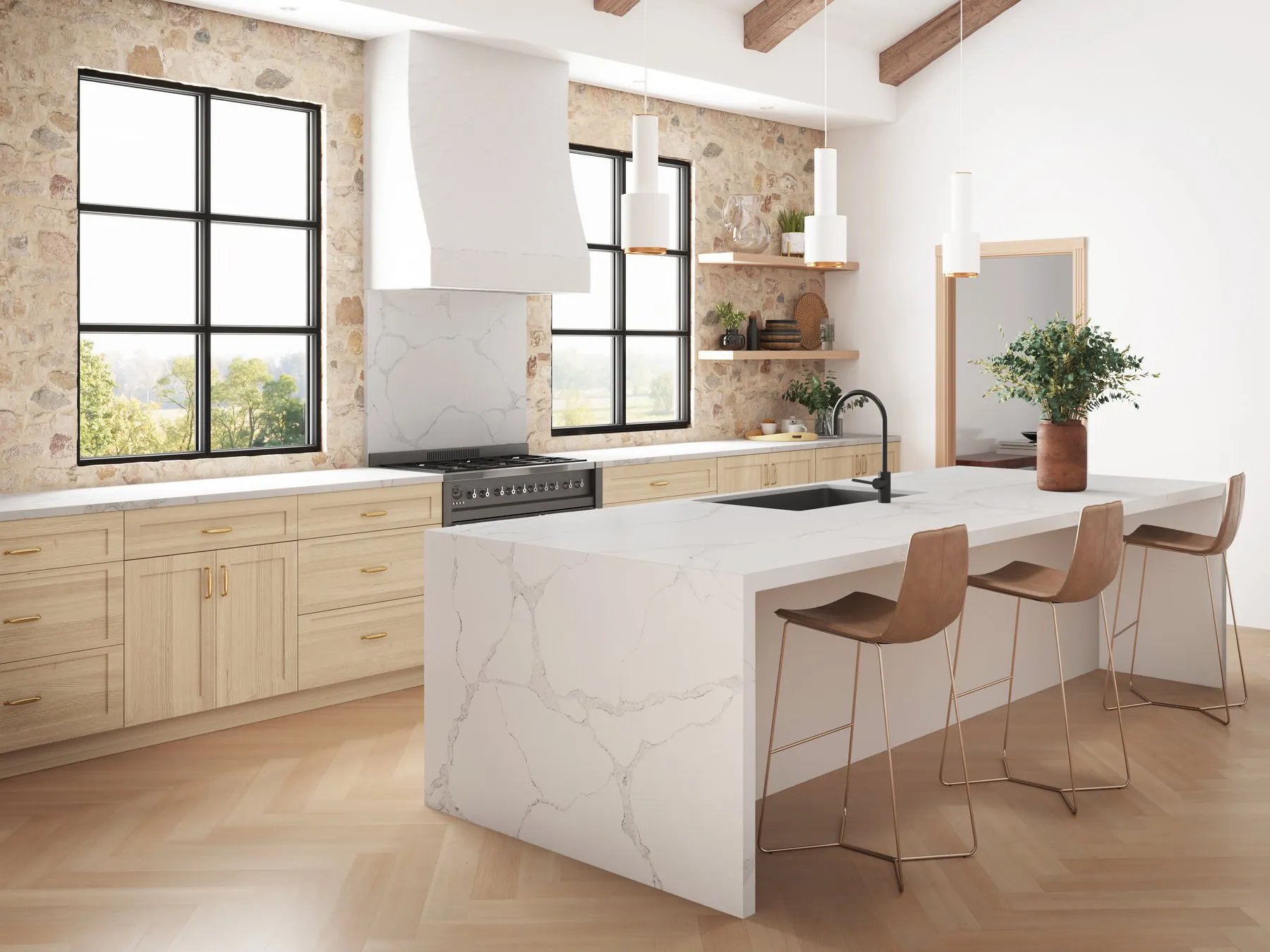
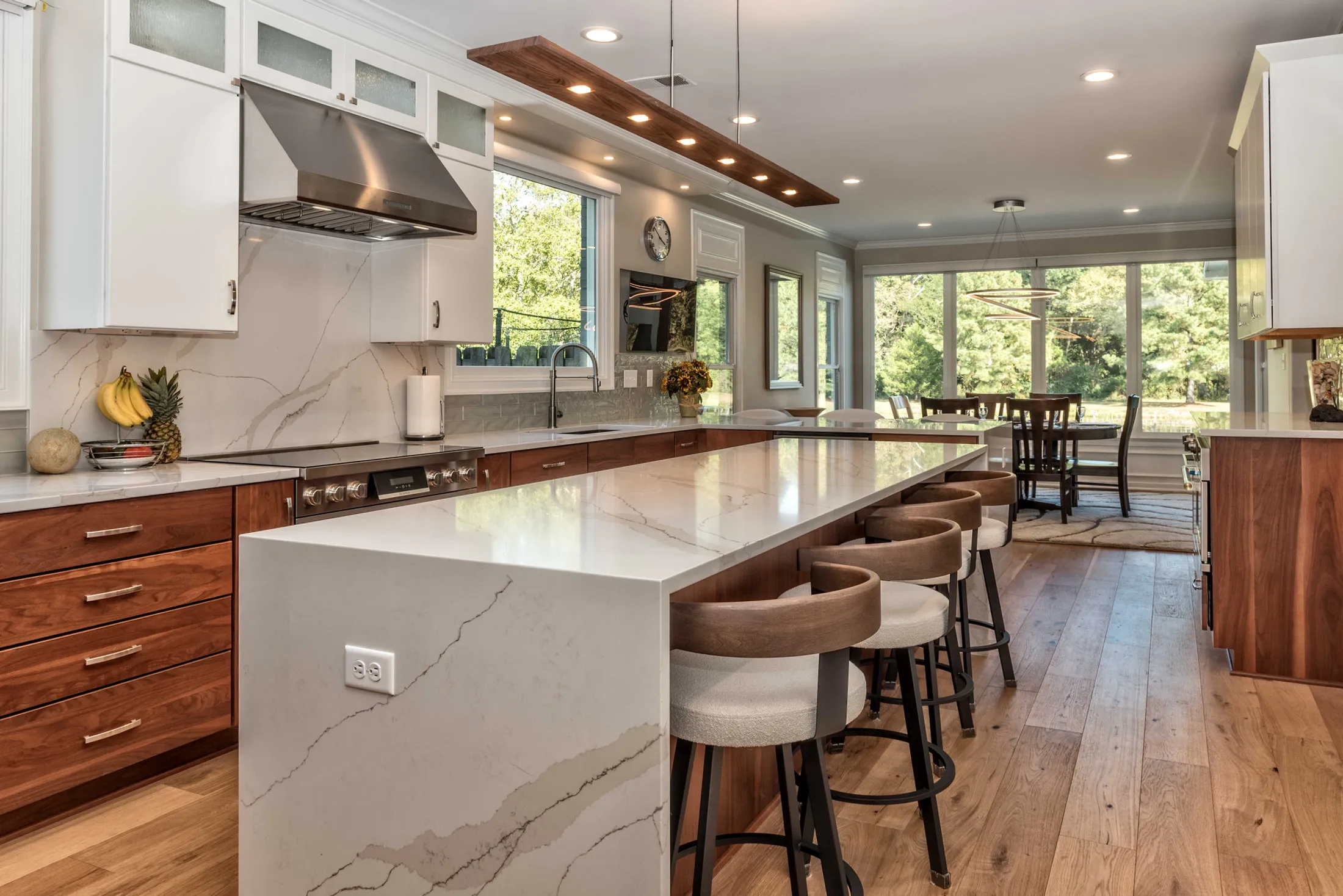
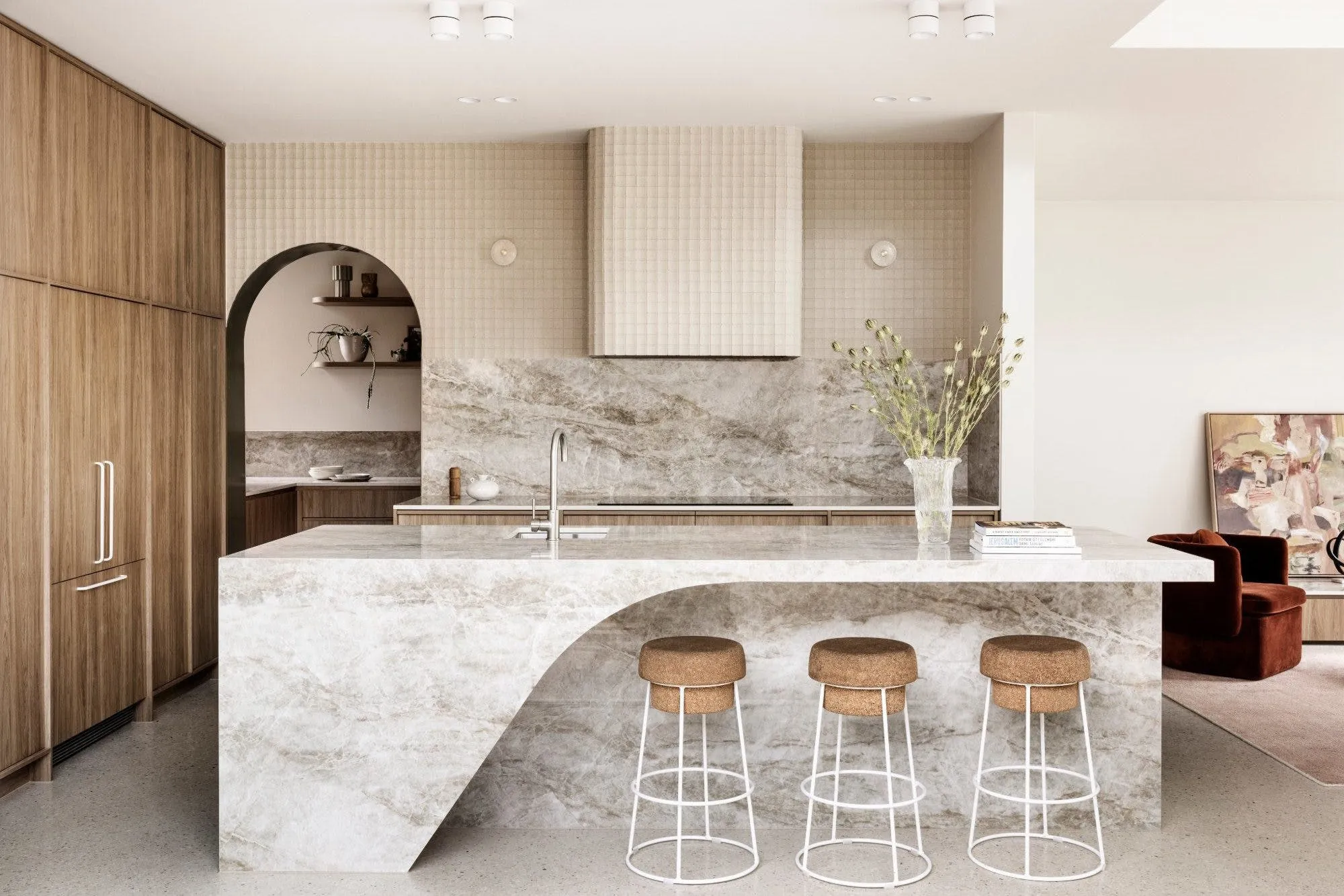
Features that use more slab add both material and fabrication time. A full-height stone backsplash behind a range, or waterfall ends that carry the countertop down to the floor, can each use a large share of a slab. Many people decide they are worth it, but it helps to know where the money goes. We cover both in waterfall islands and full-height backsplashes.
Installation and site conditions
Installation covers more than setting the countertop in place. Questions that affect a quote:
- Does the old countertop need to be removed and disposed of?
- Who will disconnect and reconnect the plumbing and the cooktop?
- Are the cabinets level and strong enough to carry stone?
- Is access easy, or are there stairs, tight hallways or a condo elevator to book?
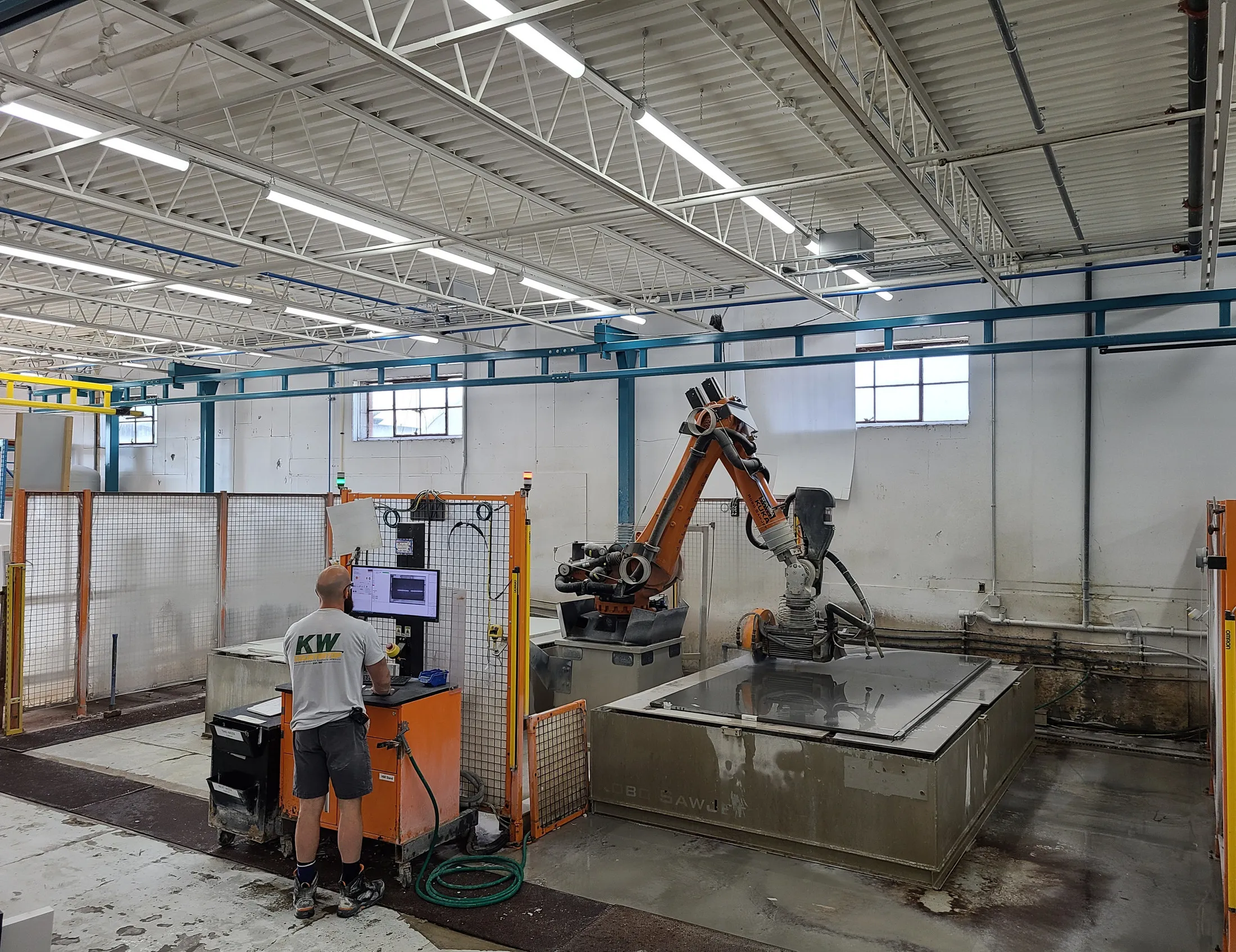
We measure with precise digital laser templating, and our installers are our own in-house crews, never subcontracted. That keeps the person who quotes the job, the shop that cuts it and the crew that installs it working from the same information. For what to do before templating day, see how to prepare for countertop templating and installation.
How to get an accurate quote
An estimate is only as good as the information behind it. To get a firm number quickly, bring or send:
- A rough drawing of your layout with measurements, or the plans from your kitchen designer
- The sink and faucet models, or a note that you want to choose them with us
- Cooktop or range specifications
- Your preferred material and colour, or the two or three you are deciding between
When you compare quotes, check that each one includes the same items: templating, fabrication, edge profile, cutouts, sink, installation and removal of the old tops. A lower number that leaves out half of those is not a lower price.
When you are ready for a number, send us your layout through our quote form or bring it to the Kitchener stone gallery, and we will price it on the slab you actually like.