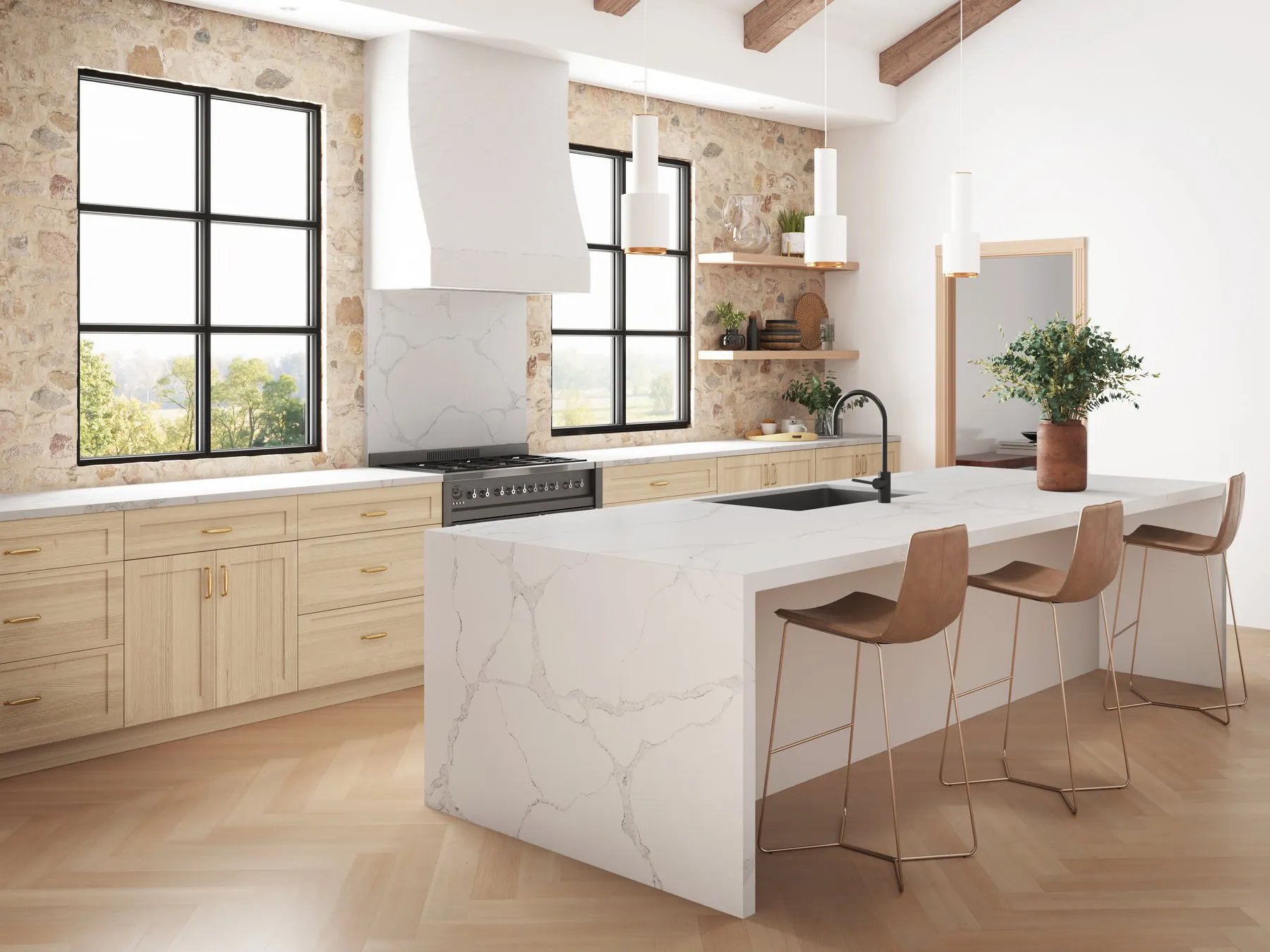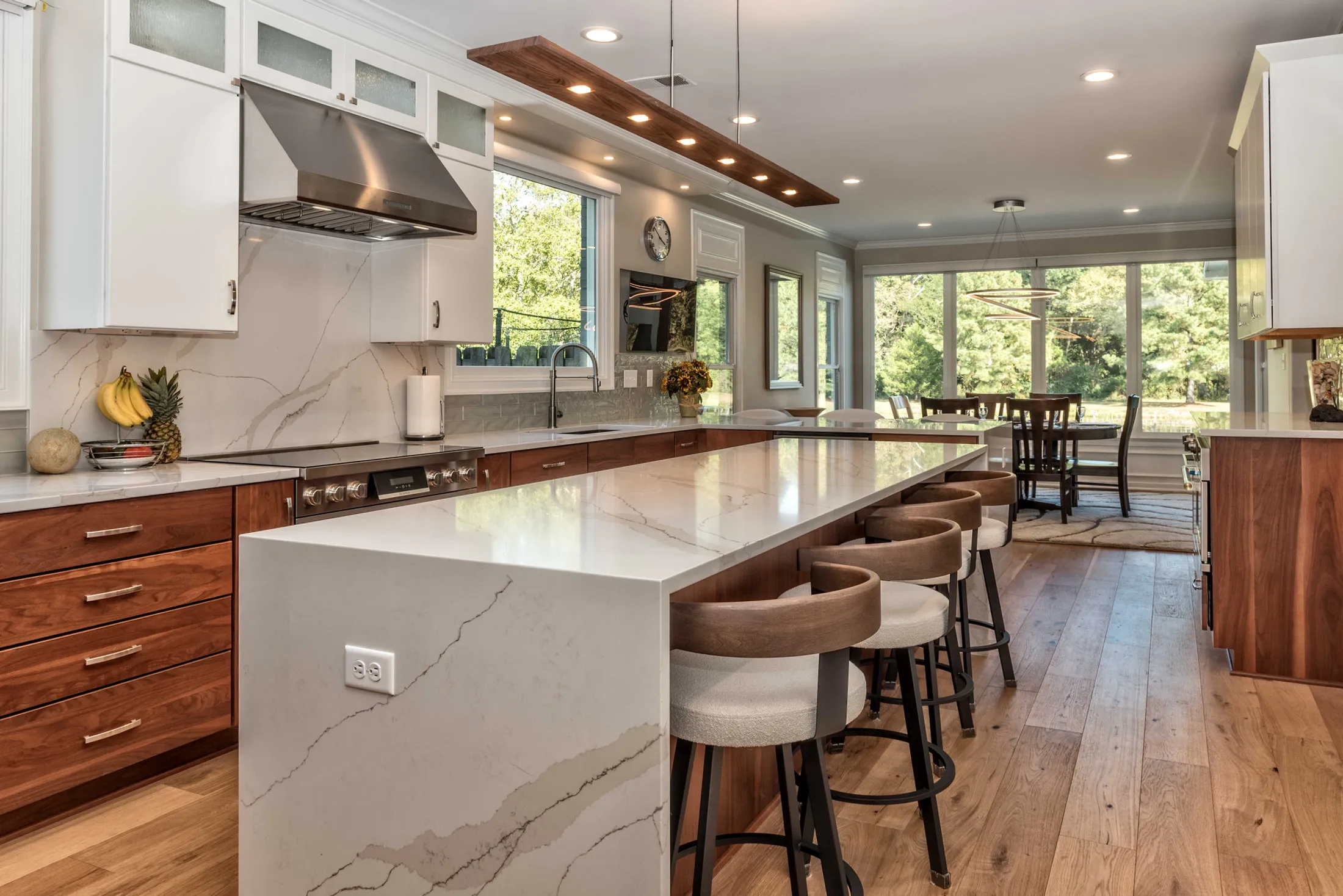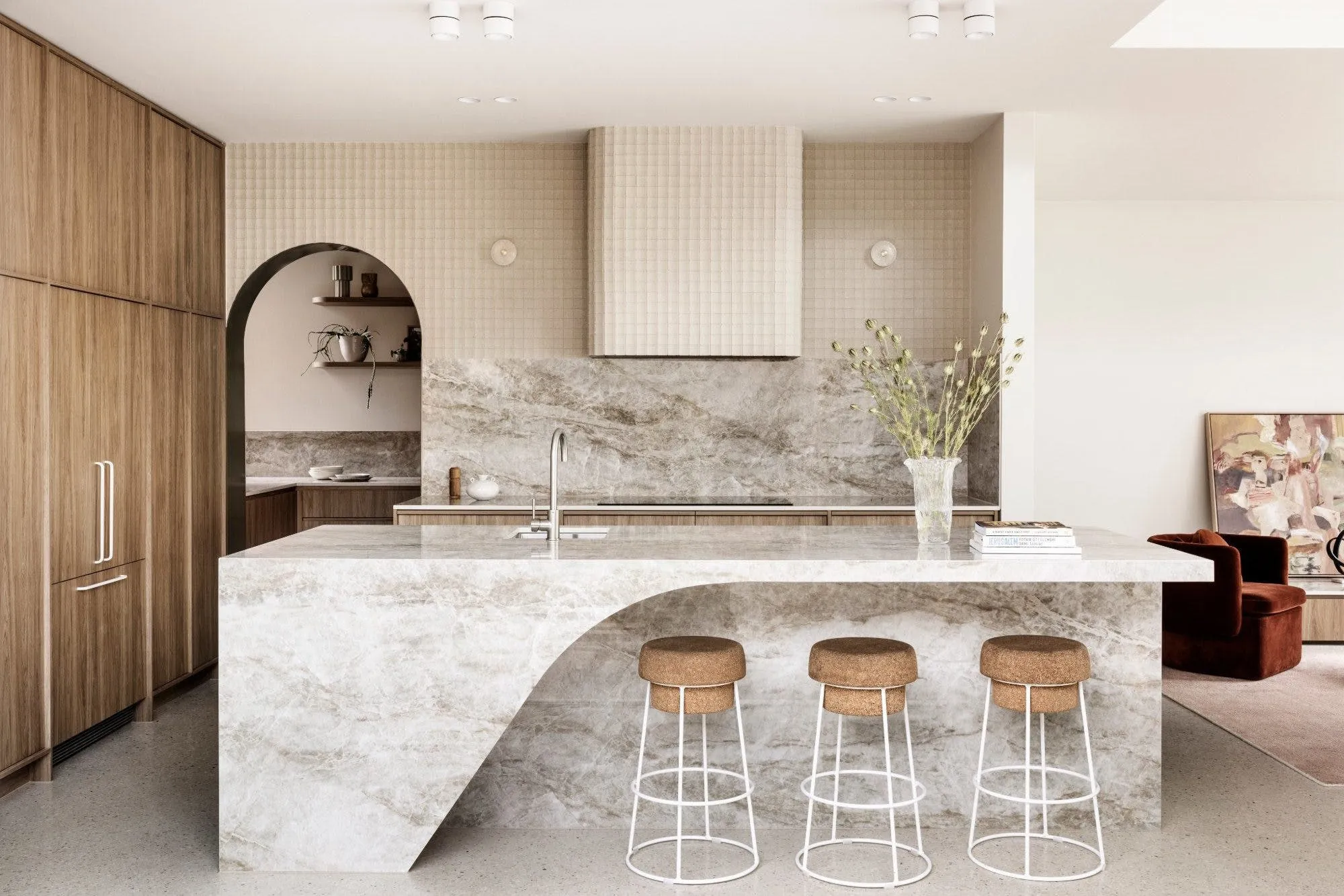
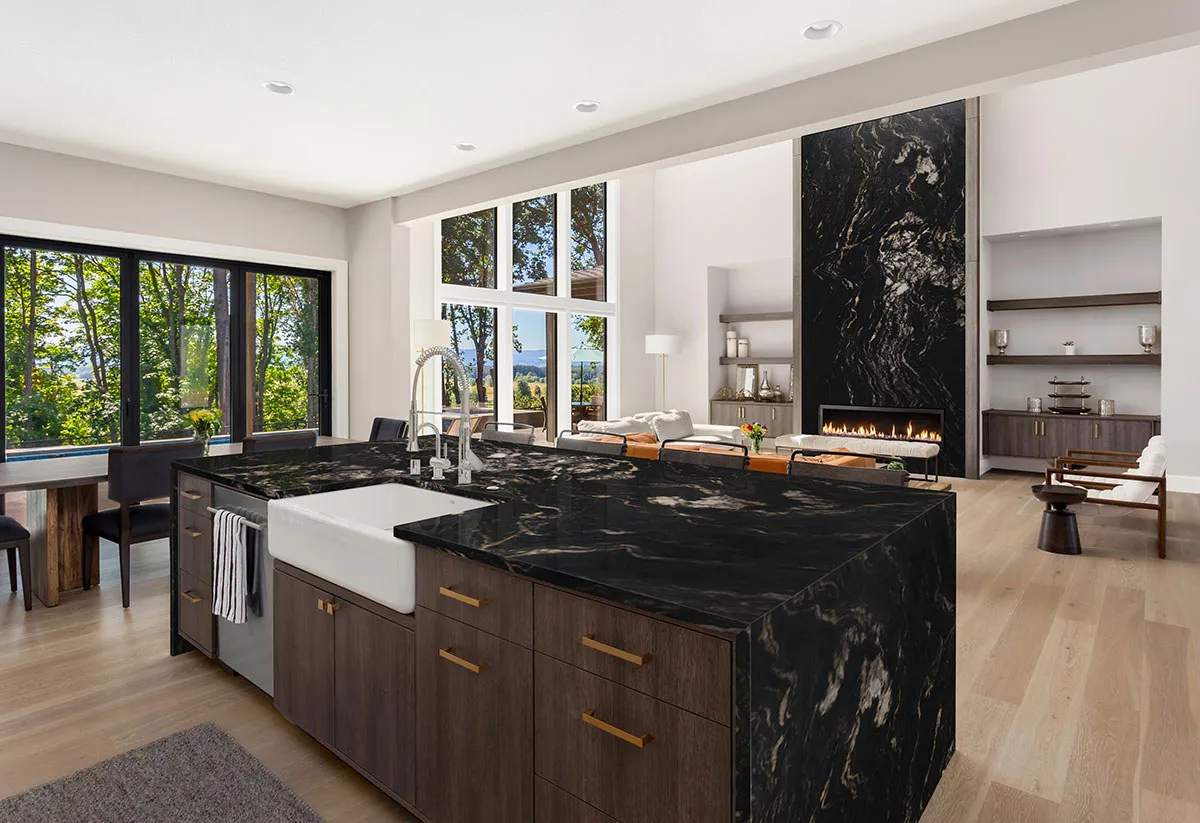
For quartz, granite and porcelain countertops, an undermount sink is the most common choice. The sink mounts beneath the countertop, the cutout edge is polished smooth, and you can wipe crumbs and spills straight into the bowl. A drop-in sink (also called top-mount) sits on top of the counter with a visible rim, and it is the standard choice for laminate. A farmhouse or apron-front sink has an exposed front panel and works with stone or laminate, as long as the cabinet is built for it.
The right sink depends on your countertop material, your cabinets, how you like to clean and your budget. Whichever type you choose, pick the exact model before templating, because the cutout is made to fit that sink. Here is how each type works and where it fits best.
Undermount sinks
An undermount sink is attached to the underside of the countertop with clips and adhesive, then sealed along the joint. The countertop meets or overlaps the edge of the bowl, and the cutout edge is polished so it looks finished.
Why people choose them
- No rim on the counter, so cleanup is a single wipe into the sink
- A clean, modern look that shows off the countertop
- Slightly more usable counter space around the bowl
What to know
Undermount sinks need a countertop with a solid, water-resistant edge at the cutout, which is why they pair with quartz, granite, porcelain and solid surface. With standard laminate, the cutout would expose the particleboard core to water, so a drop-in sink is the usual choice there.
You can also choose how much of the sink rim shows, which is called the reveal:
- Positive reveal: a thin strip of the sink’s top edge stays visible
- Negative reveal: the countertop extends slightly past the edge of the bowl
- Flush reveal: the countertop edge lines up with the bowl
Each looks a little different and cleans a little differently, so decide before fabrication.
Drop-in sinks
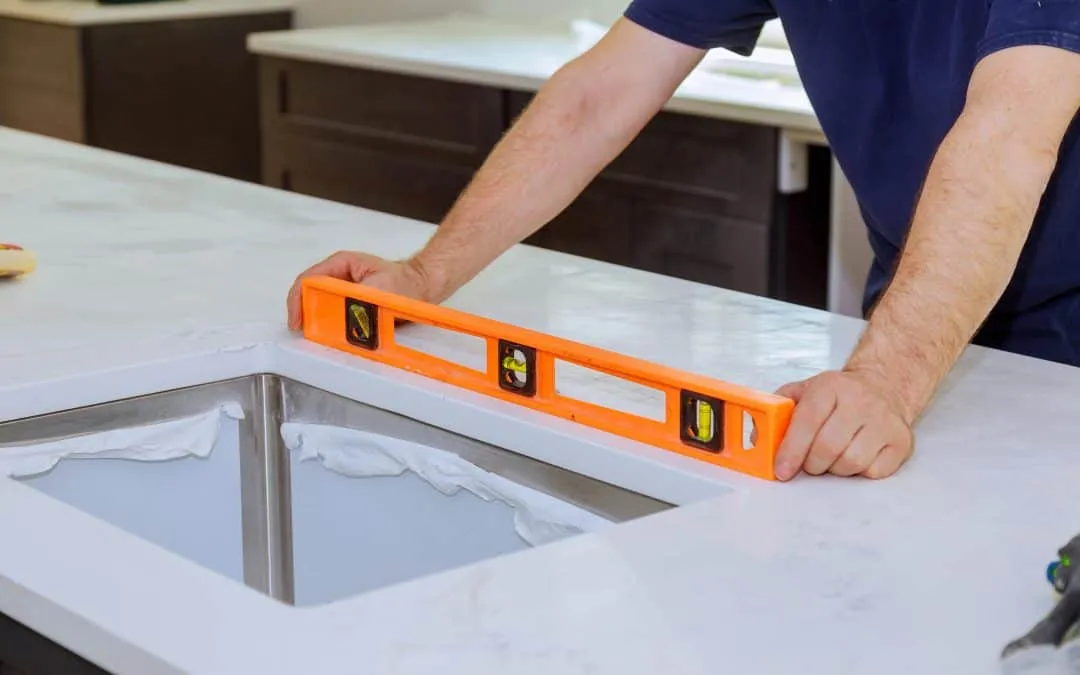
A drop-in sink lowers into the cutout from above, and its rim rests on the countertop. The rim covers the cut edge, so the cutout does not need to be polished.
Why people choose them
- They work with every countertop material, including laminate
- They are usually the more budget-friendly option
- They are easier to swap out later without disturbing the countertop
What to know
The rim sits above the counter, so crumbs collect along it and the bead of caulk around it needs regular cleaning. Drop-in sinks are a practical choice for rentals, laundry rooms, basement suites, wet bars and any laminate countertop.
Farmhouse (apron-front) sinks
A farmhouse sink is deep, with a front panel that replaces part of the cabinet face. They come in fireclay, stainless steel, cast iron and other materials, and they suit both traditional and modern kitchens.
What to know
- They need a sink base cabinet designed or modified for an apron-front sink, so bring your cabinet supplier in early
- Many are heavy and need proper support inside the cabinet
- The countertop is cut to fit around the sink, either resting on it or wrapping behind the apron
- Sizes vary more than other sink types, so the sink should be on site at templating
Comparing the three
| Undermount | Drop-in | Farmhouse | |
|---|---|---|---|
| Best countertop match | Quartz, granite, porcelain, solid surface | Any, standard for laminate | Quartz, granite, porcelain, laminate |
| Cleanup | Easiest, wipe straight in | Rim and caulk line collect debris | Easy, with a deep bowl |
| Look | Clean and modern | Practical, traditional | A focal point |
| Plan for | Reveal style, polished cutout | Rim profile | Cabinet, support, sink on site |
Bathroom vanities
The same choices apply in bathrooms. Undermount oval and rectangular sinks are the most common pairing with quartz and granite vanity tops. Vessel sinks sit on top of the counter and need only a drain hole, though the faucet height has to suit the bowl. A vanity is also a good place to use a premium stone for less, since a small top can often come from a remnant. See countertop remnants for vanities and small projects.
Bowls, faucet holes and other details
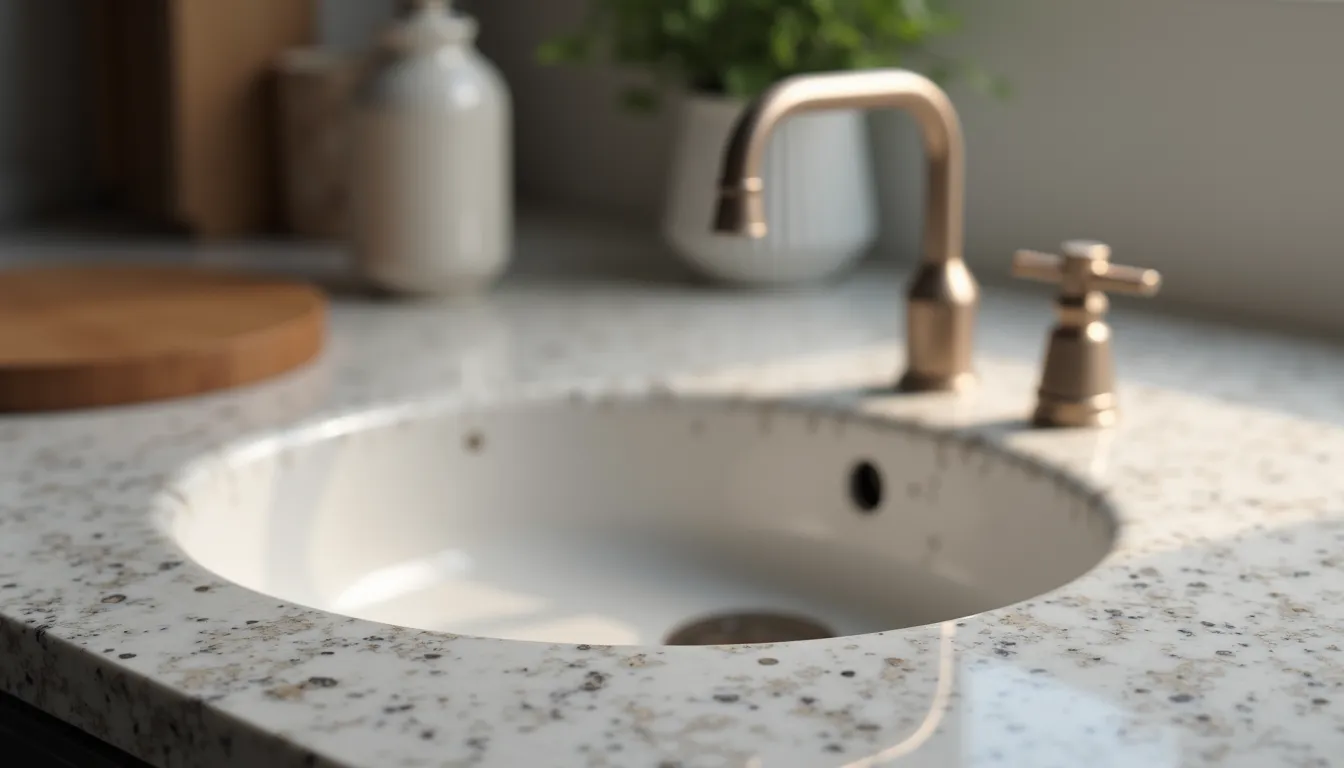
Beyond the sink type, a few details shape the cutout:
- Bowl layout. Single, double, or a large single with a low divider. A big single bowl handles sheet pans and stock pots, while a double suits washing and rinsing at the same time.
- Faucet holes. Count them: faucet, soap dispenser, filtered water tap, and an air gap if your dishwasher installation needs one.
- Position. Centre the sink on a window or on its cabinet, and leave usable counter space on both sides.
- Cabinet size. The sink has to fit the sink base cabinet with room for clips and plumbing.
Each cutout and hole is part of the fabrication, so they also show up in your quote. Our guide to what sets the price of a new countertop explains how.
Looking after the sink area
The area around the sink sees more water than any other part of the countertop, so it deserves a little attention:
- Check the joint. Look at the sealant line between an undermount sink and the countertop once or twice a year, and have it redone if it cracks or pulls away.
- Refresh the caulk. On a drop-in sink, replace the bead around the rim when it discolours or lifts, so water cannot get under the rim.
- Wipe standing water. Water that sits around the faucet base can leave mineral spots on any surface, and on granite it is the first place to show when the sealer needs renewing.
- Use gentle cleaners. Mild soap or a pH-neutral cleaner is enough for both the sink and the stone around it.
Our countertop care guide covers cleaning and sealing for each material.
Before templating day
We measure with precise digital laser templating, and the cutouts are made to the sink and fixtures you have chosen. Before your appointment:
- Choose the exact sink and faucet models, and have the sink on site if you can
- Have the cooktop or range specifications ready
- Decide on the reveal if you are going with an undermount sink
- Make sure the cabinets for a farmhouse sink are installed and level
Our post on how to prepare for countertop templating and installation has the full checklist. We also sell sinks, faucets and accessories, so you can choose them alongside your countertop and plan everything together.
If you are still deciding, book a visit to our Kitchener or Guelph showroom and bring your cabinet layout, and we will help you match the sink to your countertop.