A countertop remnant is a leftover piece of a full slab, usually the part that remains after a larger project is cut. It’s the same quartz, granite or porcelain as the full slab, just smaller. For a bathroom vanity, laundry room counter, bar top or fireplace surround, a remnant often covers the whole job, so you aren’t paying for a full slab when you only need a corner of one.
The trade-off is that remnants are one of a kind and the selection changes constantly. If you’re flexible on colour and know your measurements, remnants are one of the most practical ways to get stone into the smaller rooms of your house. If you need an exact colour or a perfect match to your kitchen, a full slab may be the better route.
What a countertop remnant is (and isn’t)
When a kitchen is cut, the templates are laid out on the slab to use as much of it as possible. What’s left over, sometimes a long strip and sometimes a generous rectangle, becomes a remnant.
A remnant isn’t a second or a reject. It’s the same material with the same finish as the slab it came from. The only real differences are size and the fact that there’s usually only one of it.
At KW Countertop, remnants sit alongside full slabs in our 10,000 sq ft stone gallery in Kitchener, which carries the region’s largest selection of full slabs and remnants. Current stock is listed in our online Stone Gallery, so you can see what’s available before you visit.
Projects that suit a remnant
Remnants work best where the countertop is small and doesn’t need to match anything else exactly:
- Bathroom vanities, single or double, in ensuites and powder rooms
- Laundry rooms, for a folding counter or a top over a front-load washer and dryer
- Wet bars and coffee stations
- Fireplace surrounds and hearths
- Shower curbs, benches and niche shelves
- Window sills in kitchens and bathrooms
- Built-in desks and mudroom benches
- Small outdoor features in granite or porcelain (quartz generally isn’t recommended for direct sun; see our post on outdoor countertops in an Ontario climate)
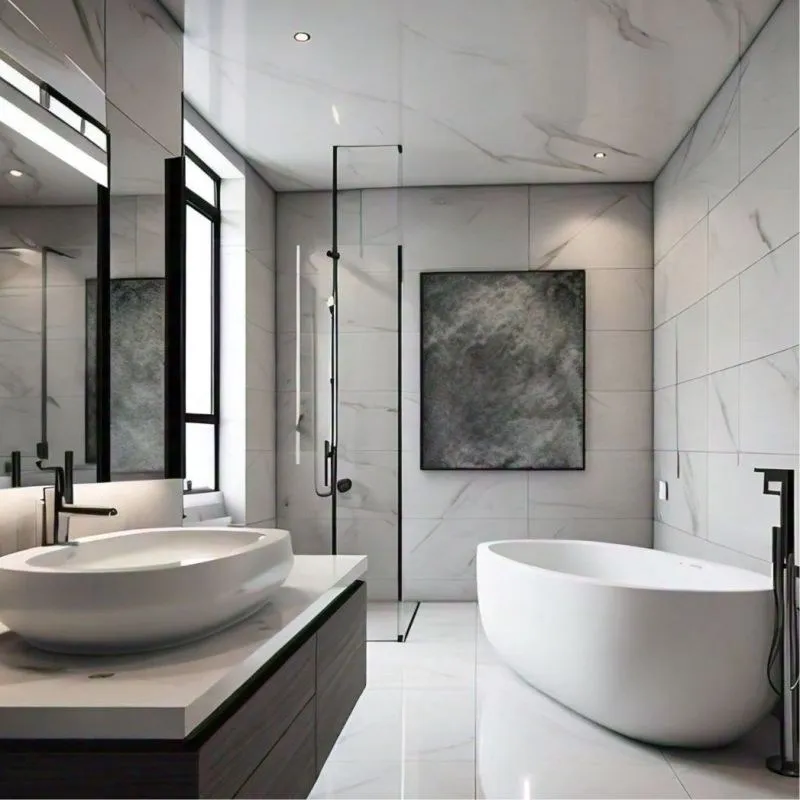
Bathroom vanities are the most common. A vanity top is small enough that a remnant often covers it with room to spare, and stone holds up well to water, makeup and hair products.
Measure before you shop
Remnant shopping goes faster when you know what size you need. Before you visit:
- Measure the cabinet. Note the width and depth of the vanity or base, plus how far you want the top to overhang the front and any exposed sides.
- Count the extra pieces. Backsplashes and side splashes need material too. A vanity tucked between two walls might need a back splash and two side splashes.
- Know your sink. Undermount, vessel or drop-in, and the model if you have one. The cut-out has to sit far enough from the edges of the piece. Our post on undermount vs drop-in sinks explains the differences.
- Note the faucet. A single-hole, widespread or wall-mounted faucet changes what’s cut into the top.
- Take photos of the room, the cabinet colour and the flooring.
With that in hand, our team can tell you quickly whether a remnant is big enough, and whether one remnant could even cover two small projects.
What to check before you commit
Size after trimming
Remnant edges are rough-cut. When we fabricate your top, we trim back to clean material, so a remnant needs to be a little bigger than the finished top. Let us check the numbers rather than measuring the remnant with a tape at the gallery and hoping for the best.
Pattern and veining
On a small piece, one big vein can dominate. Look at where the movement falls and picture where your sink cut-out will land. With quartz the pattern is usually fairly consistent, but with granite and marble-look porcelain, the section you end up with makes a real difference.
Thickness
A remnant is whatever thickness its original slab was, usually 2 cm or 3 cm. Either can work for a vanity, and a mitred edge can make a thinner piece look heavier. Our guide to 2 cm vs 3 cm countertops explains the trade-offs.
Matching more than one room
If you want the ensuite and the powder room to match, make sure there’s enough material for both before you start. There’s usually only one of each remnant, and once it’s used, that exact piece can’t be reordered.
Why remnants make sense for small jobs
The appeal is practical. Buying a full slab for a vanity top means paying for far more stone than you’ll use. A remnant lets you choose a quality quartz, granite or porcelain for a small space without that waste. Price depends on the material, the size and the fabrication involved, so ask for a quote on the specific piece. Our post on countertop cost factors in Waterloo Region covers what drives the number.
Remnants also suit landlords and investors finishing a basement suite or rental unit, where a durable stone vanity is a sensible upgrade. Our notes on countertops for basement apartments go into that in more detail.
There’s an environmental upside too: a remnant puts good stone to work instead of leaving it on a rack.
How a remnant project works
A remnant job follows the same steps as a full kitchen, just on a smaller scale:
- Choose the piece. Browse the Stone Gallery online, then see it in person at our Kitchener gallery. Ask whether the piece can be set aside while your project is confirmed.
- Template. Once the vanity or cabinet is installed, we take precise digital laser measurements.
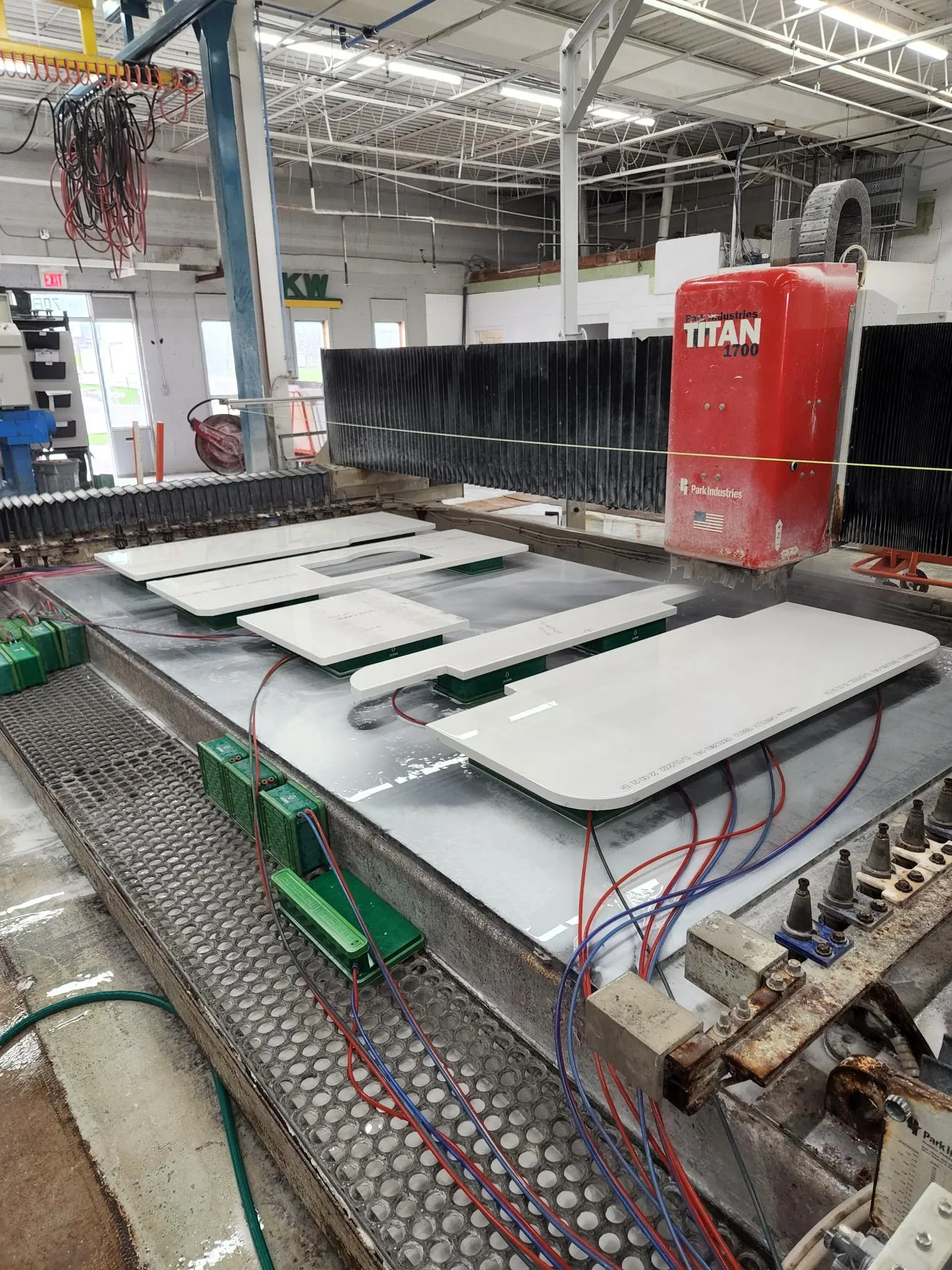
- Fabricate. The remnant is cut, edged and polished in our Kitchener production facility, including the sink and faucet cut-outs.
- Install. Our own trained in-house crew installs it. We never subcontract installation, whether it’s a full kitchen or a single vanity.
Homeowners from Kitchener, Waterloo, Cambridge and Guelph often pair a remnant vanity with a larger kitchen project, but a single remnant top is a perfectly good reason to visit. See more of our residential work, from kitchens to vanities, showers and fireplaces.
When a full slab is the better choice
Remnants aren’t right for every job. Go with a full slab when:
- You need a specific colour that isn’t in remnant stock
- The bathroom has a long vanity or several connected pieces
- You want the vanity to match your kitchen countertops exactly
- The design includes a full-height backsplash or wall cladding
For your next step, check the remnants currently listed in our online Stone Gallery, note a few you like along with your measurements, and contact us to confirm they’ll fit before you visit.