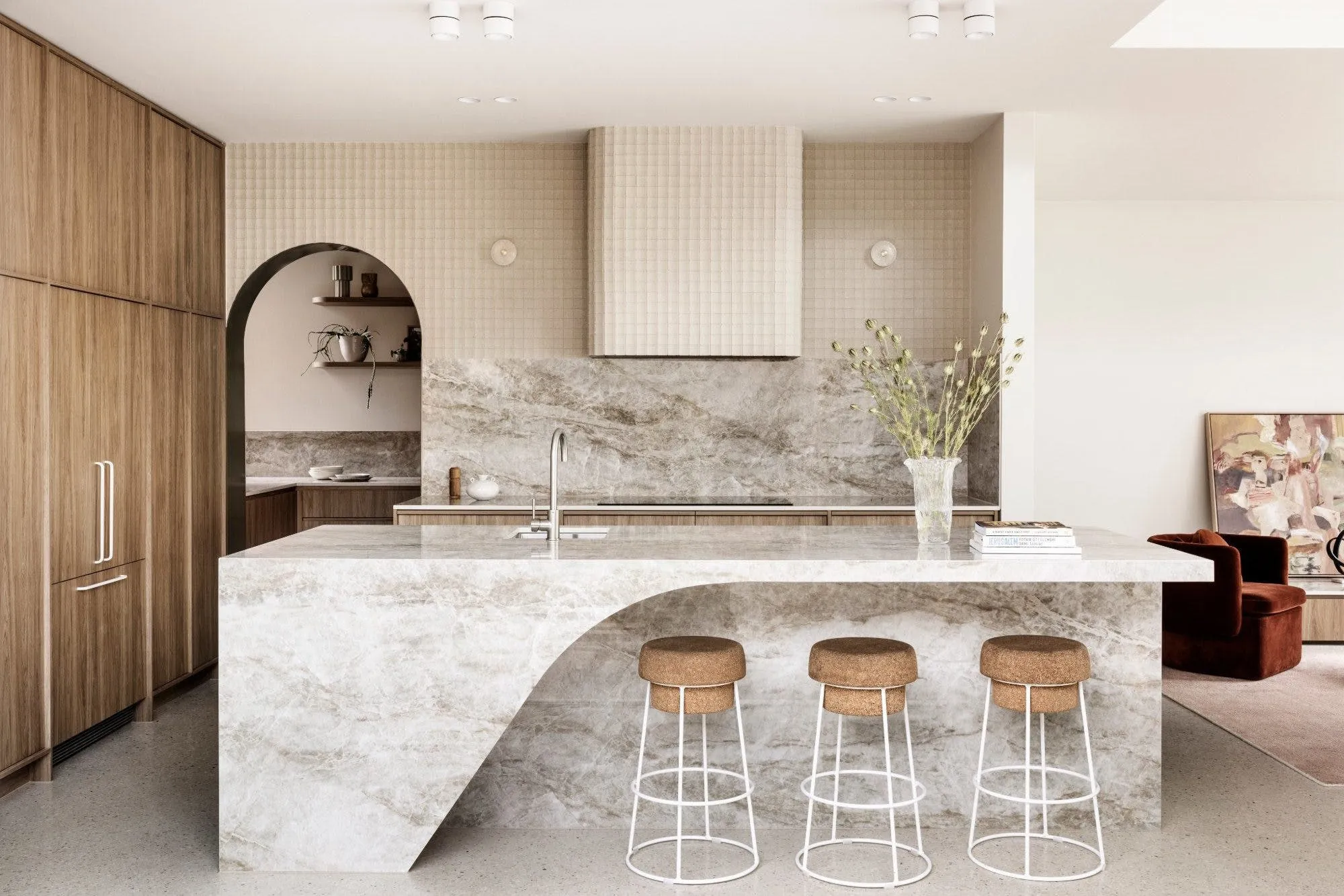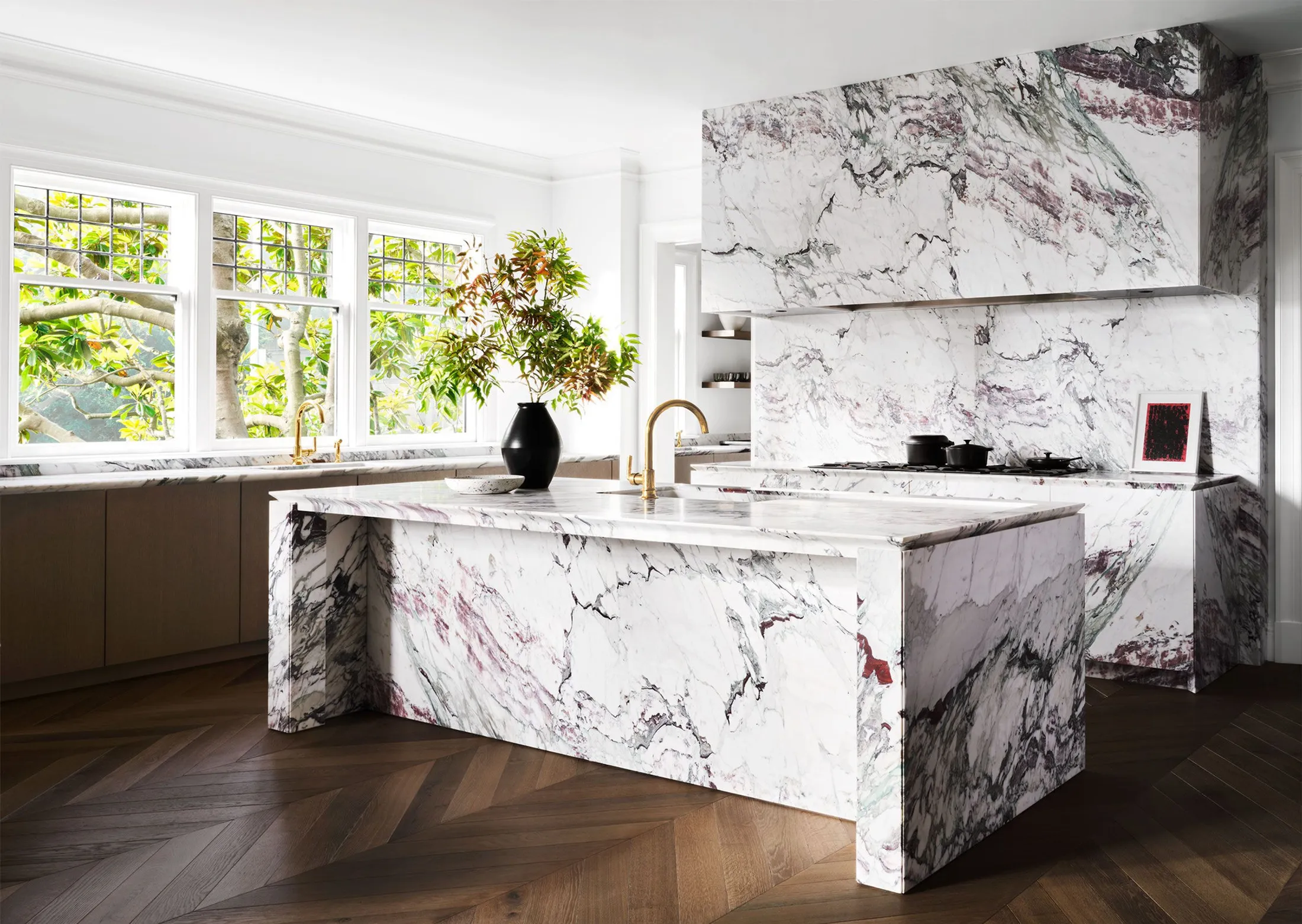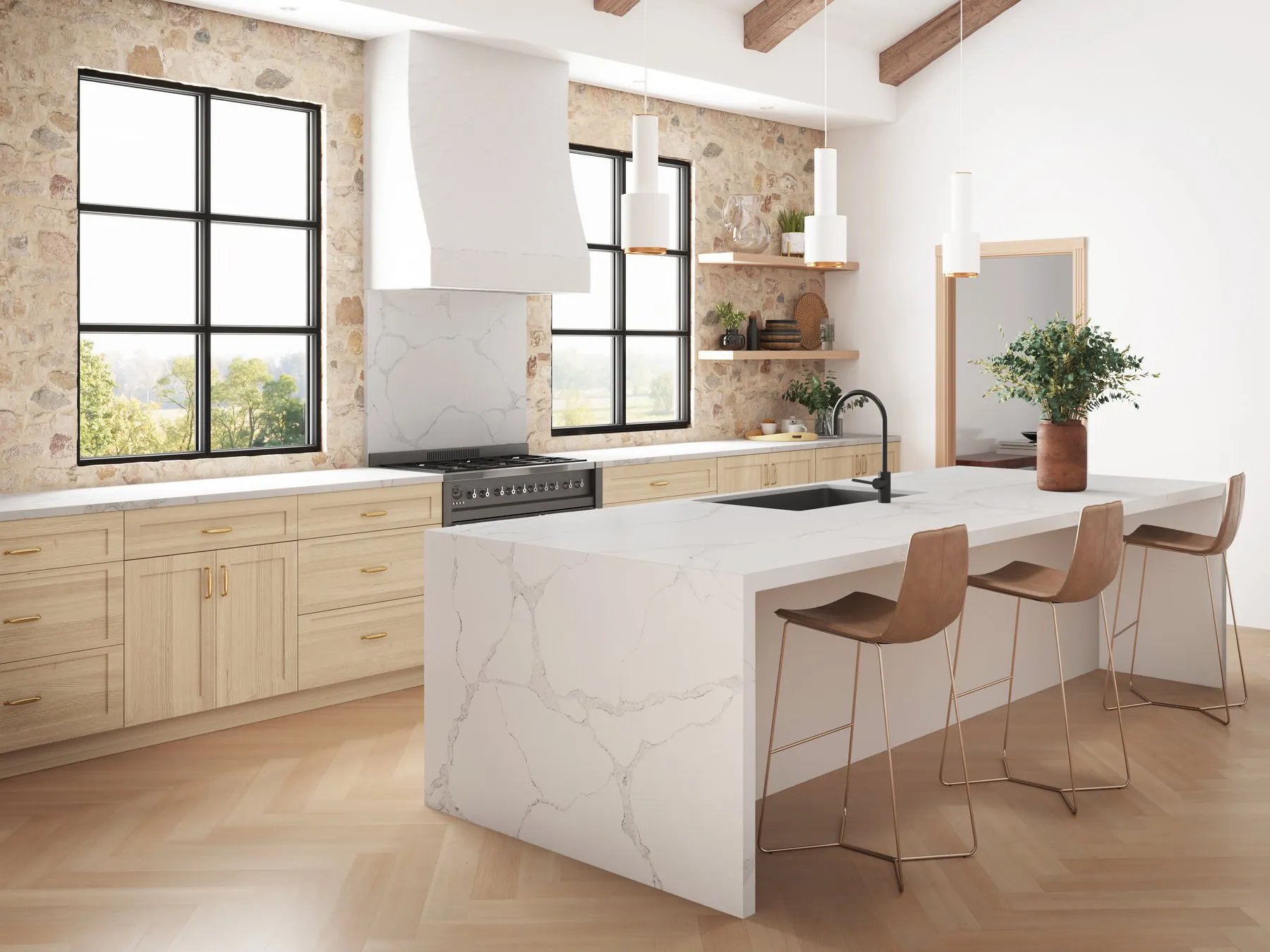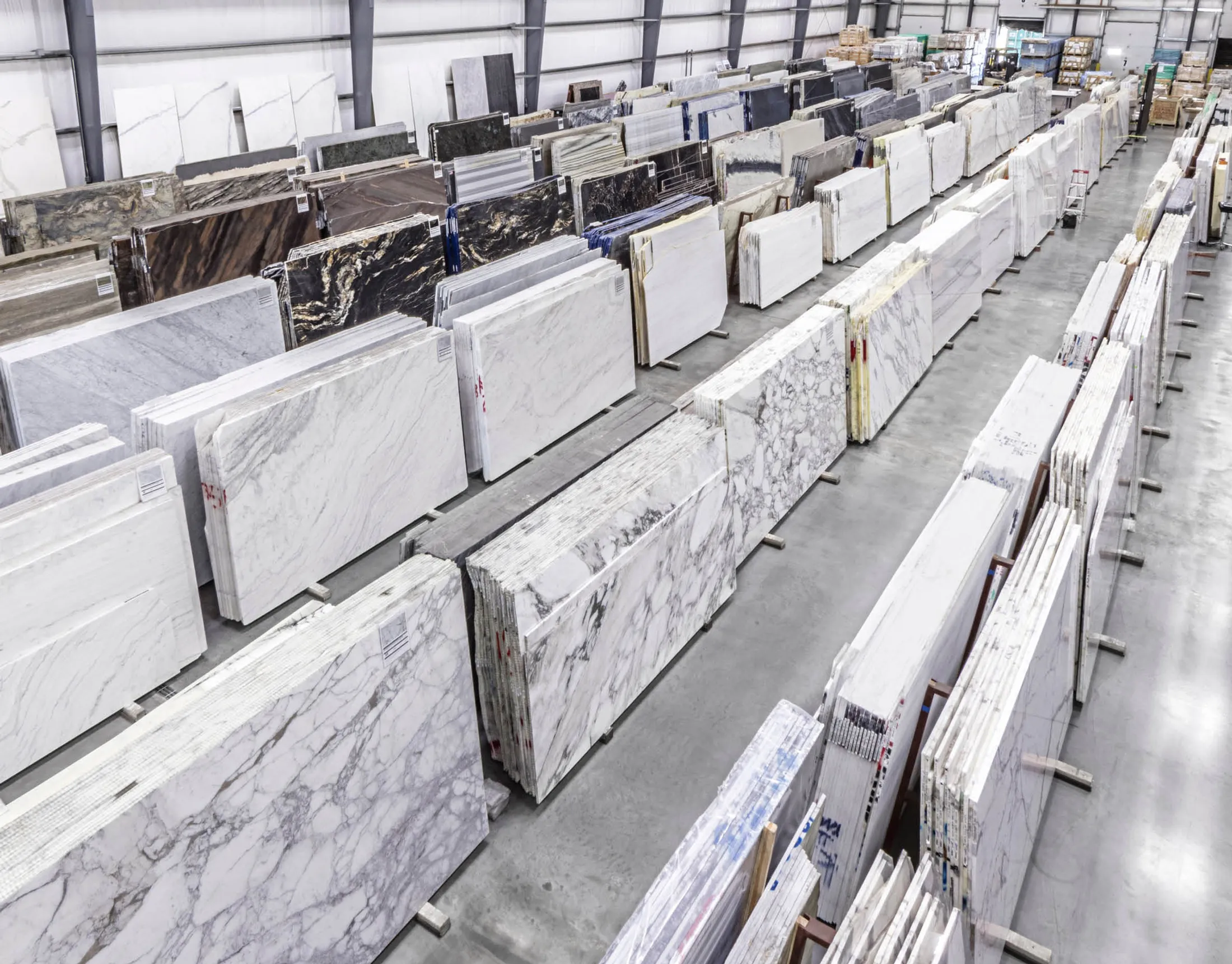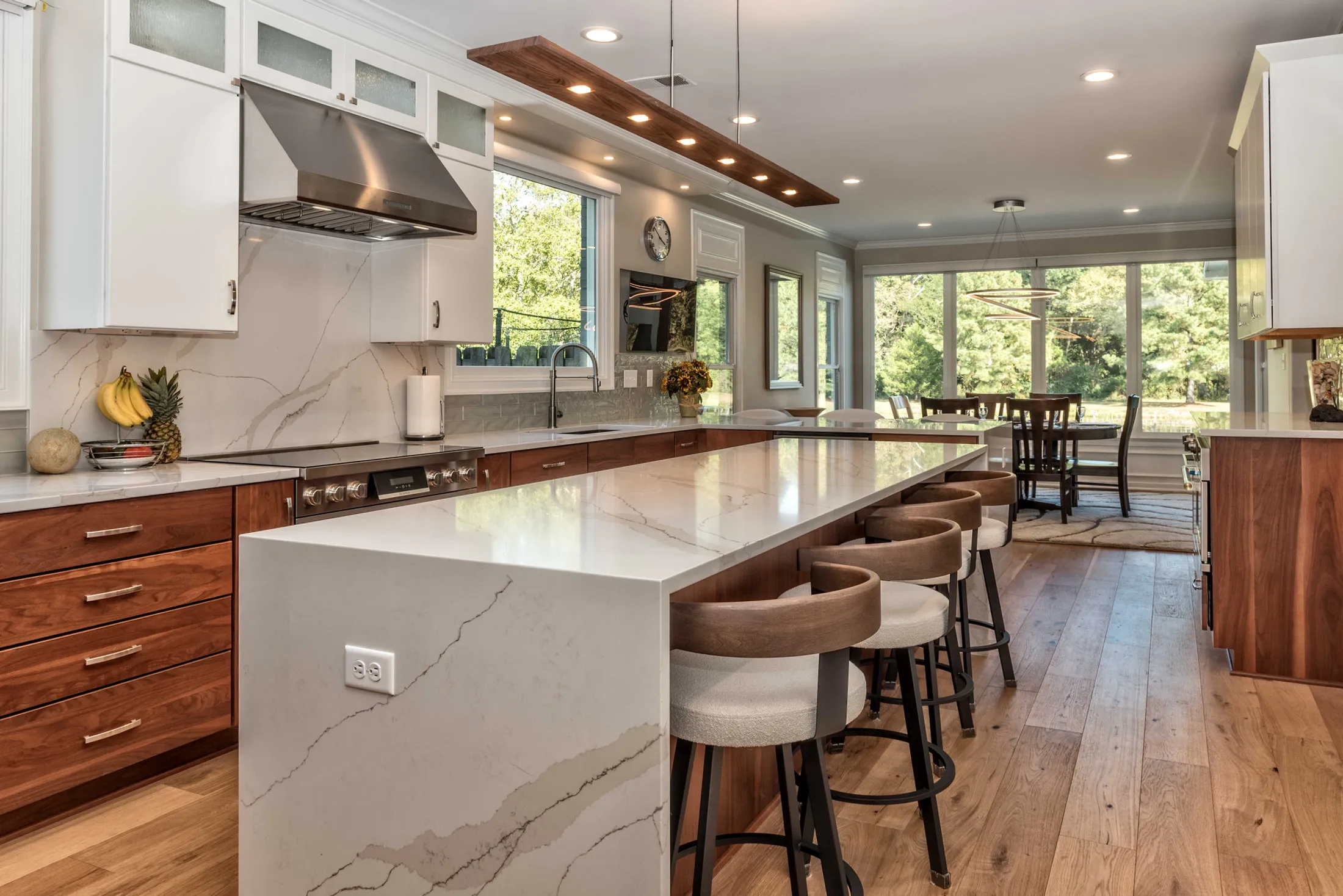
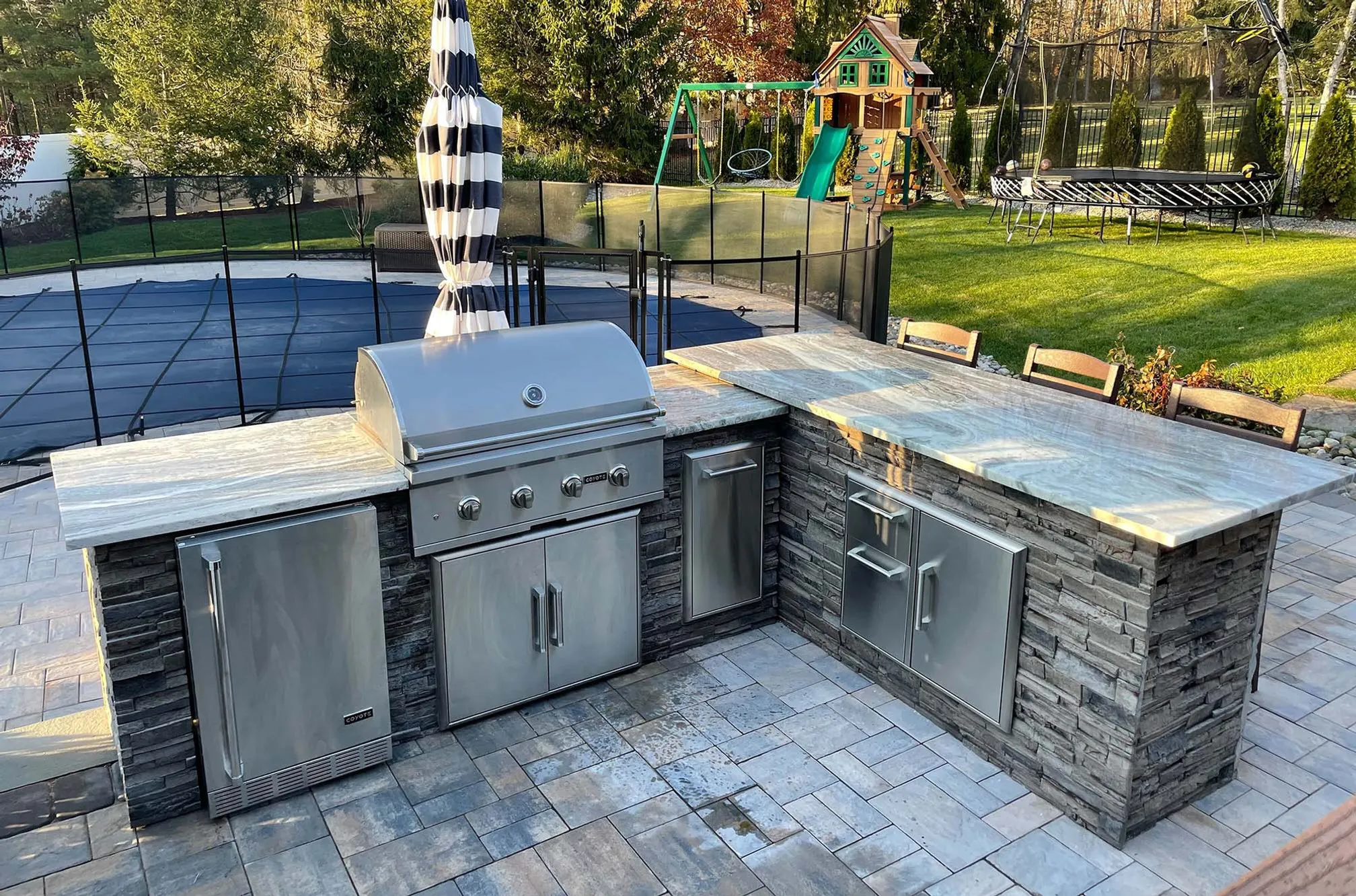
For an outdoor kitchen in Ontario, porcelain and granite are the two countertop materials to look at first. Porcelain is UV-stable, handles the heat from a grill and absorbs very little water, so freeze-thaw cycles have little to work on. A dense granite that is sealed before winter also stands up to sun, heat and cold, and natural stone has a long track record outdoors.
Quartz and laminate are indoor materials. Most quartz manufacturers recommend against outdoor installation because long UV exposure can fade or yellow the resin, and laminate’s particleboard core cannot handle rain and snow. Just as important as the material is how the countertop is supported, how water drains off it and how it is cared for over the winter. Here is what works in backyards across Kitchener, Waterloo, Cambridge and Guelph.
What an Ontario winter does to a countertop
Outdoor counters in Southwestern Ontario face more than a few cold months. The main stresses are:
- Freeze-thaw cycles. Water that soaks into a porous surface expands when it freezes. Repeated all winter, that can open small cracks, loosen seams and lift sealant.
- Summer sun. Hours of direct UV fade some materials and break down resins.
- Heat. Grills, side burners and hot pans put high heat on the surface.
- Snow and ice. Snow can sit on the counter for weeks, and shovels and ice scrapers chip edges.
- Stains. Leaves, pollen, grease and bird droppings all leave marks if they sit.
A countertop that does well outside has to resist water, UV and heat at the same time.
Porcelain: the low-maintenance choice
Porcelain slabs are made from fine clays and minerals fired at very high temperatures. The result is a dense surface that:
- Is UV-stable, so its colour does not fade in the sun
- Handles heat from grills and cookware
- Absorbs very little water, which is what matters most for freeze-thaw
- Resists stains from grease, wine and leaves, with no sealing needed
Porcelain comes in large slabs, which means fewer seams on a long outdoor run. Thin slabs can be given a heavier look with a mitred edge, which we explain in countertop edge profiles explained. The main watch-out is impact: a dropped cast-iron pan or a shovel can chip an exposed edge, so a slightly softened edge makes sense outside.
The porcelain countertops we show include lines from Infinity Stone, Cosentino and RG Stone. Each product has its own guidance on exterior use, so check the specific product before you commit. For a broader look at the material, see porcelain countertops explained.
Granite: proven natural stone
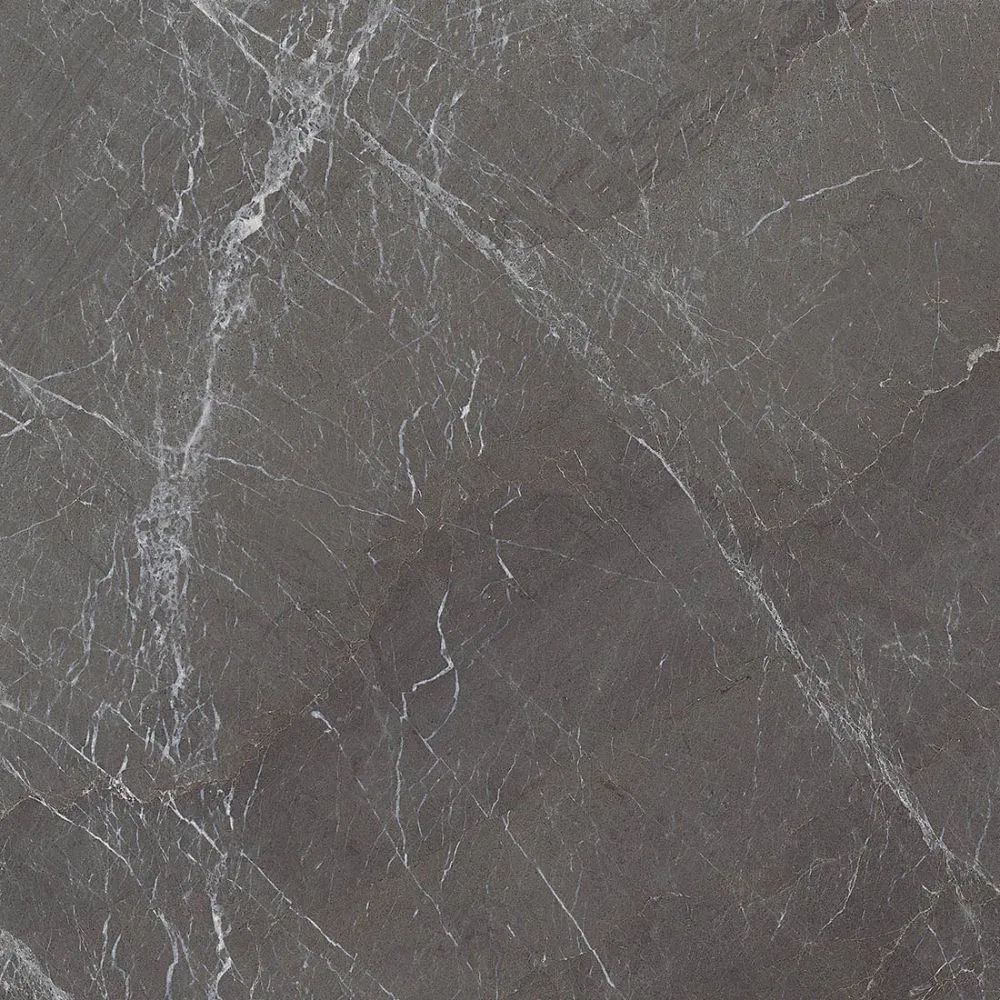
Granite formed from molten rock that cooled slowly deep in the earth, so a grill or a hot summer afternoon does not bother it. Its colour comes from minerals, not dyes, so it does not fade in sunlight.
Because granite is porous, the key to using it outside is sealing. A properly sealed granite sheds water instead of absorbing it, which protects it through freeze-thaw cycles. Some practical points:
- Choose a dense stone. Granites vary in how much water they absorb. Ask about the specific slab, and put a few drops of water on a sample to see how quickly it darkens.
- Seal before winter. Reseal when water stops beading on the surface, and make the fall a regular check.
- Think about colour and finish. Dark stone gets hot in direct sun. A honed or leathered finish shows fewer water spots than a high polish.
Our granite countertops page shows colours such as Alaska White, Silver Waves and Black Mist, and the live stone gallery inventory shows the slabs in stock right now.
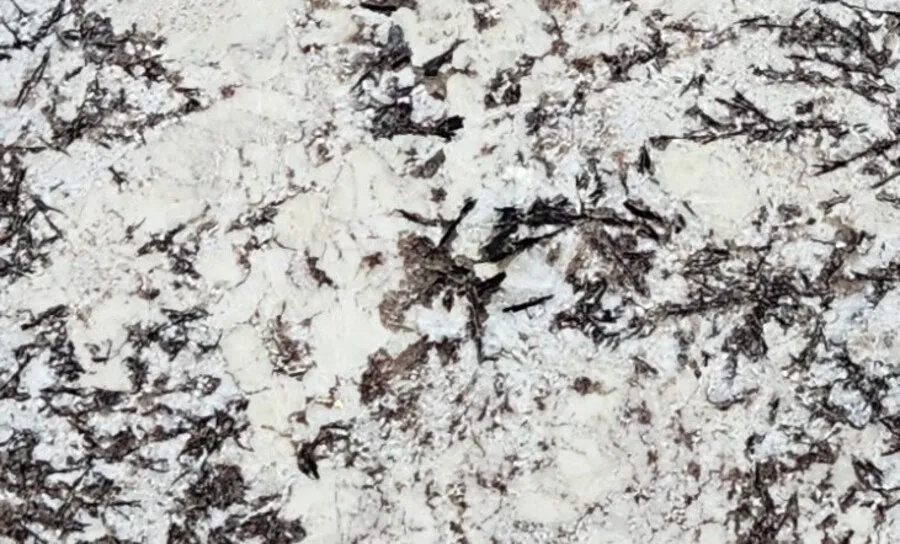
Quartzite and other natural stone
True quartzite is a dense, hard natural stone that handles UV and heat well, and it can work outdoors when sealed. Be careful with softer stones sold under similar names, and avoid marble and limestone for exposed outdoor counters, since they absorb more water and etch from acidic spills. Our post on quartz vs quartzite explains how to tell them apart.
Why quartz and laminate stay indoors
Quartz is one of the best indoor kitchen surfaces, but its resin is the weak point outside. Long sun exposure can fade or yellow it, and most manufacturers recommend against outdoor use. Under a deep covered porch the exposure is lower, but check the manufacturer’s care guide before using any quartz outside.
Laminate is a printed layer over a particleboard core. Once water reaches the core it swells, so laminate is not suitable for an outdoor kitchen.
Outdoor countertop materials compared
| Material | Sun (UV) | Heat | Water and freeze-thaw | Outdoors? |
|---|---|---|---|---|
| Porcelain | UV-stable | Handles heat | Absorbs very little | Yes, our first pick |
| Granite | UV-stable | Handles heat | Good when sealed | Yes, seal regularly |
| True quartzite | UV-stable | Handles heat | Good when sealed | Yes, seal regularly |
| Quartz | Resin can fade or yellow | Protect from high heat | Non-porous | Not recommended |
| Laminate | Not made for outdoors | Low heat resistance | Core swells when wet | No |
Details that matter as much as the material
The material is half the job. The other half is how the outdoor kitchen is built:
- A solid, level base. Masonry, block or a steel frame that does not flex. Stone and porcelain need continuous support.
- Drainage. No low spots, so water runs off instead of pooling and freezing.
- Few seams. Every seam is a place for water to get in. Plan the layout to keep them to a minimum, and use sealants suited to outdoor use.
- Supported overhangs. Bar-height seating overhangs need brackets or corbels.
- Appliance cutouts. Built-in grills, side burners and outdoor sinks have their own cutout and clearance requirements, so have the manufacturer’s specifications on hand.
We template once the base is built, using digital laser measurement, and our own in-house crews install the countertop. The steps are the same as for an indoor job, which we cover in how to prepare for countertop templating and installation.
Getting your countertop through the winter
A little care in the fall goes a long way:
- Clean off grease, food and leaves before the season ends.
- Reseal natural stone if water no longer beads on the surface.
- Use a breathable cover, or none at all, rather than a plastic tarp that traps moisture against the surface.
- Clear snow with a soft broom or brush, not a metal shovel or ice chipper.
- Keep de-icing salt off the counter and wipe off any that lands on it.
- Check seams and caulking in the spring and repair them before summer.
Our countertop care guide has more on cleaning and sealing each material.
Planning an outdoor kitchen for next season? Send us your plans through our quote form or bring them to the Kitchener stone gallery, and we will help you choose a porcelain or granite that suits your space.