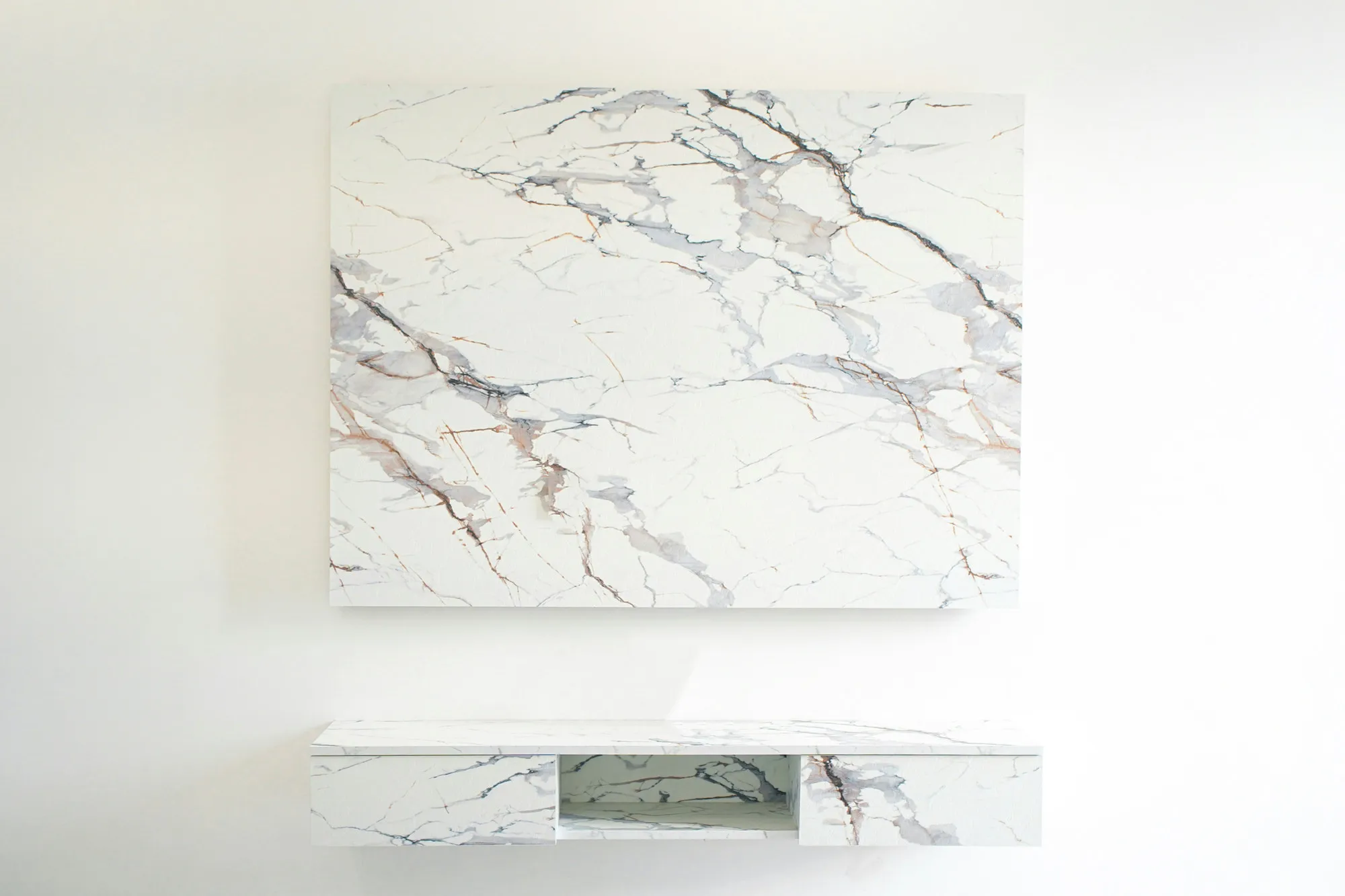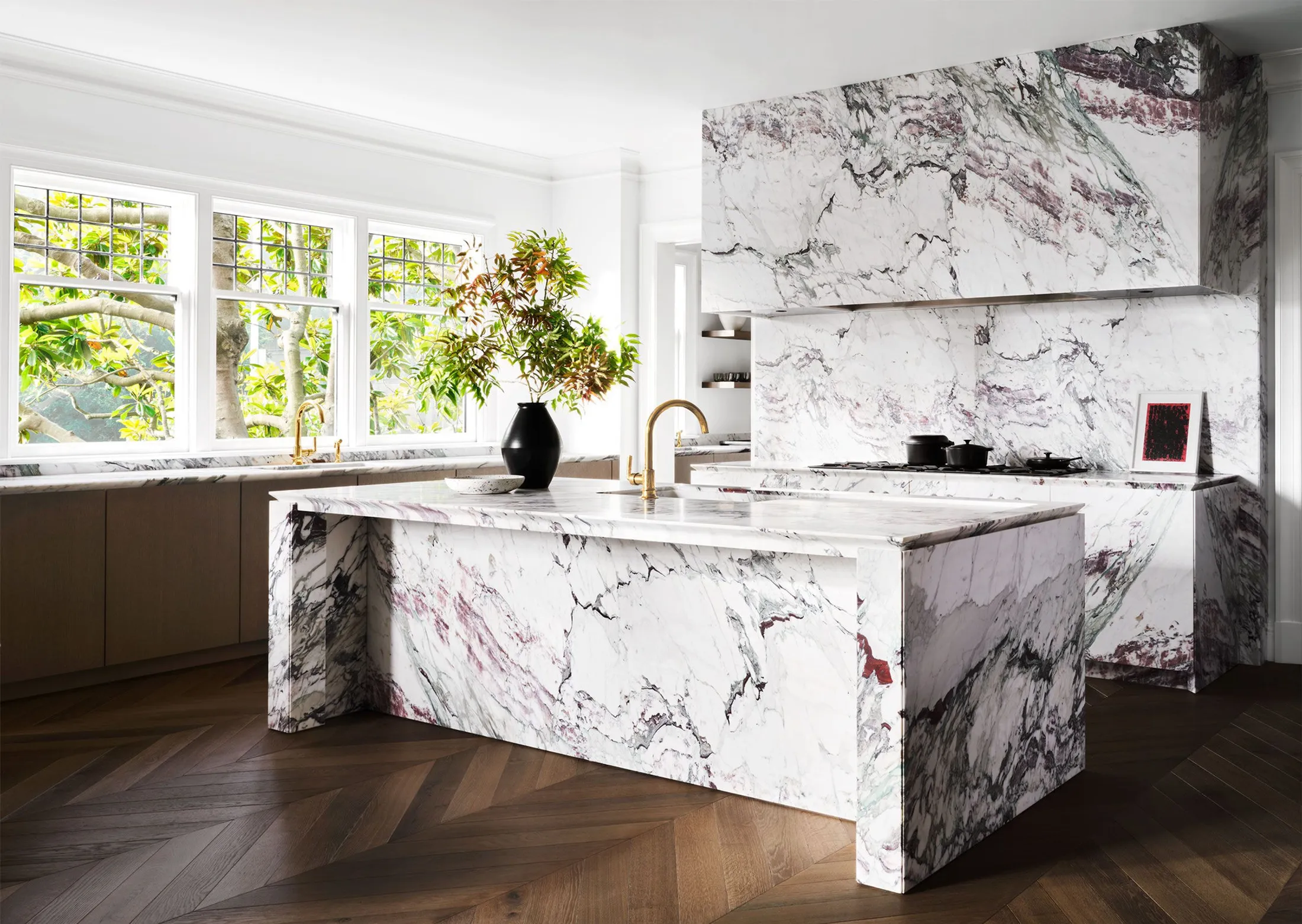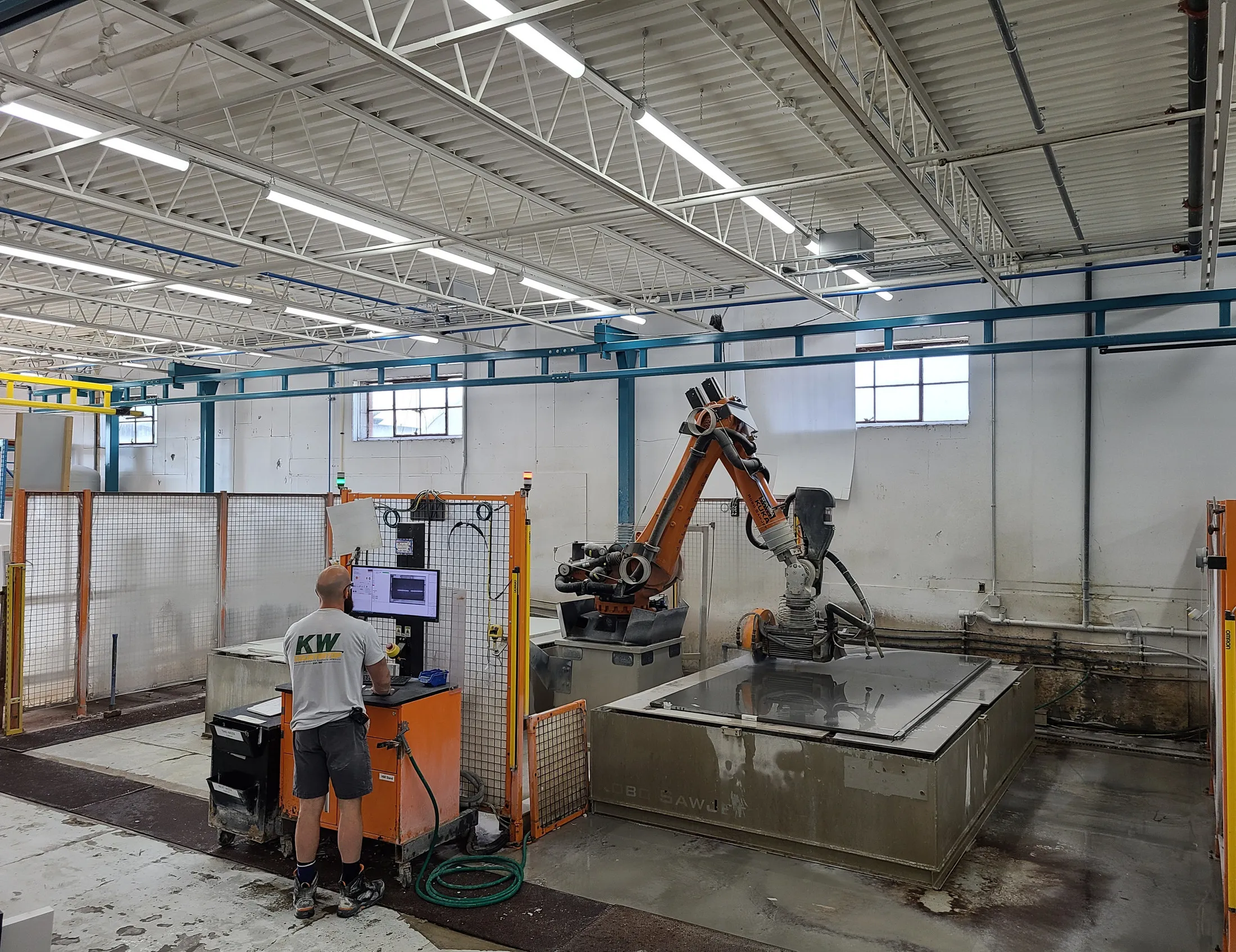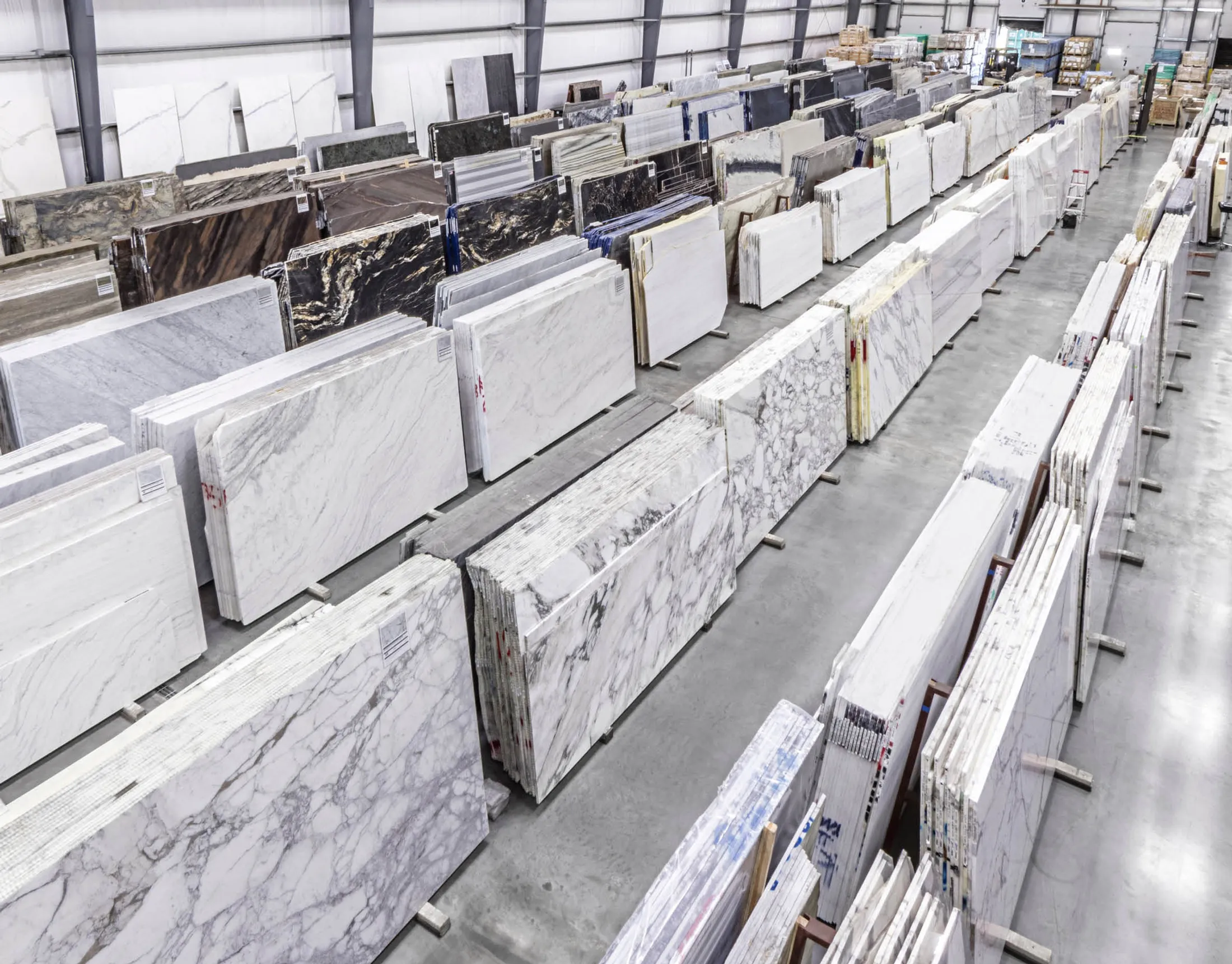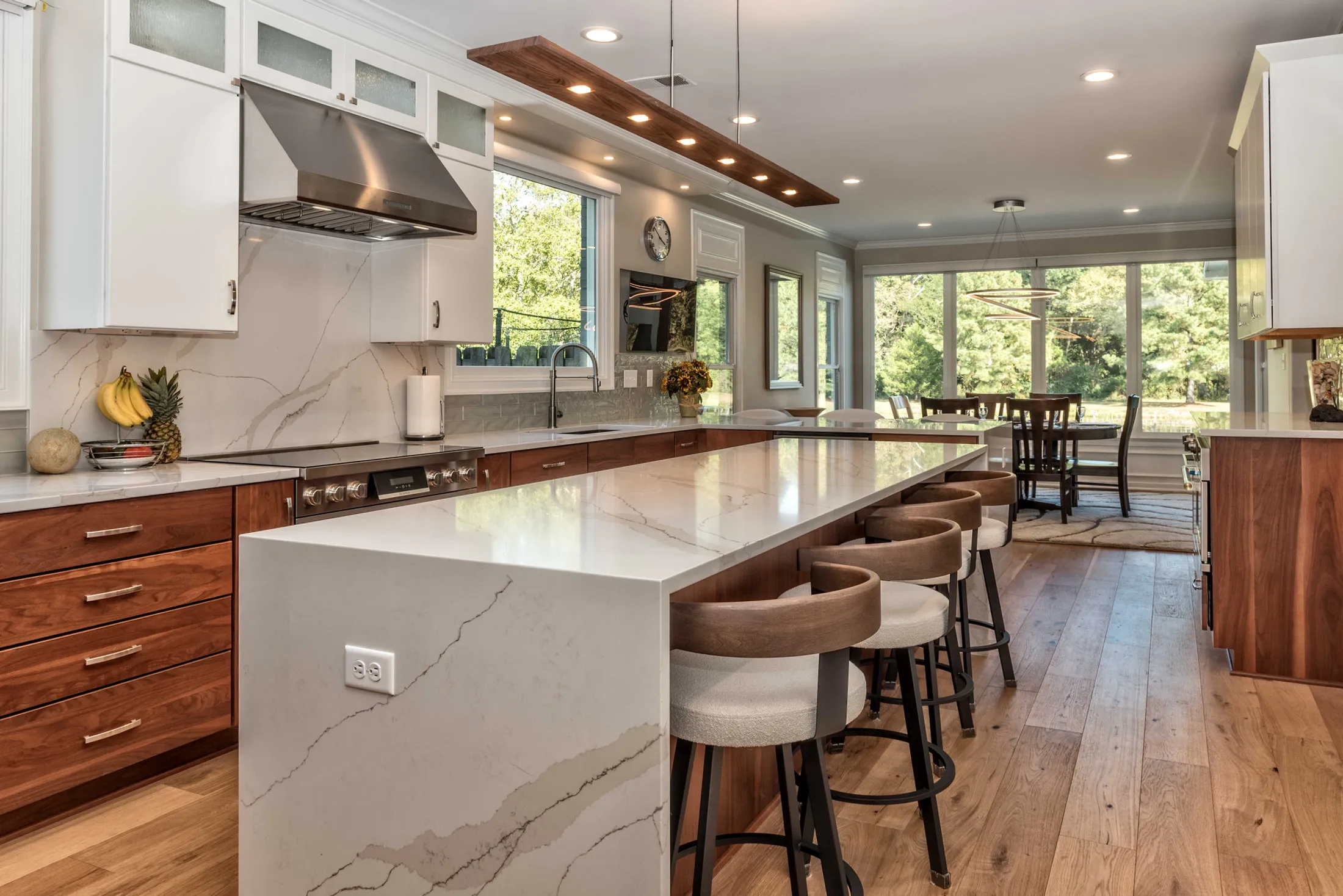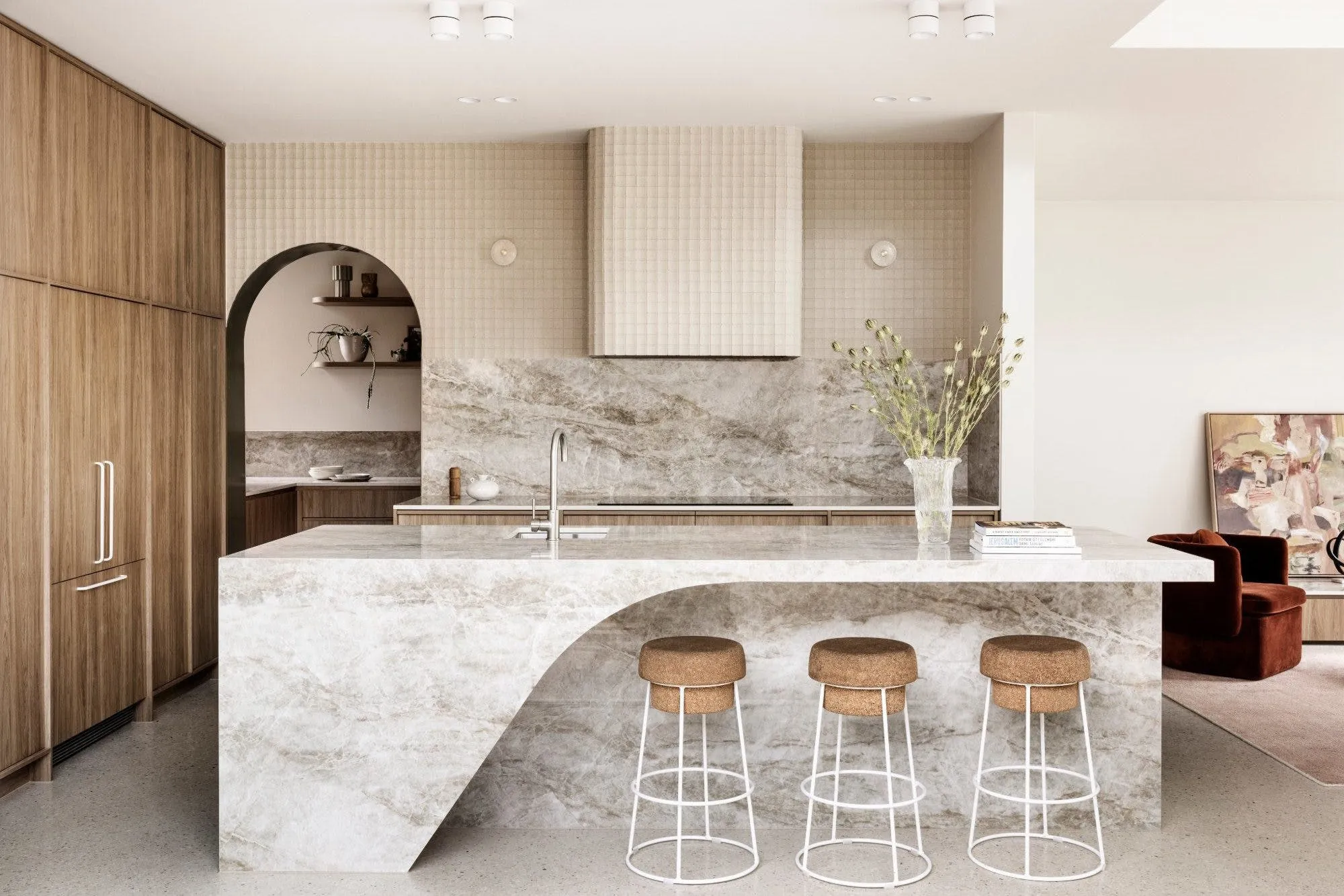
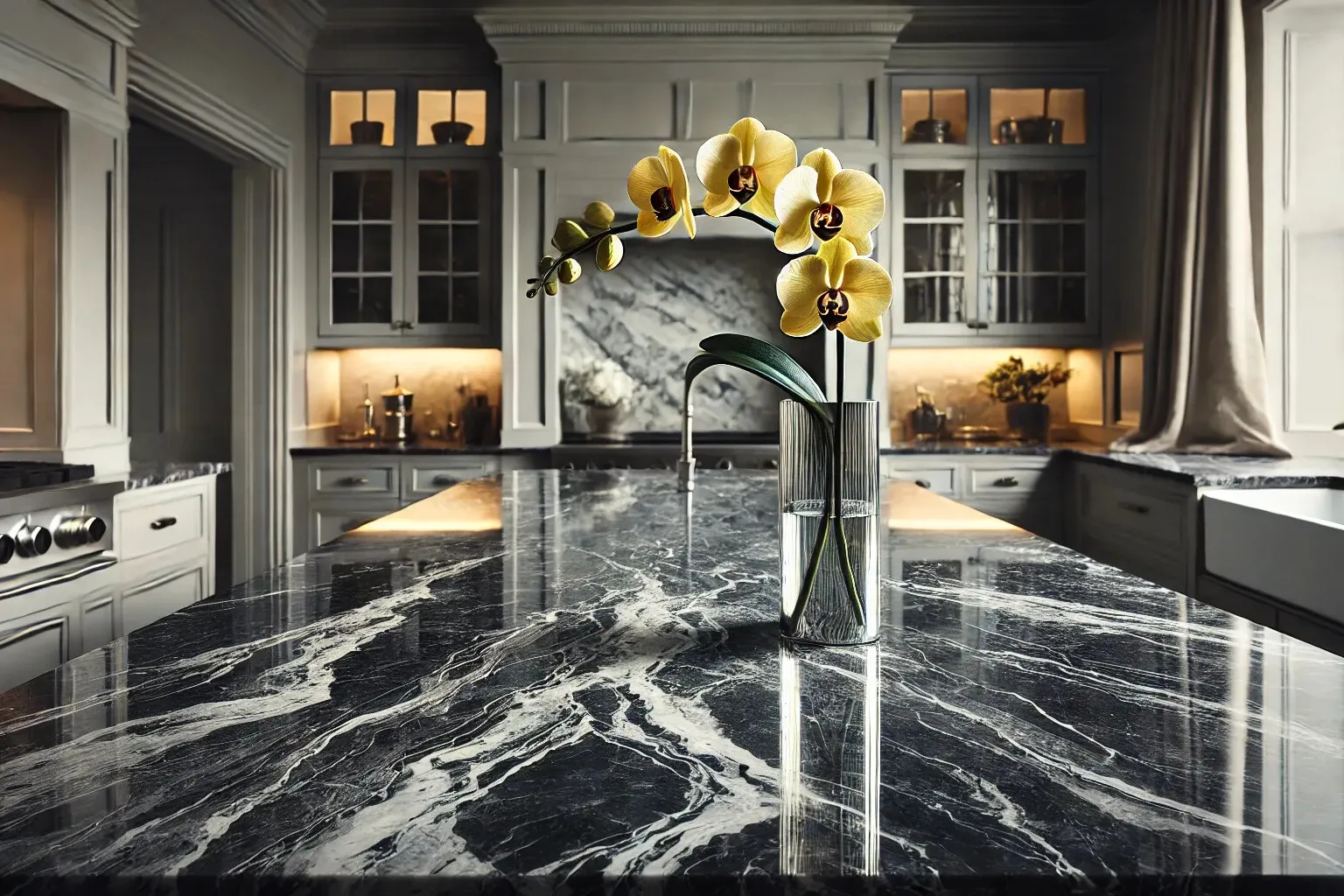
Quartz and quartzite sound almost the same, but they are different materials. Quartz countertops are engineered: ground natural quartz is mixed with resin and pigments and pressed into slabs in a factory. Quartzite is natural stone, a rock that forms when sandstone is put under intense heat and pressure, and it is quarried and cut into slabs the same way granite is.
That one difference drives everything else. Quartz is non-porous, consistent from slab to slab and needs no sealing, but because it contains resin it should be protected from direct high heat and long UV exposure. Quartzite is very hard and handles heat well, but like other natural stone it is porous, benefits from sealing, and every slab is different. If you want low upkeep and a predictable look, quartz usually fits better. If you want the depth and movement of natural stone and do not mind a little maintenance, quartzite is worth a look.
How each one is made
Quartz: an engineered surface
Quartz slabs are manufactured. Crushed quartz makes up most of the slab, resin binds it together, and pigments set the colour and pattern. Because the recipe is controlled, a quartz colour looks the same from one slab to the next, which makes it easy to match a kitchen, a vanity and a backsplash. The quartz brands we show include Vicostone, HanStone, Cambria, Wilsonart and LX Hausys, and you can see them on our quartz countertops page.
Quartzite: a natural stone
Quartzite starts as sandstone. Over a very long time, heat and pressure fuse the sand grains into a dense, crystalline rock. Minerals in the stone produce its colours, which tend toward white, grey, beige and soft greens or blues, often with long, flowing veins. No two slabs are the same, and the colour can shift across a single slab.
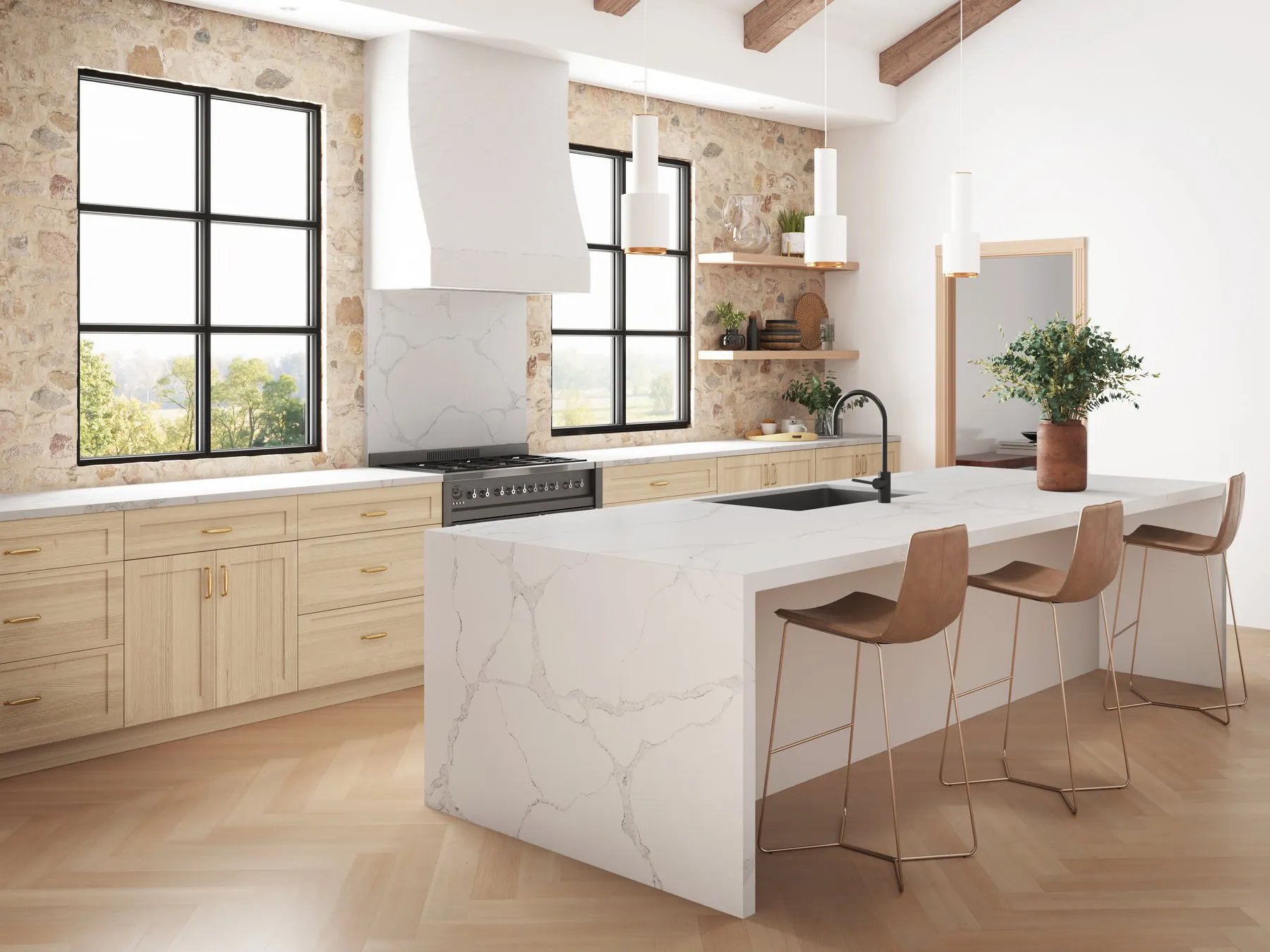
Quartz vs quartzite at a glance
| Quartz | Quartzite | |
|---|---|---|
| What it is | Engineered from ground quartz, resin and pigments | Natural stone |
| Look | Consistent colour and pattern | Every slab unique, with natural movement |
| Porosity | Non-porous | Porous, varies by stone |
| Sealing | Not needed | Recommended |
| Heat | Protect from direct high heat | Handles heat well |
| Sunlight | Long UV exposure can discolour it | UV-stable |
| Daily wear | Resists scratches and stains | Very hard, resists scratches |
| Outdoor use | Generally not recommended | Possible with the right stone, sealed |
| Matching seams | Easier | Needs careful layout |
Looks and design
The biggest reason people choose quartzite is the look. Natural veining has a depth and variation that a manufactured pattern does not quite copy, and it can become the centrepiece of a kitchen. The trade-off is that you are choosing a specific slab, not a colour from a sample. What you see on the slab is what you get, including any darker patches or mineral spots.
Quartz gives you control. Marble-look quartz with long veins has come a long way, and solid or lightly speckled quartz suits modern and condo kitchens where a calm surface is the goal. If your layout needs several slabs, quartz also makes seams easier to match. For tips on reading slabs in person, see how to choose a slab at a stone gallery.
Maintenance and daily life
Living with quartz
Quartz is the low-effort option. It does not need sealing, it resists stains from coffee, wine and oil, and daily cleaning with mild soap and water is usually enough. Most manufacturers recommend avoiding harsh chemicals and abrasive pads, and using trivets under hot pots and pans. Check the care guide for your specific product.
Living with quartzite
True quartzite is very hard and stands up well to knives, heat and daily use. Because it is porous, it should be sealed, and how often depends on the stone. Wipe up oils and coloured liquids promptly, use a pH-neutral stone cleaner, and reseal when water no longer beads on the surface. Our countertop care guide covers sealing in more detail.
Heat and sunlight
Heat and UV are where the two materials differ most. Quartzite has no resin, so a hot pan or a sunny window is not a concern for the stone itself, although trivets are still a good habit. Quartz should be kept away from direct high heat, and long exposure to strong sun can discolour the resin over time.
That matters in a few places:
- Kitchens with large south or west-facing windows that put direct sun on the counter for hours
- Sunrooms and three-season rooms
- Outdoor kitchens and barbecue counters
For outdoor projects, see outdoor kitchen countertops that survive an Ontario winter.
Watch for “soft quartzite”
Not every stone sold as quartzite behaves like quartzite. Some slabs labelled that way are closer to marble or dolomite, which are softer and can etch (leave dull marks) when lemon juice, vinegar or wine sits on them. Before committing, ask about the stone and, if you can, test a sample: true quartzite scratches glass and does not etch from a drop of lemon juice. Our post on why homeowners choose quartz and granite over marble explains etching and why it matters on a working countertop.
Fabrication and cost
The hardness that makes quartzite durable also makes it slower to cut, shape and polish, and natural stone supply is less predictable than a manufactured product. Both push quartzite toward the higher end of the price range, alongside other exotic natural stones. Quartz covers a wide middle band, with the price rising for premium brands and bold, veined designs. Thickness, edge profile, cutouts and layout affect both. Our guide to what sets the price of a new countertop walks through those factors.
Which one is right for you?
Quartz is usually the better fit if:
- You want a countertop that never needs sealing
- You want the same colour across a kitchen and bathrooms
- Your kitchen is busy and you would rather not think about spills
Quartzite is usually the better fit if:
- You want the depth and movement of natural stone
- Heat or strong sun on the counter is a concern
- You are happy to seal it and wipe up spills promptly
If you like natural stone but want something more familiar, granite offers similar heat resistance in a wide range of colours, and porcelain handles heat and sunlight without needing to be sealed.
The best way to decide is to see the options side by side. Browse our live slab inventory to see what is in stock, then book a visit to the Kitchener stone gallery or our Guelph showroom to compare them in person.